Carbon Stainless Steel Multi-Turn Wave Spring Specification Table 17-7ph Carbon / Stainless Steel
Descrição:
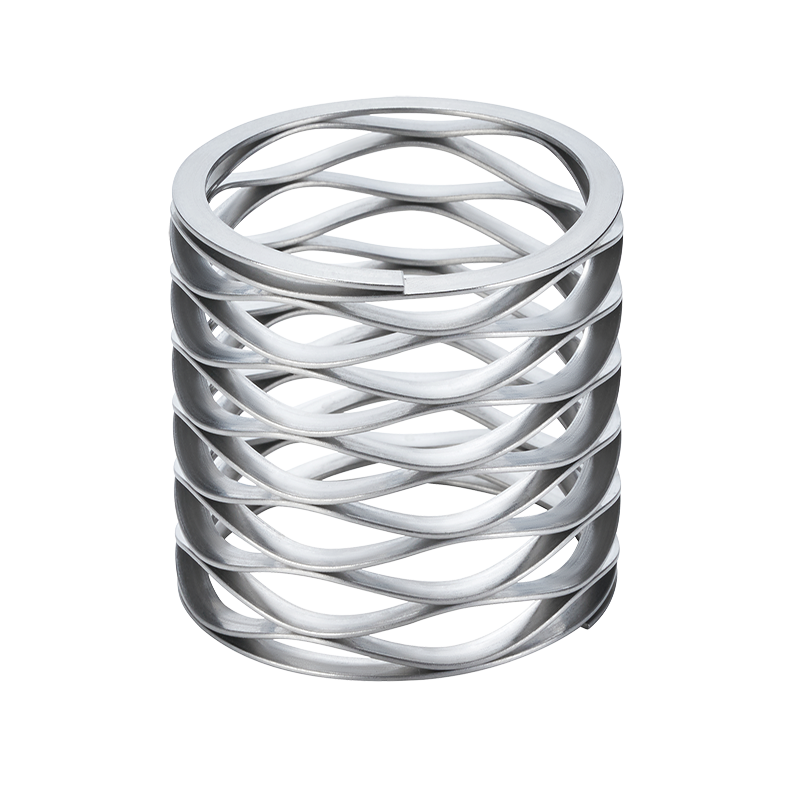
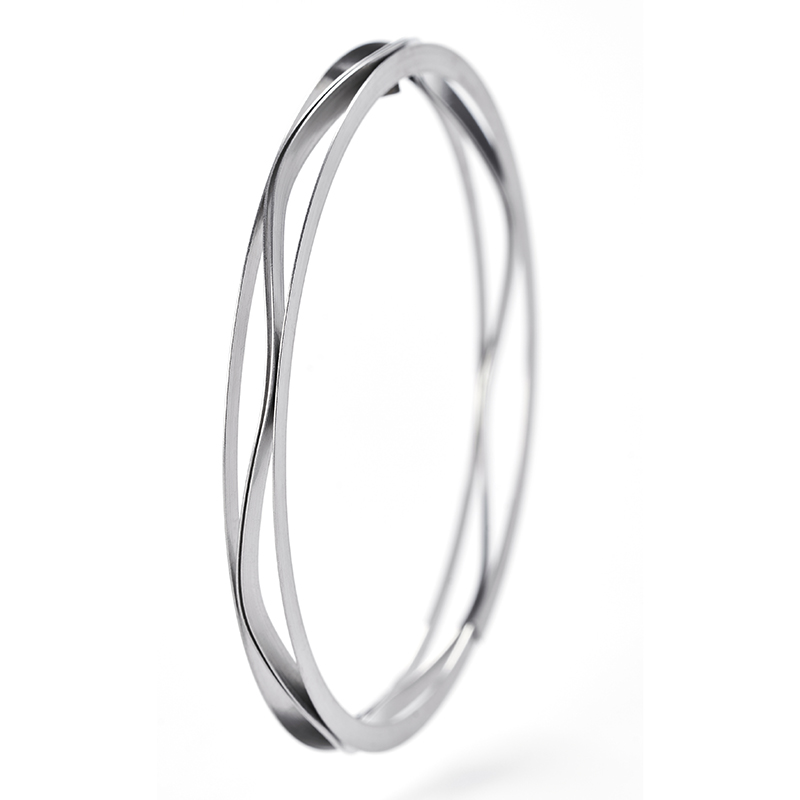
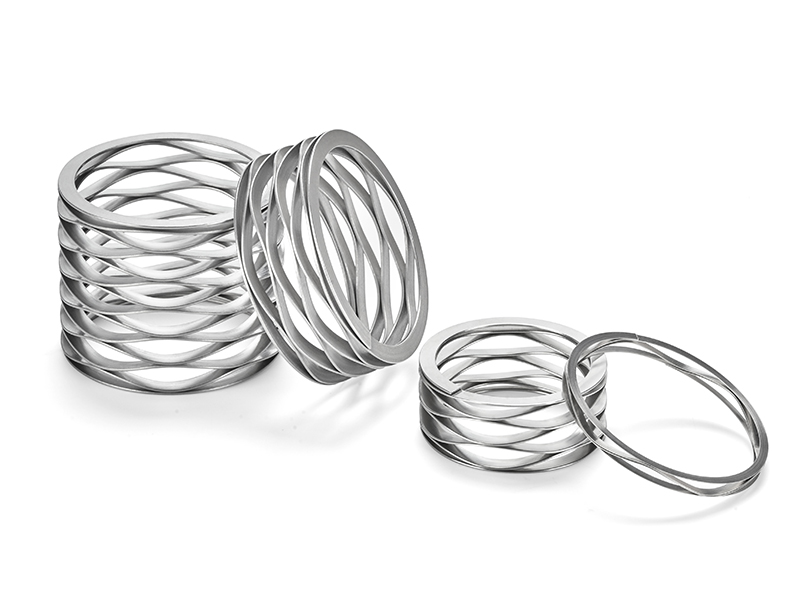
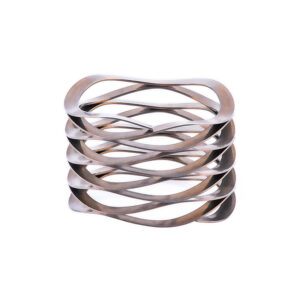
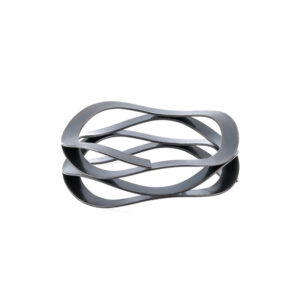
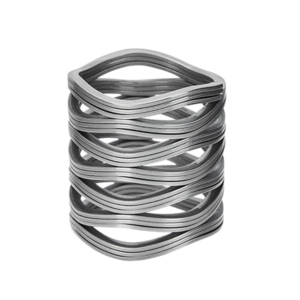
- Carbon stainless steel Multi-Turn Wave Springs are made of a single filament of round-edged, pre-tempered flat wire from a continuous coil. This results in uniform diameters and wave heights. They replace conventional round wire springs when space is critical, typically occupying only 1/3 to 1/2 of the compressed height space, while providing more deflection with the same load specifications.
- Carbon stainless steel Multi-Turn Wave Spring should be used for all applications requiring tight load deflection specifications where axial space is critical.
- Podemos produzir mola de acordo com desenho, amostras. Se você exige tais, por favor contato meu.
Comparação de molas de aço inoxidável e molas de aço carbono:
1. Material a composição é diferente
The main disadvantage of carbon steel springs is that they are easy to rust, especially when used in high temperature and high humidity environments. When the ambient temperature and humidity are high, stainless steel springs should be used.
2. Diferentes técnicas de produção
O processo de produção do material de aço carbono é obter a alta dureza da mola de produção por têmpera e revenimento do material de base com baixa dureza. Este processo leva a baixa tenacidade do material de aço carbono e menor serviço vida. Em aplicações práticas, haverá uma mola inteira. O fenômeno da fratura, o material de aço inoxidável é obtido pelo laminador de metal base de baixa dureza por várias vezes para obter a espessura e dureza necessárias para a produção de molas, e também obtém boa tenacidade, o que acabará por levar a uma melhor vida útil do que as molas de aço carbono. Ao mesmo tempo, o desempenho é mais estável.
3. Diferença de preço do material
Como o teor de cromo no material da mola de aço inoxidável é de 16-18% e o teor de níquel é de 6%-8%, o preço também é 2 a 3 vezes mais caro que o aço carbono. Para molas da mesma especificação, as molas de aço inoxidável serão mais caras do que as molas de aço carbono. O preço será cerca de 2 vezes mais caro.
A força da mola do aço inoxidável é menor que a da mola de aço carbono, a dureza da mola de aço inoxidável é menor que a do fio de aço carbono, mas a vida útil é maior; A mola de aço carbono é mais fácil de enferrujar do que a mola de aço inoxidável e possui requisitos mais elevados no ambiente de uso.
A seção material da espiral mola de onda de aço inoxidável de alta rotação deve ser preferencialmente de secção circular. Os materiais de seção quadrada e retangular têm forte capacidade de carga, boa resistência ao impacto e podem miniaturizar a mola, mas a fonte de materiais é pequena. E o preço é alto, exceto para necessidades especiais, geralmente tente não usar esse material. Nos últimos anos, o desenvolvimento de fio de aço plano laminado em vez de fio de aço trapezoidal alcançou bons resultados.
Materiais de mola que trabalham em altas temperaturas requerem boa estabilidade térmica, relaxamento ou resistência à fluência, resistência à oxidação e resistência à corrosão de certos meios.
Especificação:
| Número da peça |
Opera em
Diâmetro do Furo |
Lears Shaft
Diâmetro |
Carregar |
Altura de trabalho |
Altura Livre |
Ondas |
Voltas |
pensamento |
Parede Radial |
Taxa de Primavera |
| milímetros |
milímetros |
(N) |
milímetros |
milímetros |
milímetros |
milímetros |
N/MM |
| LMS20-H1 |
20 |
14 |
100 |
4.24 |
6.32 |
3.5 |
3 |
0.33 |
2.01 |
48.08 |
| LMS20-L1 |
20 |
15 |
35 |
2.72 |
6.32 |
3.5 |
3 |
0.2 |
1.8 |
9.72 |
| LMS20-M1 |
20 |
14 |
70 |
3.05 |
6.32 |
3.5 |
3 |
0.25 |
1.98 |
21.41 |
| LMS20-H2 |
20 |
14 |
100 |
5.66 |
8.43 |
3.5 |
4 |
0.33 |
2.01 |
36.1 |
| LMS20-L2 |
20 |
15 |
35 |
3.61 |
8.43 |
3.5 |
4 |
0.2 |
1.8 |
7.26 |
| LMS20-M2 |
20 |
14 |
70 |
4.06 |
8.43 |
3.5 |
4 |
0.25 |
1.98 |
16.02 |
| LMS20-H3 |
20 |
14 |
100 |
7.06 |
10.54 |
3.5 |
5 |
0.33 |
2.01 |
28.74 |
| LMS20-L3 |
20 |
15 |
35 |
4.52 |
10.54 |
3.5 |
5 |
0.2 |
1.8 |
5.81 |
| LMS20-M3 |
20 |
14 |
70 |
5.08 |
10.54 |
3.5 |
5 |
0.25 |
1.98 |
12.82 |
| LMS20-H4 |
20 |
14 |
100 |
8.48 |
12.65 |
3.5 |
6 |
0.33 |
2.01 |
23.98 |
| LMS20-L4 |
20 |
15 |
35 |
5.41 |
12.65 |
3.5 |
6 |
0.2 |
1.8 |
4.83 |
| LMS20-M4 |
20 |
14 |
70 |
6.27 |
12.65 |
3.5 |
6 |
0.25 |
1.98 |
10.97 |
| LMS20-H5 |
20 |
14 |
100 |
9.91 |
14.76 |
3.5 |
7 |
0.33 |
2.01 |
20.62 |
| LMS20-L5 |
20 |
15 |
35 |
6.32 |
14.76 |
3.5 |
7 |
0.2 |
1.8 |
4.15 |
| LMS20-M5 |
20 |
14 |
70 |
7.32 |
14.76 |
3.5 |
7 |
0.25 |
1.98 |
9.41 |
| LMS20-H6 |
20 |
14 |
100 |
12.73 |
18.97 |
3.5 |
9 |
0.33 |
2.01 |
16.03 |
| LMS20-L6 |
20 |
15 |
35 |
8.13 |
18.97 |
3.5 |
9 |
0.2 |
1.8 |
3.23 |
| LMS20-M6 |
20 |
14 |
70 |
9.17 |
18.97 |
3.5 |
9 |
0.25 |
1.98 |
7.14 |
| LMS20-H7 |
20 |
14 |
100 |
16.97 |
25.3 |
3.5 |
12 |
0.33 |
2.01 |
12 |
| LMS20-L7 |
20 |
15 |
35 |
10.82 |
25.3 |
3.5 |
12 |
0.2 |
1.8 |
2.42 |
| LMS20-M7 |
20 |
14 |
70 |
12.22 |
25.3 |
3.5 |
12 |
0.25 |
1.98 |
5.35 |
| LMS25-H1 |
25 |
19 |
110 |
4.04 |
6.63 |
3.5 |
3 |
0.38 |
2.39 |
42.47 |
| LMS25-L1 |
25 |
19 |
50 |
2.06 |
6.63 |
3.5 |
3 |
0.25 |
2.18 |
10.94 |
| LMS25-M1 |
25 |
19 |
80 |
2.95 |
6.63 |
3.5 |
3 |
0.3 |
2.39 |
21.74 |
| LMS25-H2 |
25 |
19 |
110 |
5.38 |
8.84 |
3.5 |
4 |
0.38 |
2.39 |
31.79 |
| LMS25-L2 |
25 |
19 |
50 |
2.74 |
8.84 |
3.5 |
4 |
0.25 |
2.18 |
8.2 |
| LMS25-M2 |
25 |
19 |
80 |
3.94 |
8.84 |
3.5 |
4 |
0.3 |
2.39 |
16.33 |
| LMS25-H3 |
25 |
19 |
110 |
6.73 |
11.05 |
3.5 |
5 |
0.38 |
2.39 |
25.46 |
| LMS25-L3 |
25 |
19 |
50 |
3.43 |
11.05 |
3.5 |
5 |
0.25 |
2.18 |
6.56 |
| LMS25-M3 |
25 |
19 |
80 |
4.9 |
11.05 |
3.5 |
5 |
0.3 |
2.39 |
13.01 |
| LMS25-H4 |
25 |
19 |
110 |
8.08 |
13.26 |
3.5 |
6 |
0.38 |
2.39 |
21.24 |
| LMS25-L4 |
25 |
19 |
50 |
4.11 |
13.26 |
3.5 |
6 |
0.25 |
2.18 |
|

 Portuguese
  English
  Chinese
  Dutch
Dutch  French
  German
  Italian
  Japanese
  Korean
  Russian
  Spanish