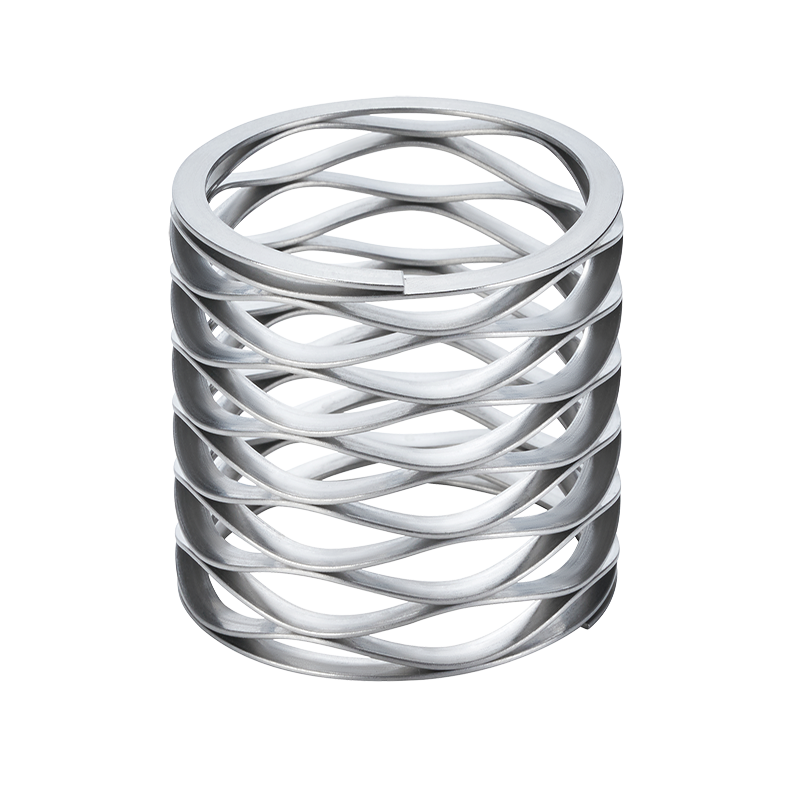
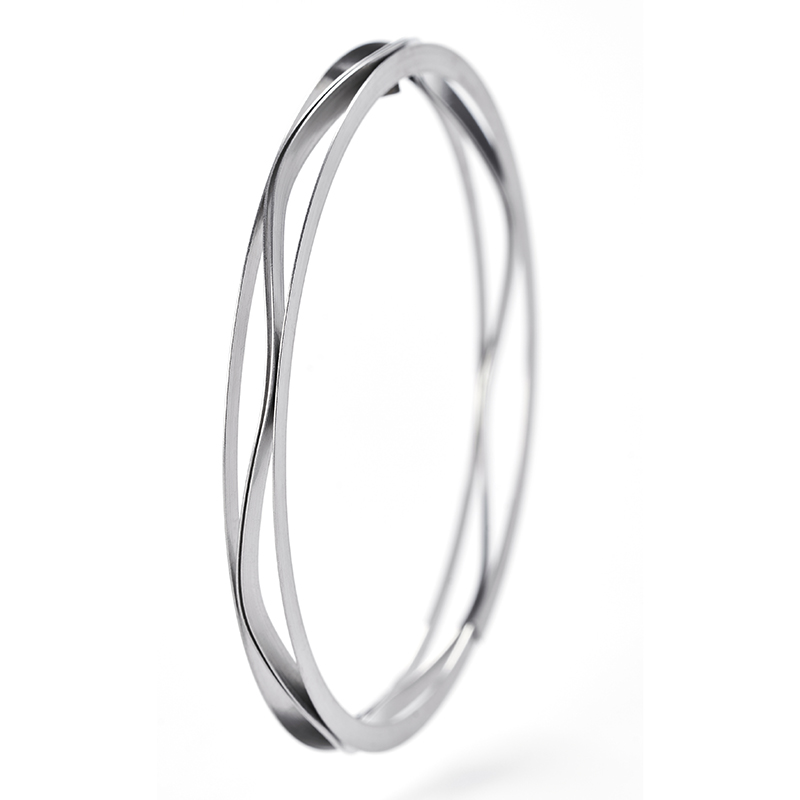
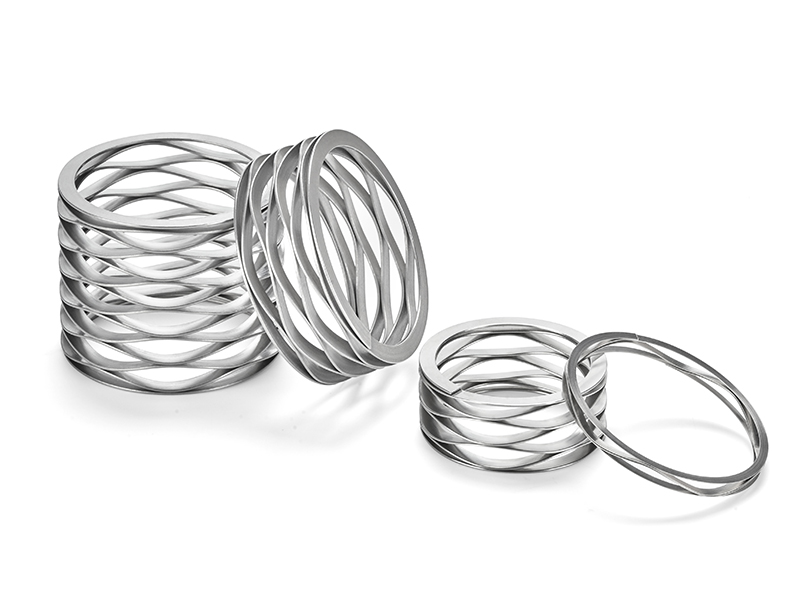
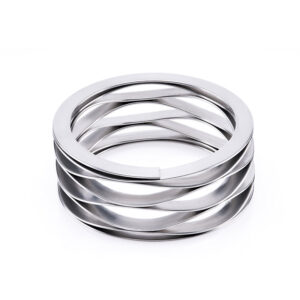
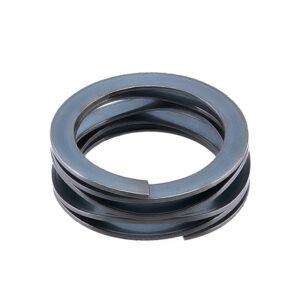
Wave springs, also known as wave springs, are thin annular elastic metal components consisting of several wave crests and wave troughs. This product is made of high-quality spring steel 65Mn (60Si2MnA/50CrVA /0Cr17Ni7Al) and stainless steel SUS304/SUS316/SUS631, which are heat-treated by specific methods and have a hardness generally controlled between HRC44-55. The surface is blackened and has good elasticity. Wave springs are widely used in the motor, machinery, hydraulic equipment, automotive and other industries. They are mainly installed in the bearing chamber or hole with appropriate specifications, with a small installation space, and have the special function of reducing noise and vibration.
Surface treatment
Blackening treatment: This surface treatment provides a black surface. Blackening is more important for appearance than for corrosion resistance.
Chrome plating: Chrome plating is mainly a treatment method for carbon steel products, mainly to increase corrosion resistance.
Oil immersion: Oil immersion is a standard treatment method for carbon steel products, aiming to prevent rust during transportation and storage.
Passivation: Passivation is a cleaning method for stainless steel materials.
Phosphate coating: Phosphating has better corrosion resistance than blackening.
Ultrasonic cleaning: This is a standard surface treatment method for stainless steel materials.
Vibration deburring: To eliminate sharp edges of the product.Classification of wave springs
Wave springs are divided into two types: L/LM series wave springs and LS/LMS series wave springs.
L/LM series Wave Springs
The L/LM series are continuously wound wave spring with alternating peaks and troughs. The characteristics of this series of I wave springs are that they can provide ideal elasticity in a small installation space, saving up to 50% of space compared with conventional spiral springs.
LS/LMS series Wave Springs
The LS/LMS series are wave springs with alternating peaks and troughs and flat rings at both ends. In addition to the advantages of the L/LM type wave springs, the LS/LMS type has more evenly distributed elasticity because of the flat rings at both ends of the wave peaks. This type of wave spring is particularly suitable for environments where there are holes at both ends of the installation space, as the wave peaks can easily fall into the holes and become inoperable.According to processing technology: punched wave springs and wound wave springs.
Characteristics of Wave Springs
Large stiffness range, strong buffering and vibration absorption capacity, large deformation energy per unit volume of material.
Variable stiffness characteristics. The stiffness can be adjusted by changing the combination of different heights, widths, and thicknesses of the wave peaks. The stiffness can also be adjusted by regulating the number of combined pieces.
Compared with disc springs, wave springs have the advantages of high strength, good flexibility, and strong impact resistance.
Compact structure size, under the same physical parameters, the required installation space is smaller.
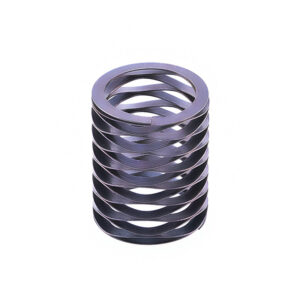
Carbon stainless steel Multi-Turn Wave Springs are made of a single filament of round-edged, pre-tempered flat wire from a continuous coil. This results in uniform diameters and wave heights. They replace conventional round wire springs when space is critical, typically occupying only 1/3 to 1/2 of the compressed height space, while providing more deflection with the same load specifications.
Carbon stainless steel Multi-Turn Wave Spring should be used for all applications requiring tight load deflection specifications where axial space is critical.
We kunnen de lente produceren volgens tekening, monsters. Als u deze eist, alstublieft contact mij.
Vergelijking van roestvrijstalen veren en koolstofstalen veren:
1. Materiaal composition is different The main disadvantage of carbon steel springs is that they are easy to rust, especially when used in high temperature and high humidity environments. When the ambient temperature and humidity are high, stainless steel springs should be used.
2. Verschillende productietechnieken Het productieproces van koolstofstaalmateriaal is om de hoge hardheid van de productieveer te verkrijgen door het basismateriaal met lage hardheid af te schrikken en te ontlaten. Dit proces leidt tot een slechte taaiheid van het koolstofstaalmateriaal en lager dienst leven. In praktische toepassingen zal er een hele lente zijn. Het fenomeen van breuk, het roestvrijstalen materiaal wordt door de walserij van basismetaal met lage hardheid meerdere keren verkregen om de dikte en hardheid te verkrijgen die nodig is voor de productie van veren, en verkrijgt ook een goede taaiheid, wat uiteindelijk zal leiden tot een betere levensduur dan koolstofstalen veren. Tegelijkertijd zijn de prestaties stabieler.
3. Materiaal prijsverschil Omdat het chroomgehalte in het veermateriaal van roestvrij staal 16-18% vertegenwoordigt en het nikkelgehalte 6%-8%, is de prijs ook 2-3 keer duurder dan koolstofstaal. Voor veren met dezelfde specificatie zijn roestvrijstalen veren duurder dan koolstofstalen veren. De prijs zal ongeveer 2 keer duurder zijn.
De veerkracht van roestvrij staal is lager dan die van koolstofstalen veer, de hardheid van roestvrijstalen veer is lager dan die van koolstofstaaldraad, maar de levensduur is langer; koolstofstalen veer is gemakkelijker te roesten dan roestvrijstalen veer en stelt hogere eisen aan de gebruiksomgeving.
Het materiaalgedeelte van de spiraal carbon roestvrijstalen multi-turn golfveer moet bij voorkeur een cirkelvormig gedeelte zijn. Materialen met vierkante en rechthoekige doorsnede hebben een sterk draagvermogen, goede slagvastheid en kunnen de veer verkleinen, maar de materiaalbron is klein. En de prijs is hoog, behalve voor speciale behoeften, probeer dit materiaal over het algemeen niet te gebruiken. De laatste jaren heeft de ontwikkeling van gerolde platte staaldraad in plaats van trapeziumvormige staaldraad goede resultaten opgeleverd.
Veermaterialen die bij hoge temperaturen werken, vereisen een goede thermische stabiliteit, weerstand tegen relaxatie of kruip, weerstand tegen oxidatie en corrosieweerstand tegen bepaalde media.

 Dutch
Dutch  English
  Chinese
  French
  German
  Italian
  Japanese
  Korean
  Portuguese
  Russian
  Spanish