Carbon Stainless Steel Multi-Turn Wave Spring Specification Table 17-7ph Carbon / Stainless Steel
Description:
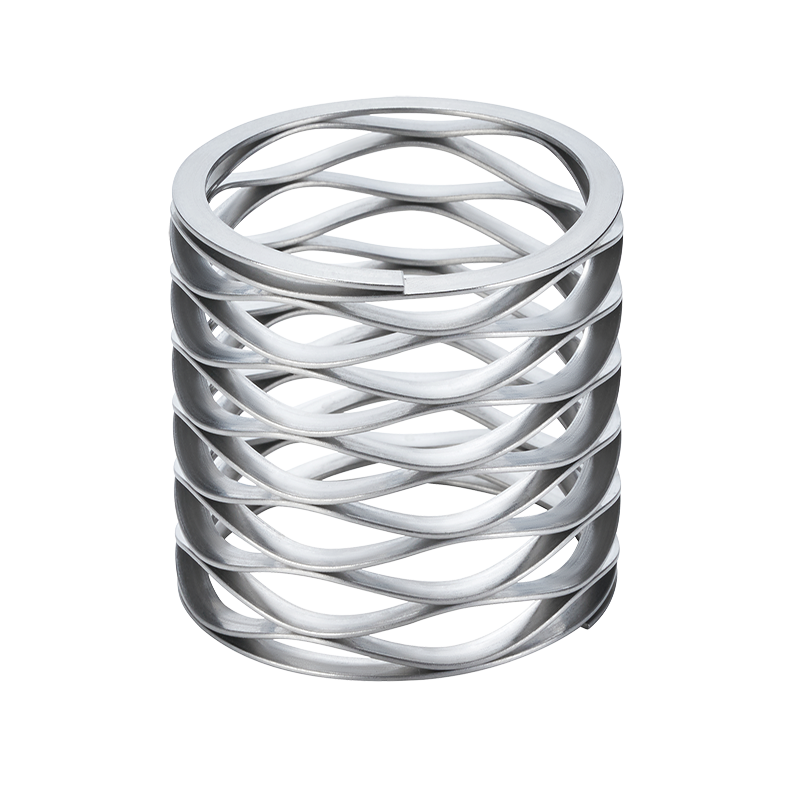
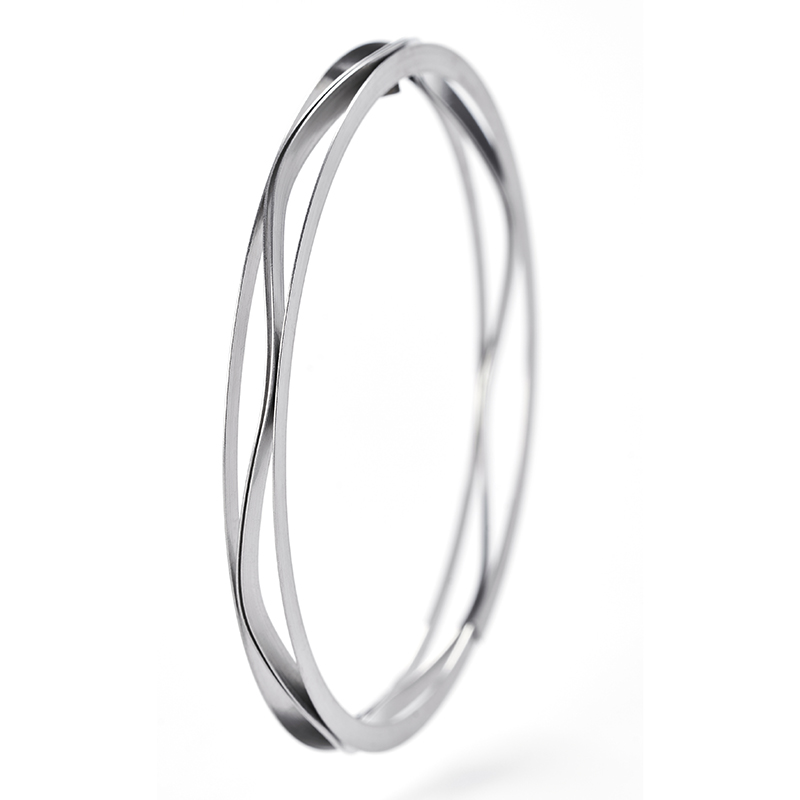
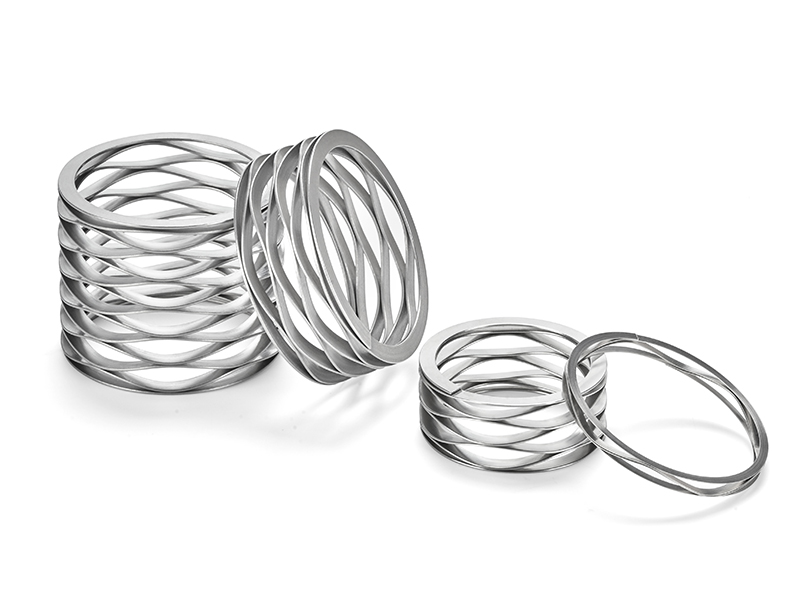
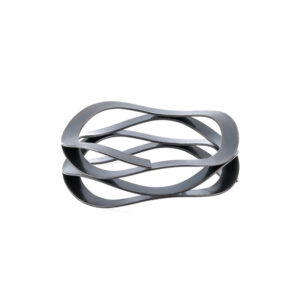
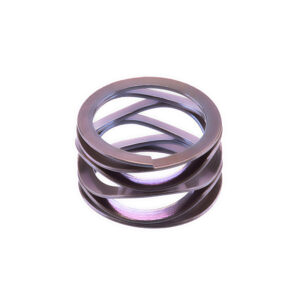
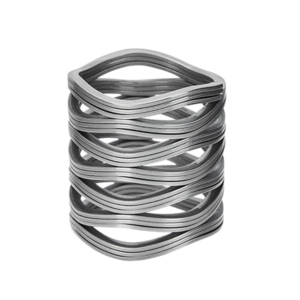
- Carbon stainless steel Multi-Turn Wave Springs are made of a single filament of round-edged, pre-tempered flat wire from a continuous coil. This results in uniform diameters and wave heights. They replace conventional round wire springs when space is critical, typically occupying only 1/3 to 1/2 of the compressed height space, while providing more deflection with the same load specifications.
- Carbon stainless steel Multi-Turn Wave Spring should be used for all applications requiring tight load deflection specifications where axial space is critical.
- Nous pouvons produire le printemps selon le dessin, les échantillons. Si vous les exigez, veuillez contact moi.
Comparaison des ressorts en acier inoxydable et des ressorts en acier au carbone :
1. Matériel la composition est différente
The main disadvantage of carbon steel springs is that they are easy to rust, especially when used in high temperature and high humidity environments. When the ambient temperature and humidity are high, stainless steel springs should be used.
2. Différentes techniques de production
Le processus de production du matériau en acier au carbone consiste à obtenir la dureté élevée du ressort de production en trempant et en revenu le matériau de base avec une faible dureté. Ce processus conduit à une mauvaise ténacité du matériau en acier au carbone et à une baisse service vie. Dans les applications pratiques, il y aura tout un ressort. Le phénomène de rupture, le matériau en acier inoxydable est obtenu par le laminoir à métal de base à faible dureté à plusieurs reprises pour obtenir l'épaisseur et la dureté requises pour la production de ressorts, et obtient également une bonne ténacité, ce qui conduira éventuellement à une meilleure durée de vie que les ressorts en acier au carbone. Dans le même temps, les performances sont plus stables.
3. Différence de prix des matériaux
Étant donné que la teneur en chrome du matériau de ressort en acier inoxydable représente 16-18% et que la teneur en nickel représente 6%-8%, le prix est également 2 à 3 fois plus cher que l'acier au carbone. Pour des ressorts de même spécification, les ressorts en acier inoxydable seront plus chers que les ressorts en acier au carbone. Le prix sera environ 2 fois plus cher.
La force du ressort de l'acier inoxydable est inférieure à celle du ressort en acier au carbone, la dureté du ressort en acier inoxydable est inférieure à celle du fil d'acier au carbone, mais la durée de vie est plus longue; le ressort en acier au carbone est plus facile à rouiller que le ressort en acier inoxydable, et il a des exigences plus élevées sur l'environnement d'utilisation.
La section matérielle de la spirale Ressort ondulé multi-tours en acier inoxydable au carbone devrait de préférence être une section circulaire. Les matériaux de section carrée et rectangulaire ont une forte capacité portante, une bonne résistance aux chocs et peuvent miniaturiser le ressort, mais la source de matériaux est petite. Et le prix est élevé, sauf pour des besoins particuliers, essayez généralement de ne pas utiliser ce matériau. Ces dernières années, le développement du laminage de fil d'acier plat au lieu de fil d'acier trapézoïdal a obtenu de bons résultats.
Les matériaux de ressort qui fonctionnent à des températures élevées nécessitent une bonne stabilité thermique, une résistance à la relaxation ou au fluage, une résistance à l'oxydation et une résistance à la corrosion de certains milieux.
Spécification:
| Numéro de pièce |
Fonctionne dans
Diamètre d'alésage |
Arbre Lears
Diamètre |
Charger |
Hauteur de travail |
Hauteur libre |
Vagues |
Se tourne |
Pensée |
Paroi radiale |
Taux du printemps |
| millimètre |
millimètre |
(N) |
millimètre |
millimètre |
millimètre |
millimètre |
N/MM |
| LMS20-H1 |
20 |
14 |
100 |
4.24 |
6.32 |
3.5 |
3 |
0.33 |
2.01 |
48.08 |
| LMS20-L1 |
20 |
15 |
35 |
2.72 |
6.32 |
3.5 |
3 |
0.2 |
1.8 |
9.72 |
| LMS20-M1 |
20 |
14 |
70 |
3.05 |
6.32 |
3.5 |
3 |
0.25 |
1.98 |
21.41 |
| LMS20-H2 |
20 |
14 |
100 |
5.66 |
8.43 |
3.5 |
4 |
0.33 |
2.01 |
36.1 |
| LMS20-L2 |
20 |
15 |
35 |
3.61 |
8.43 |
3.5 |
4 |
0.2 |
1.8 |
7.26 |
| LMS20-M2 |
20 |
14 |
70 |
4.06 |
8.43 |
3.5 |
4 |
0.25 |
1.98 |
16.02 |
| LMS20-H3 |
20 |
14 |
100 |
7.06 |
10.54 |
3.5 |
5 |
0.33 |
2.01 |
28.74 |
| LMS20-L3 |
20 |
15 |
35 |
4.52 |
10.54 |
3.5 |
5 |
0.2 |
1.8 |
5.81 |
| LMS20-M3 |
20 |
14 |
70 |
5.08 |
10.54 |
3.5 |
5 |
0.25 |
1.98 |
12.82 |
| LMS20-H4 |
20 |
14 |
100 |
8.48 |
12.65 |
3.5 |
6 |
0.33 |
2.01 |
23.98 |
| LMS20-L4 |
20 |
15 |
35 |
5.41 |
12.65 |
3.5 |
6 |
0.2 |
1.8 |
4.83 |
| LMS20-M4 |
20 |
14 |
70 |
6.27 |
12.65 |
3.5 |
6 |
0.25 |
1.98 |
10.97 |
| LMS20-H5 |
20 |
14 |
100 |
9.91 |
14.76 |
3.5 |
7 |
0.33 |
2.01 |
20.62 |
| LMS20-L5 |
20 |
15 |
35 |
6.32 |
14.76 |
3.5 |
7 |
0.2 |
1.8 |
4.15 |
| LMS20-M5 |
20 |
14 |
70 |
7.32 |
14.76 |
3.5 |
7 |
0.25 |
1.98 |
9.41 |
| LMS20-H6 |
20 |
14 |
100 |
12.73 |
18.97 |
3.5 |
9 |
0.33 |
2.01 |
16.03 |
| LMS20-L6 |
20 |
15 |
35 |
8.13 |
18.97 |
3.5 |
9 |
0.2 |
1.8 |
3.23 |
| LMS20-M6 |
20 |
14 |
70 |
9.17 |
18.97 |
3.5 |
9 |
0.25 |
1.98 |
7.14 |
| LMS20-H7 |
20 |
14 |
100 |
16.97 |
25.3 |
3.5 |
12 |
0.33 |
2.01 |
12 |
| LMS20-L7 |
20 |
15 |
35 |
10.82 |
25.3 |
3.5 |
12 |
0.2 |
1.8 |
2.42 |
| LMS20-M7 |
20 |
14 |
70 |
12.22 |
25.3 |
3.5 |
12 |
0.25 |
1.98 |
5.35 |
| LMS25-H1 |
25 |
19 |
110 |
4.04 |
6.63 |
3.5 |
3 |
0.38 |
2.39 |
42.47 |
| LMS25-L1 |
25 |
19 |
50 |
2.06 |
6.63 |
3.5 |
3 |
0.25 |
2.18 |
10.94 |
| LMS25-M1 |
25 |
19 |
80 |
2.95 |
6.63 |
3.5 |
3 |
0.3 |
2.39 |
21.74 |
| LMS25-H2 |
25 |
19 |
110 |
5.38 |
8.84 |
3.5 |
4 |
0.38 |
2.39 |
31.79 |
| LMS25-L2 |
25 |
19 |
50 |
2.74 |
8.84 |
3.5 |
4 |
0.25 |
2.18 |
8.2 |
| LMS25-M2 |
25 |
19 |
80 |
3.94 |
8.84 |
3.5 |
4 |
0.3 |
2.39 |
16.33 |
| LMS25-H3 |
25 |
19 |
110 |
6.73 |
11.05 |
3.5 |
5 |
0.38 |
2.39 |
25.46 |
| LMS25-L3 |
25 |
19 |
50 |
3.43 |
11.05 |
3.5 |
5 |
0.25 |
2.18 |
6.56 |
| LMS25-M3 |
25 |
19 |
80 |
4.9 |
11.05 |
3.5 |
5 |
0.3 |
2.39 |
13.01 |
| LMS25-H4 |
25 |
19 |
110 |
8.08 |
13.26 |
3.5 |
6 |
0.38 |
2.39 |
21.24 |
| LMS25-L4 |
25 |
19 |
50 |
4.11 |
13.26 |
3.5 |
6 |
0.25 |
2.18 |
|

 French
  English
  Chinese
  Dutch
Dutch  German
  Italian
  Japanese
  Korean
  Portuguese
  Russian
  Spanish