
A spring is a mechanical element capable of storing mechanical energy and having a restoring force. According to their different structures and uses, they can be divided into various types, such as compression springs, tension springs, and torsion springs. Among them, wave springs are a special type of compression spring, and their structure is more complicated than traditional compression springs.
What is a wave spring?
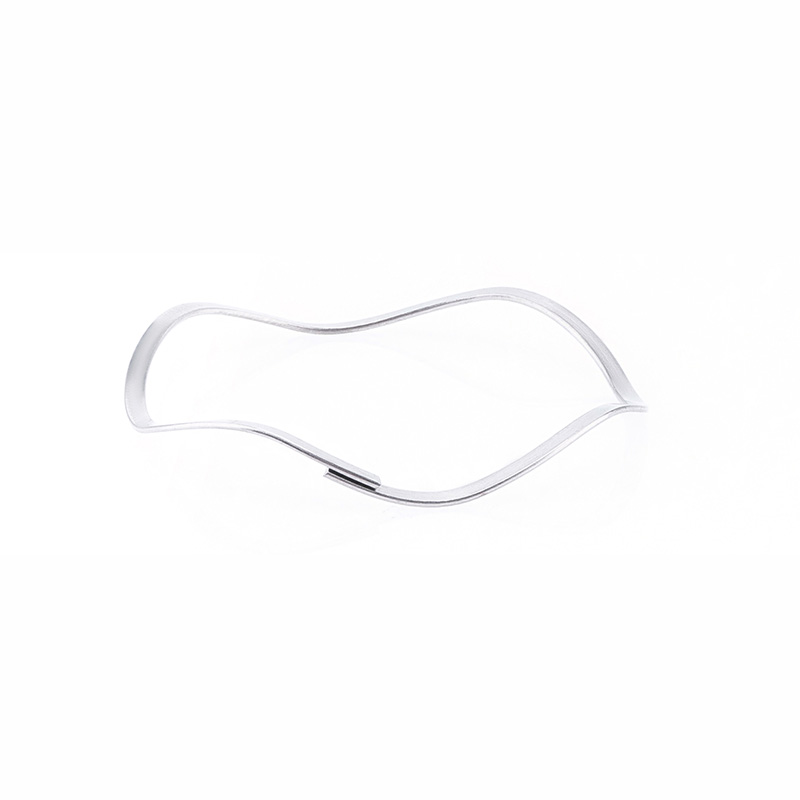
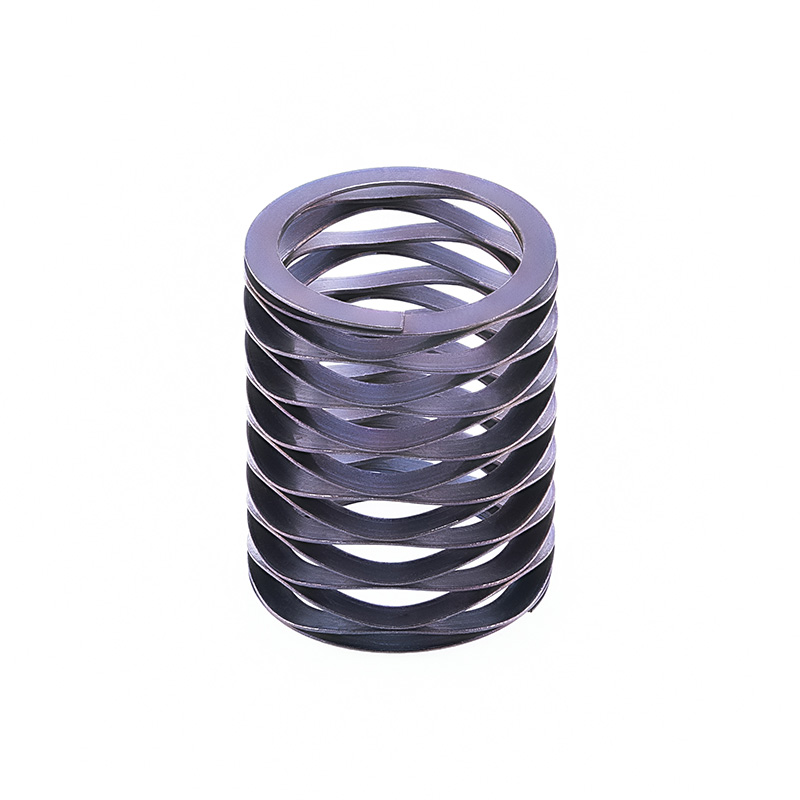
Wave springs, also known as flat springs or S springs, are a type of mechanical spring. It is shaped like a wave and is made of flat spring bands that are joined together to form a wave.
Wave springs are generally made of steel and have good elasticity and durability. Due to its compact structure, it can provide more uniform support, so that the seat can distribute body weight evenly, reduce pressure when concentrated at a certain point, and improve sitting comfort.
Wave springs usually consist of several concentric rings, each with several wave-shaped bulges. These bulges are arranged in a spiral shape, and there is a protruding “tooth” between the two adjacent bulges.
Compared with traditional compression springs, wave springs have the characteristics of being more customizable. Since its structure is complex and requires precision processing, it can be accurately designed and produced according to customer needs.
At the same time, since its internal space utilization rate is higher and each ring has multiple contact points, it can withstand greater loads and have better stability.
In addition to the above advantages, wave springs also have the characteristics of being small, lightweight, and long-lasting. Due to its higher internal space utilization rate and the use of advanced materials and processing technology, it can achieve a wider range of displacement and deformation at the same size and also has a longer service life.
Applications of wave springs
Due to their excellent performance and flexible design, wave springs are widely used in chassis systems (such as shock absorbers), engine systems (such as valve grabs), and transmission systems (such as clutches) in the automotive industry.
At the same time, wave springs are also widely used in vibration cancellers and various shock absorbers in the field of mechanical equipment. In the field of electronic products, wave springs are widely used in mobile hard disk read/write heads and mobile phone camera modules.

How are wave springs made?
- Selection of raw materials: The raw material for manufacturing wave springs is usually high-strength steel wire. The diameter and hardness of the steel wire may vary depending on the manufacturer and product type.
- Wire forming: The steel wire is fed into the machine, and through the molding process, it takes a wavy shape. This usually involves a series of rollers and dies to give the wire the desired shape.
- Bending and connecting: The formed wavy wire needs to go through bending and connecting steps to ensure the stability of the overall structure. These steps may include connecting one section of wavy wire to another to form a long strip.
- Heat treatment: Wavy wire may require heat treatment to increase its hardness and strength. This involves exposing the wire to a high-temperature environment and then cooling it quickly.
- Surface treatment: To prevent corrosion and improve durability, wavy wire may be treated with some surface treatment, such as galvanizing or painting.
- Finished product manufacturing: The processed wavy wire is sent to the manufacturing line and assembled with other components into the final wave spring product.
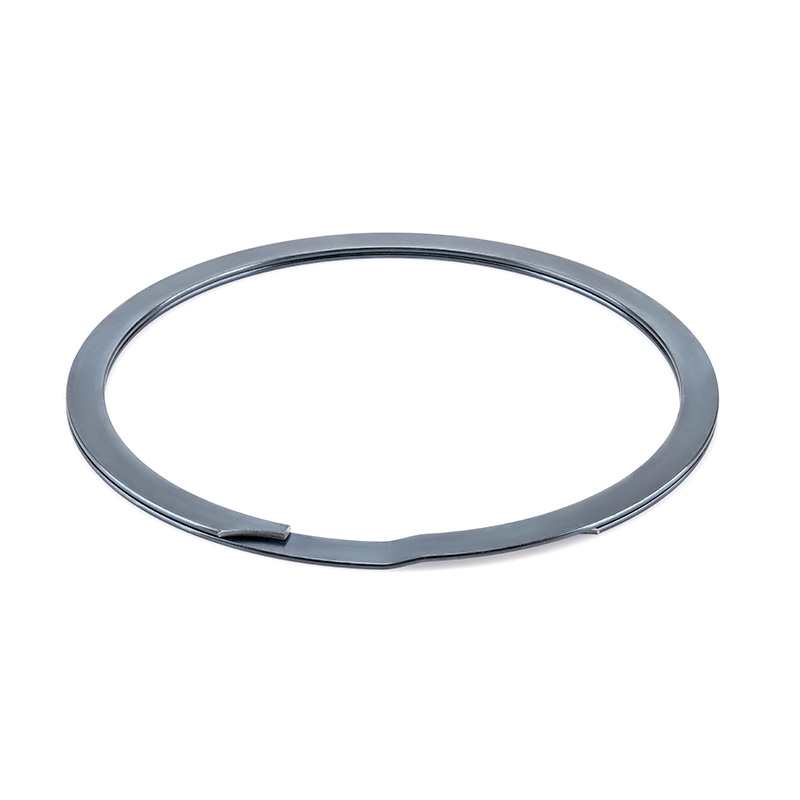
What is a wave spring washer?
Wave spring washers are flexible and versatile mechanical elements that, through their special construction and material selection, provide reliable elastic support and shock absorption solutions for various applications.
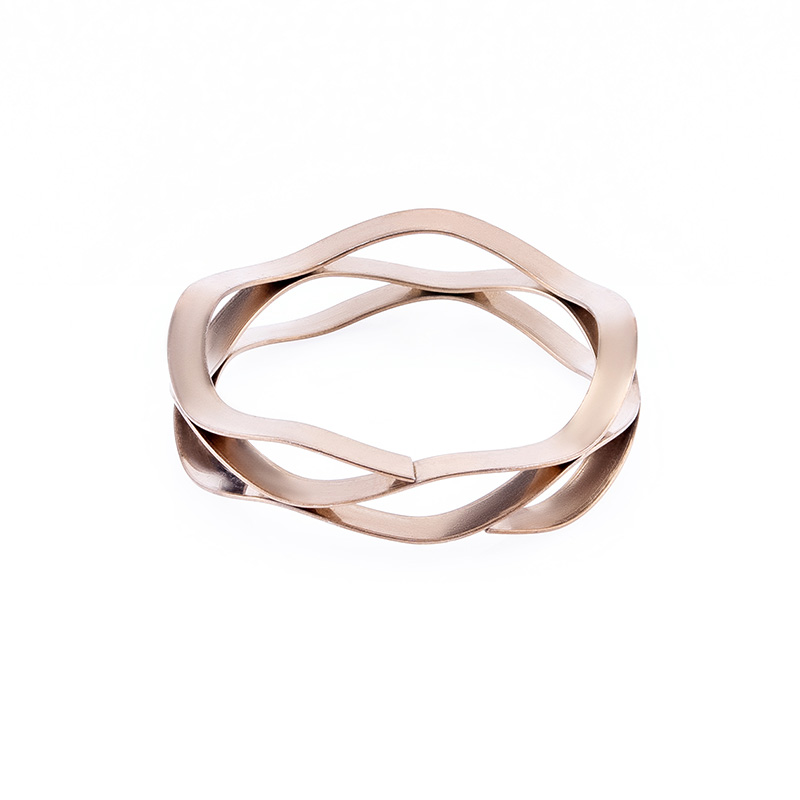
- Shape and structure: Wave spring washers are characterized by their wave-like structure, like a series of intersecting waves. This wavy shape allows the gasket to elastically deform when subjected to compression or tensile forces. The outer diameter, inner diameter, and peak and valley design of the gasket can all vary according to specific application requirements.
- Material selection: Wave spring washers are usually made of highly elastic metal materials, such as spring steel (spring steel) or stainless steel. These materials are elastic enough to quickly return to their original state after stress.
- Principle of action: When the wave spring gasket is pressurized, the wave structure is squeezed, causing the distance between the peak and trough to decrease. At this point, the gasket is elastically deformed to absorb stress. Conversely, when the gasket is subjected to tensile forces, the wave structure stretches, increasing the distance between the peak and trough. This design allows the gasket to provide elastic support in different directions and stresses.
- Application areas: Wave spring gaskets are widely used in mechanical systems, automobile suspension systems, electronic equipment, instruments, valves, and pipeline connections. They are commonly used for shock absorption, cushioning, spring support, load adjustment, etc., to improve system performance and longevity.
- Advantages: Compared to ordinary flat springs or round springs, the wave structure of wave spring gaskets provides a larger surface area and enhances their elastic deformation ability. This allows them to provide better shock absorption and support in limited space.
How to pick the spring rate for a wave spring?
The spring rate of a wave spring is an important parameter that indicates the recovery force generated under unit deformation. Choosing the right spring rate is critical to ensuring that wave springs provide the required support and shock absorption in specific applications.
- Application requirements: Different applications have different requirements for the spring rate of wave springs. For example, if wave springs are used to support heavy loads, you may need to select a higher spring rate to provide sufficient support. Conversely, if you need to provide better shock absorption under light loads, you can choose a lower spring rate.
- System stiffness: The spring rate of a wave spring directly affects the stiffness of the system. Higher spring rates usually correspond to higher stiffness, while lower spring rates correspond to lower stiffness. When selecting the spring rate, it is necessary to consider the stiffness requirements of the entire system to ensure that the wave spring can work in harmony with the system.
- Load and deformation range: Load and deformation range are two other key factors to consider when selecting a spring rate. Higher loads usually require a higher spring rate to provide sufficient support. At the same time, if the wave spring experiences large deformation in the application, it is also necessary to select the corresponding spring rate to ensure that the required support can be provided within the deformation range.
- Environmental conditions: Considering that wave springs may be used in various environmental conditions, such as high temperature, low temperature, humidity, etc., the temperature and environmental adaptability of the material should be considered when selecting the spring rate.
- Performance testing: Ultimately, performance testing may be necessary to determine the most appropriate spring rate. By measuring the performance of wave springs in actual applications, it is possible to verify whether they meet the requirements under specific conditions.
 English
  Chinese
  Dutch
Dutch  French
  German
  Italian
  Japanese
  Korean
  Portuguese
  Russian
  Spanish