
Introduction
When designing compact, high-performance machinery, choosing the right retaining ring can make a significant difference. A spiral retaining ring offers several clear advantages over the traditional circlip (snap ring).
Coiled from flat wire, spiral retaining rings eliminate protruding ears, provide a true 360° continuous retaining surface for even load distribution, and generate zero material scrap. They also allow easy customization without expensive new tooling.
While circlips remain a reliable choice for low-stress, frequently disassembled applications, their limitations become obvious in modern compact, high-vibration designs. Leading manufacturers like Rotor Clip and Smalley have long highlighted these benefits, and engineers across automotive, aerospace, medical, and industrial sectors continue to switch to spiral retaining rings for better performance and lower total cost.
What Exactly Is a Spiral Retaining Ring?
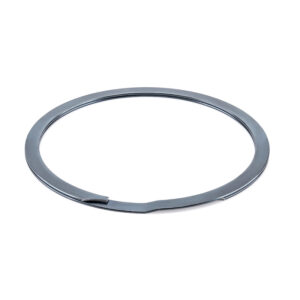
The manufacturing process is the key to understanding why spiral retaining rings perform so well. Unlike stamped rings, a spiral retaining ring is precision-coiled from flat wire — similar to a keychain but made from high-performance spring steel, stainless steel, or other alloys.
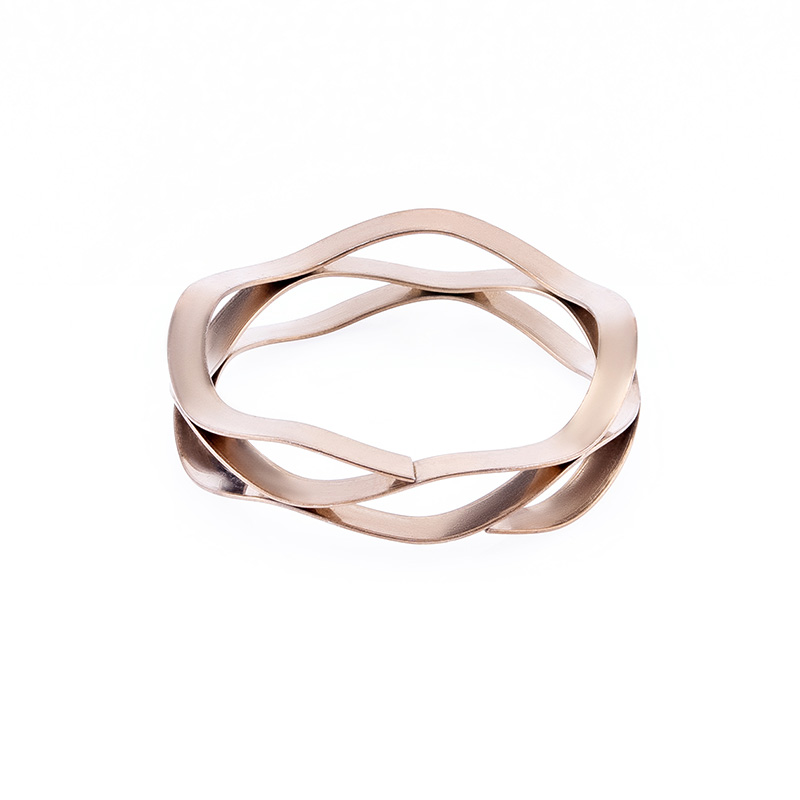
This coiling process creates a uniform rectangular cross-section with no ears, lugs, or stamped protrusions. In multi-turn designs (such as the popular 2-turn version), it delivers full 360° continuous contact with the groove, providing even load distribution around the entire circumference. There are no gaps at the ends.
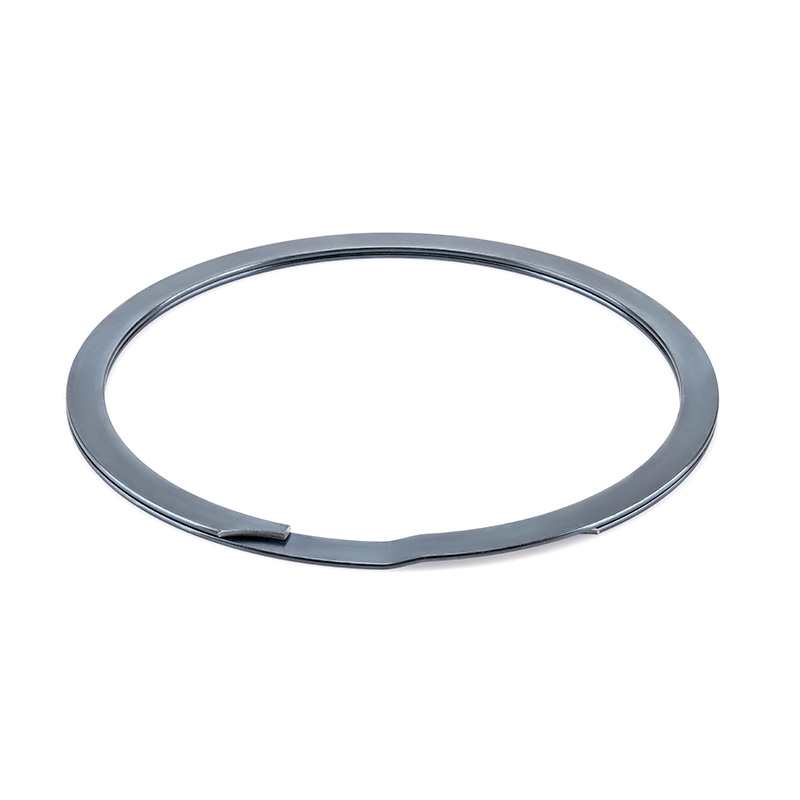
Our 2-Turn Internal Spiral Retaining Ring, for example, is made from durable 65Mn spring steel, carbon steel, or stainless steel. It generates zero material scrap and requires no new tooling for custom sizes. The result is a clean, flush fit that saves radial space and offers a sleek appearance in both internal and external applications.
Quick Definition: A spiral retaining ring is a continuous coil of flat wire that provides uniform radial elasticity with no protruding ears or gaps.
What Is a Traditional Circlip?
A traditional circlip (also called a snap ring or stamped retaining ring) is manufactured by stamping from a flat sheet of spring steel or stainless steel. This process naturally creates two ears (lugs) with holes for circlip pliers, along with a tapered cross-section and a visible gap between the ends.
While stamping allows for fast production, it also generates significant material waste and requires expensive new dies for any custom size. The main advantage of a circlip is quick installation and removal using standard snap-ring pliers.
Feature-by-Feature: Spiral Retaining Ring vs Circlip
Putting the two side by side makes the trade-offs much clearer.
| Feature | Spiral Retaining Ring | Traditional Circlip (Snap Ring) |
|---|---|---|
| Manufacturing method | Coiled from flat wire | Stamped from sheet steel |
| Cross-section | Uniform rectangular (constant section) | Tapered (constant or variable section) |
| Assembly ears/lugs | None | Two large ears with holes for pliers |
| Retaining surface | 360° continuous on multi-turn designs | Partially interrupted by a gap and ears |
| Gap between ends | No gap (fully closed) | Significant gap in the free state |
| Radial space required | Minimal — no ears interfere | Large ears protrude |
| Customisation cost | No new tooling required | Requires a new stamping die |
| Material scrap | Zero scrap | Significant |
| Installation tools | Screwdriver or simple pick | Circlip pliers (two holes) |
| Ease of removal | Good (requires removal notch) | Very easy (pliers) |
| Ideal for high-speed rotation | Yes — balanced | Less ideal — ears create imbalance |
| Aesthetic appearance | Clean, flush | Protrusions visible |
The Four Core Advantages of a Spiral Retaining Ring
1. No Ears, No Interference — The Space-Saving Advantage
The most obvious difference between a spiral retaining ring and a circlip is the complete absence of ears.
On a traditional circlip, the two large ear-like protrusions with holes for snap-ring pliers stick out radially. In compact assemblies, these ears often interfere with nearby components. They force engineers to increase housing diameter or add special relief grooves, adding cost and complexity.
With a spiral retaining ring, there are no ears at all. The entire ring sits flush within the groove, and mating components need no extra clearance.
This space-saving benefit is especially valuable in transmissions, actuators, valve assemblies, and small electronics. For many design engineers facing tight packaging constraints, this advantage alone is reason enough to switch.
2. 360° Continuous Retaining Surface for Better Load Distribution
A multi-turn spiral retaining ring provides a full 360° continuous retaining surface.
Because the ring is coiled in multiple revolutions, it maintains contact with the groove floor around its entire circumference. There are no gaps at the ends and no ears to interrupt the supporting surface. The result is even load distribution around the shaft or inside the housing.
By contrast, a traditional circlip has a large gap between its ends, and the ears create additional interruptions. Under axial load, the force concentrates at just a few points. This uneven distribution can lead to localized wear, groove deformation, and eventual failure — especially in high-vibration or high-thrust applications.
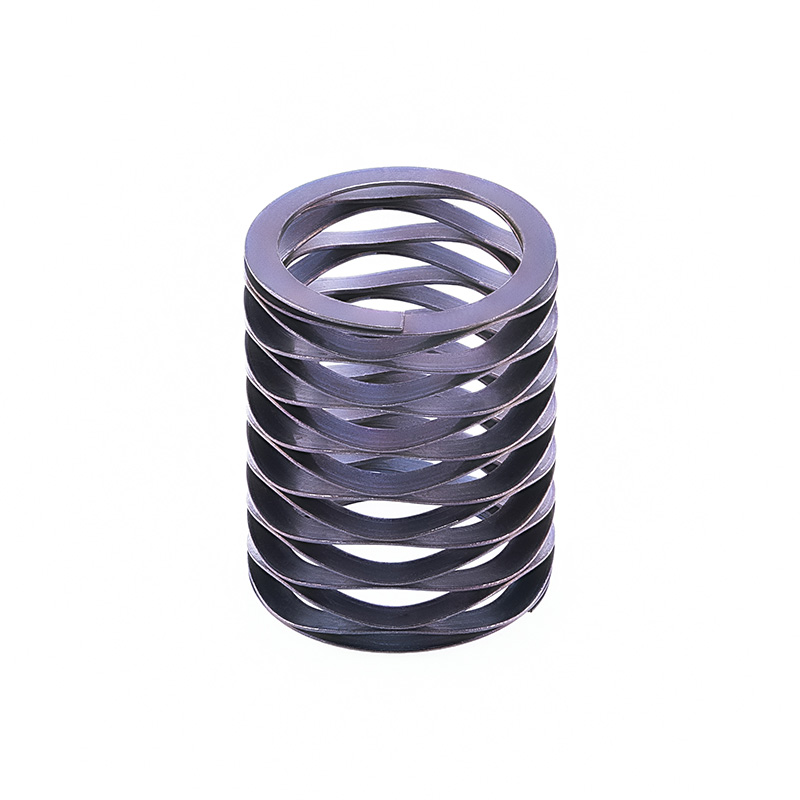
The multi-turn design also spreads spring force across several coils, helping the ring grip the groove more securely and resist “walking out.”
3. Coiling vs Stamping: Zero Scrap, Zero Tooling, Lower Cost for Exotic Alloys
The manufacturing method creates major differences in cost and flexibility.
Spiral retaining rings are coiled from flat wire, producing virtually zero material scrap. This is particularly advantageous when using expensive materials like 316 stainless steel, Inconel, Elgiloy, or beryllium copper.
Stamping circlips from sheet metal, however, generates significant waste and requires new dies for any custom size. With spiral rings, custom diameters, wire thicknesses, and number of turns can be produced quickly without new tooling charges. This makes them ideal for prototypes, low-to-medium volume runs, and special requirements.
4. High-Speed Operation: Why Ears and Imbalance Matter
For rotating shafts, the ears on a circlip create an out-of-balance mass.
At low speeds, this may not matter. But as rotational speed increases, centrifugal force on the ears can cause vibration, noise, and premature bearing wear. In extreme cases, the ears may even deform or fracture at high RPM.
A spiral retaining ring has no ears, so its mass is uniformly distributed around the circumference — especially in multi-turn designs. This balanced construction performs much better at high speeds.
Rule of thumb: If your shaft rotates faster than about 5,000 RPM, a spiral retaining ring offers a significant advantage. Automotive transmission designers, spindle manufacturers, and aerospace engineers all recognize this benefit.
Application Scenarios — Where Each Ring Excels
| Application Type | Preferred Fastener | Why |
|---|---|---|
| Automotive transmission (high RPM) | Spiral retaining ring | No imbalance, 360° load distribution |
| Aerospace actuator (vibration, space tight) | Spiral retaining ring | No ear interference, reliable under vibration |
| Medical device (miniature, clean assembly) | Spiral retaining ring | Flush profile, no protruding lugs |
| Heavy machinery frequent service (e.g., pump access) | Circlip | Quick removal with pliers |
| High-volume consumer product (large radial clearance) | Circlip | Lower per-unit cost at scale |
| Custom prototype / low-volume production | Spiral retaining ring | No tooling charges, fast turnaround |
Installation and Removal Comparison — A Quick Summary
-
Spiral retaining ring: Insert a screwdriver or pick into the removal notch, lift the free end, then spiral the ring out of the groove. No special pliers required. Slightly slower but still tool-friendly.
-
Circlip: Use standard snap-ring pliers to compress or expand the ring. Very fast removal, but requires the pliers and access to the ear holes.
Installation Tip: For a spiral retaining ring, always start the installation by pressing the ring into the groove at the removal notch, then work around the circumference. The ring will naturally coil into place.
Material Selection — 65Mn Spring Steel as a Case Study
We offer the 2-turn internal spiral retaining ring in 65Mn spring steel, a widely used carbon spring steel known for high strength, high hardness, good elasticity, and excellent hardenability. For demanding applications such as automotive steering column inner casings, the 65Mn spiral retaining ring prevents the bearing from falling off and stabilises the rotation of the inner casing within the outer casing.
In practical terms, 65Mn retains its elastic properties through millions of cycles, even under significant radial and axial loads. The heat treatment process for 65Mn requires oil quenching (water quenching would cause cracking), followed by medium-temperature tempering. The combination of the 65Mn material and the spiral coiling process yields a retaining ring that is tough, fatigue-resistant, and less prone to stress cracking at the ends.
For engineers designing equipment that must survive vibration, thermal cycling, and long-term wear, the material and process combine to deliver a fastener that genuinely outlasts the machine it serves. Whether you need a spiral retaining ring in 65Mn, stainless, or an exotic alloy, the coiling process adapts easily.
Market Trends and Industry Adoption
The global retaining ring market was valued at approximately $2.8 billion in 2025 and is projected to reach $4.2 billion by 2034, growing at a compound annual rate of about 5.1%. A separate analysis puts the global retaining ring market at $2.50 billion in 2025, with forecasts reaching $3.62 billion by 2032 at a 5.44% CAGR. Within this growing market, spiral retaining rings are gaining share because of their design flexibility, low-cost customisation, and superior performance in space-constrained and high-reliability applications.
Automotive transmissions increasingly incorporate spiral rings for gear and bearing retention. Aerospace actuators use them in landing gear and flight control systems, where reliability and weight savings are critical. Heavy machinery, mining equipment, agricultural implements, and even medical devices have also shifted towards spiral designs, particularly where high vibration or tight radial clearances exclude traditional circlips.
When Does a Circlip Remain the Better Choice?
A spiral retaining ring is not a universal replacement. Several scenarios still favour the traditional circlip.
-
Frequent disassembly — Any application that requires daily or weekly removal will benefit from the snap-ring pliers method. The extra second to spiral out a spiral ring becomes annoying when repeated often.
-
Abundant radial clearance — If the assembly already has plenty of space and no risk of ear interference, the circlip’s lower initial unit cost may be attractive. For very high volume production runs, the difference in per-unit price still favours stamped circlips.
-
Removal notch sensitivity — The removal notch for spiral rings creates a very small gap at one point on the retaining surface. In most applications, that gap is irrelevant, but in extreme cases where a truly seamless 360° surface is required, a three-turn or four-turn spiral retaining ring reduces the effect to negligible levels.
-
Legacy design and tooling — If the design team has used circlips for decades and the application is not demanding, there is no compelling reason to change.
Why Professional Engineers Are Switching
Professional design engineers are not influenced by marketing hype; they are influenced by data, test results, and field experience. And the data for spiral retaining rings has become difficult to ignore.
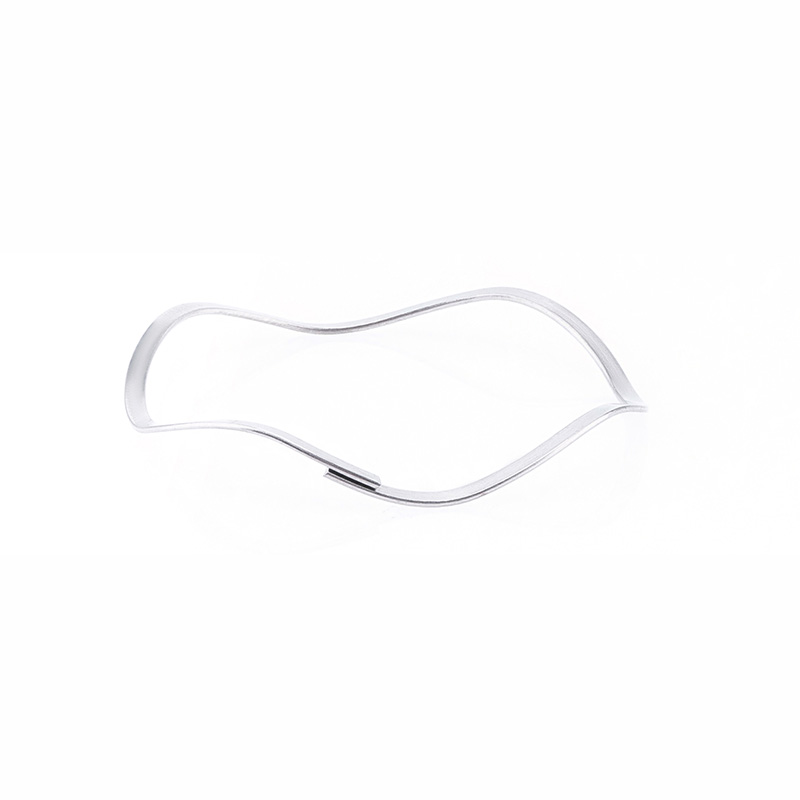
In one documented heavy equipment application, a wave-spiral retaining ring replaced a stamped circlip that had repeatedly failed under high vibration. The spiral ring’s 360° retaining surface and multi-turn design distributed the axial load evenly, eliminated the ear interference that had damaged a mating housing, and tripled the service life of the assembly.
In a medical device application, a very small stainless steel spiral retaining ring replaced a circlip that was simply too large for the confined space. The lug-free profile of the spiral ring allowed the entire design to be miniaturised, reducing weight and improving patient comfort.
Engineers who switch report fewer field failures, lower warranty claims, and more compact product designs. For any new product development, starting with a spiral retaining ring as the default fastener is a smart move.
Conclusion
A spiral retaining ring outperforms a traditional circlip by offering 360° continuous load distribution, no interfering ears, zero material scrap, easy customization without tooling costs, and superior balance at high speeds.
For demanding applications in automotive, aerospace, heavy machinery, and medical devices, spiral retaining rings deliver better reliability, space efficiency, and lower long-term costs. While circlips remain suitable for low-stress, high-volume, or frequently disassembled applications, spiral rings are the smarter choice for most modern compact designs.
Ready to Upgrade Your Assemblies?
Please feel free to contact us anytime with any questions or needs.
 English
  Chinese
  Dutch
Dutch  French
  German
  Italian
  Japanese
  Korean
  Portuguese
  Russian
  Spanish