
Wave spring washers are compact and reliable fastener accessories, widely used in many industries such as machinery, electrical, aviation, and automobiles. This article will systematically explain the standards, working principles, and uses of wave spring washers, which can help you have a more comprehensive understanding of wave spring washers.
Related hot searches:Spiral Retaining Ring、Constant Section Retaining Ring
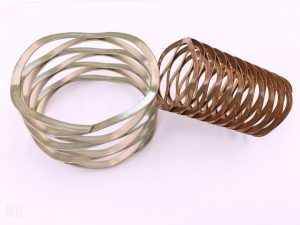
What is a wave spring washer?
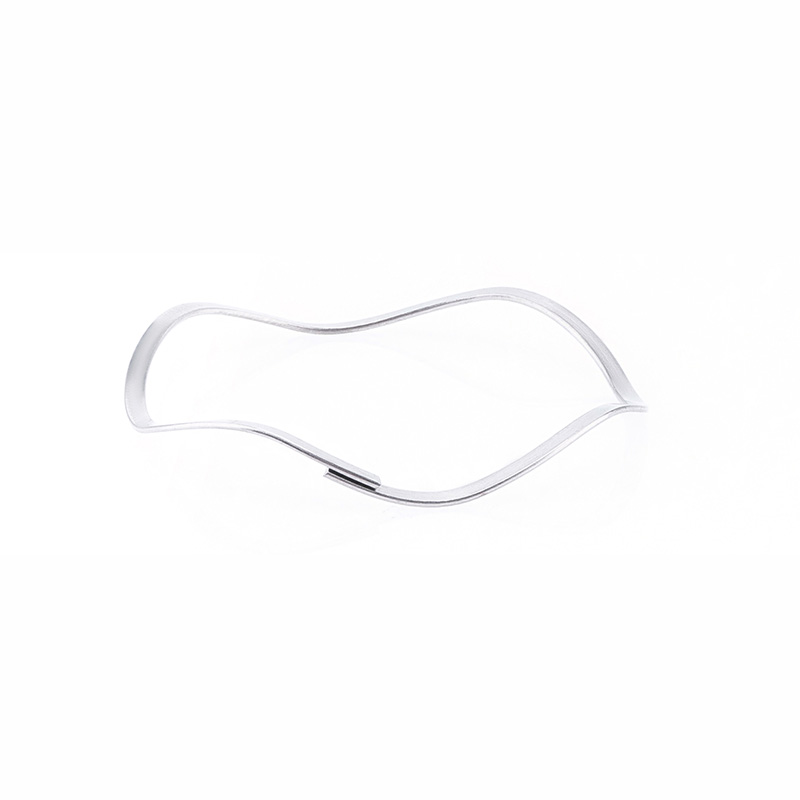
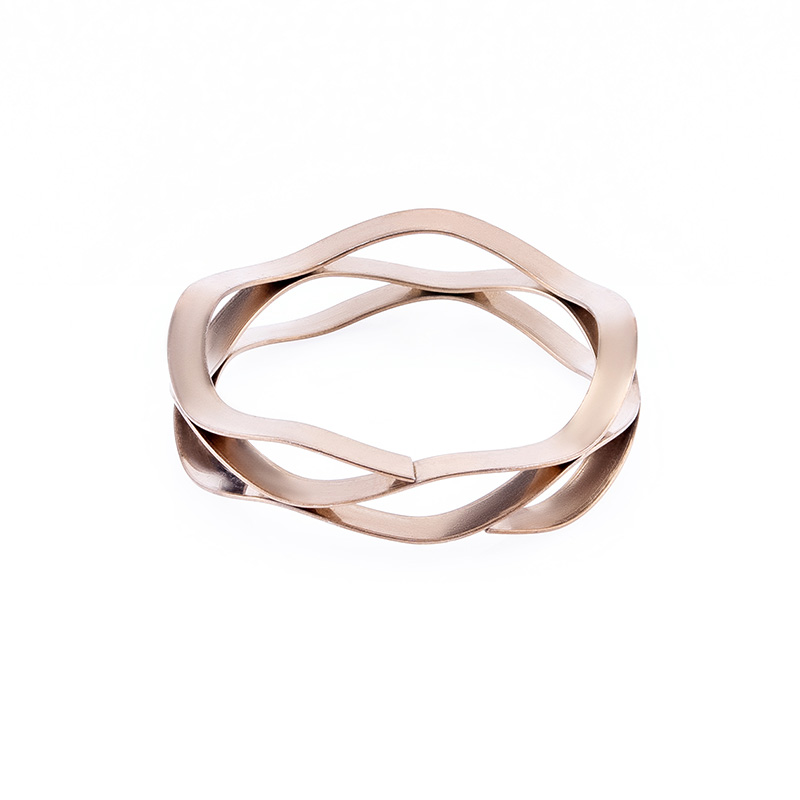
Wave spring washers are metal ring washers with a wavy shape, usually made of carbon steel, stainless steel or alloy steel. Its structure has multiple continuous peaks and troughs, which provide axial preload through its elastic deformation to prevent threaded connections from loosening.
Main features:
Good elasticity, can provide stable elastic force in a small space
Absorb vibration and impact, protect connectors
Can be used to withstand trace axial force scenarios
Standards for wave spring washers
In order to ensure uniform size, tolerance and performance, different countries and regions have formulated corresponding standards for wave spring washers:
| Standard Code | Region | Description |
| DIN 137-A/B | Germany | Most common German standard; Type A (round wave), Type B (sharp wave) |
| GB/T 859 | China | Chinese standard with similar dimensions to DIN |
| JIS B 1252 | Japan | Japanese standard used in precision instruments |
| ASME B18.21.3 | United States | US general washer specification covering wave, disc, and finger types |
Introduction to wave spring washer dimensions
The dimensions of wave washers include **inner diameter (ID), outer diameter (OD), thickness (T) and wave height (H), etc. Common specifications are as follows:
| Nominal Diameter (mm) | Inner Diameter (mm) | Outer Diameter (mm) | Thickness (mm) | Number of Waves |
| M3 | 3.2 | 6.5 | 0.2 | 3 |
| M5 | 5.3 | 10.0 | 0.3 | 3–4 |
| M10 | 10.5 | 20.0 | 0.5 | 4–5 |
| M16 | 17.0 | 30.0 | 0.8 | 4–6 |
The size selection should be determined based on the bolt diameter and the required axial force. Too large or too small will affect the fastening performance.
How do wave spring washers work?
Wave washers use their wave structure to produce elastic deformation when compressed, generating reaction force, thereby forming a continuous preload in the threaded connection to prevent the nut or bolt from loosening due to vibration or load changes.
Its main working mechanisms include:
Axial elastic compensation: to cope with changes in thread gap caused by factors such as thermal expansion and contraction.
Damping and vibration reduction: absorb mechanical vibration and impact force, and protect joint parts.
Anti-loosening effect: maintain connection stability and reduce damage or failure caused by loosening.
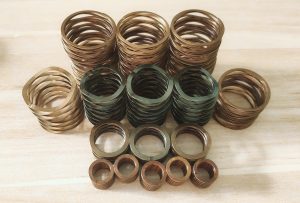
Typical uses of wave spring washers
Wave spring washers are widely used in the following occasions due to their thin structure and stable elasticity:
| Application Area | Typical Use Case |
| Electric Motors | Axial load control between stator and rotor |
| Aerospace | Tight axial space compensation in compact assemblies |
| Precision Instruments | Secure fastening without affecting calibration |
| Consumer Electronics | Anti-loosening and vibration damping in screws |
| Medical Devices | Secure micro-components with stable preload |
When should wave spring washers be used?
It is recommended to use wave spring washers in the following situations:
Limited space: When the installation space is small and conventional spring structures cannot be used
Micro-axial preload: It is necessary to provide a slight but continuous elastic force
High vibration environment: Used for shock absorption and loosening prevention to extend the life of the equipment
High requirements for removability: Compared with other locking methods, wave washers are easy to disassemble
Differences between wave spring washers and other spring washers
Wave washers are a type of spring washers. Compared with other common washers such as disc washers, finger washers, and spiral washers, they have the following differences:
| Feature | Wave Spring Washer | Disc Spring Washer | Split Lock Washer |
| Shape | Multi-peak wave curves | Conical single disc | Helical with split end |
| Installation Space | Very compact | Moderate | Very compact |
| Load Behavior | Linear, light-to-medium load | Nonlinear, heavy load | Light-to-moderate load |
| Anti-loosening Effect | Moderate to strong | Good support, not lock-tight | Good for basic anti-loosening |
| Best Use Case | Precise, micro-load assembly | High-force compression | General vibration resistance |
How to choose a wave spring washer
To choose a suitable wave spring washer, you need to consider a variety of factors such as the installation environment, force requirements, and matching bolts. The following are practical selection suggestions:
1.Choose materials according to application scenarios
| Material | Key Features | Recommended Applications |
| Carbon Steel | High elasticity, low cost, prone to rust | General machinery, dry environments |
| Stainless Steel 304 | Corrosion-resistant, heat-resistant, long lifespan | Food equipment, electronics, outdoor use |
| Stainless Steel 316 | Superior corrosion resistance, marine-grade | Chemical plants, marine, high-end use |
| Beryllium/Copper | Excellent conductivity, fatigue and wear resistant | Electrical connectors, signal devices |
Note: If used in a humid, high temperature or corrosive environment, 304 or 316 stainless steel should be used first.
2.Confirm load and elastic parameters
Axial load requirements: Select the corresponding wave height and thickness according to the preload of the bolt.
The number of waves affects elasticity: the more waves, the wider the deformation range, which is suitable for dynamic connection.
Working stroke range: avoid the gasket being completely flattened after installation, leaving a working margin.
3.Match the screw and aperture size
The inner diameter of the gasket must be larger than the diameter of the screw but close to it;
The outer diameter needs to cover the force-bearing surface;
The thickness and wave height need to adapt to the clearance and pressure requirements of the connector.
Installation and maintenance tips for wave spring washers
Correct installation and regular maintenance can extend the service life of the gasket and improve the reliability of the connector.
1.Installation tips
Keep the installation surface clean and flat
Clean the oil and iron filings on the contact surface of the bolt and both sides of the gasket to ensure that no impurities are caught.
Install in the correct direction
The wave washer does not distinguish between the front and back, but it is recommended that the wave crest direction is outward for uniform pressure.
Avoid excessive compression
The washer should not be completely flattened during installation, and some elastic travel should be retained.
Pre-tighten the bolts step by step
The symmetrical locking method is more conducive to uniform force on the washer and prevents edge extrusion damage.
Use torque tools
It is recommended to use a torque wrench in precision occasions to ensure consistent preload accuracy.
2.Maintenance and inspection points
| Task | Suggested Frequency | What to Inspect |
| Surface corrosion check | Every 6 months | Rust, discoloration, cracks |
| Elasticity testing | Every 12 months | Check rebound force, spring effectiveness |
| Fastening inspection | Quarterly | Loosening, axial clearance, washer alignment |
| Replacement cycle | Every 2–3 years | Especially in high-frequency vibration environments |
Note: Wave washers cannot be reused multiple times in high stress environments, as fatigue accumulation may lead to breakage.
The usage recommendations are summarized as follows:
Preferably used in assembly scenarios with limited space and the need to maintain axial elastic force;
Choose appropriate standards and materials (for example, 304 stainless steel can be used in corrosion-resistant environments);
Pay attention to matching bolt sizes to ensure that the washers will not be eccentric or fail;
Used in conjunction with other locking methods, the stability of the system can be further improved.
Conclusion
At present, wave spring washers are widely used. As an efficient, compact and elastic auxiliary component of connectors, they have become the main parts of various high-precision or space-constrained industrial occasions. Its stable preload and excellent shock absorption performance make it an irreplaceable type of washer in mechanical engineering and high-end manufacturing.
 English
  Chinese
  Dutch
Dutch  French
  German
  Italian
  Japanese
  Korean
  Portuguese
  Russian
  Spanish