
Introduction: Why Retaining Rings Matter?
A borgring is one of the most important components that are often disregarded in the mechanical assembly process. These bands serve as both shoulders and stops that hold parts in place in shafts, bores, or housing spaces, while also providing retention without necessitating extensive machining or complex fasteners. One authoritative manufacturer describes a retaining ring as being similar to an industrial fastener that binds together mating parts or assemblies.
With increasing pressure to perform, reduce the size, rotate at high speed, and have a manufacturing cost, it’s crucial to choose the correct type of retaining ring, method of installation, and materiaal. This article will discuss the following:
- What is the function of the ring, and how does it interact with the system?
- The primary types of retaining walls with their design, and benefits.
- How they function: what they store, how they are installed, and what loads they process
- Common applications (chemical, mechanical, aerospace, electronics, etc.)
- Key specifications and selection criteria (geometric design, load, shaft versus bore, materials)
- Installation, removal, maintenance methods, and failure scenarios
- Of emerging technologies ( custom bands, superior materials, automation)
By the end of this article, you should have a basic understanding of how to utilize retaining rings to enhance the reliability of structures, reduce the cost of installation, and improve the performance of structures.
What is a Retaining Ring? Definition and Fundamental Operation
-
Definitie
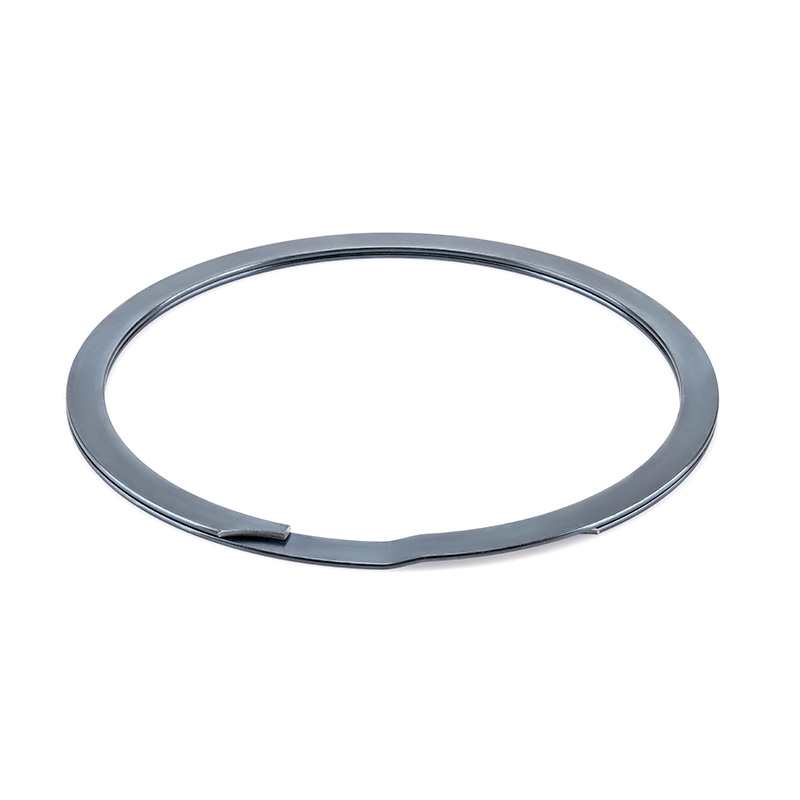
A retaining ring, also called a Snap ring of Circlip, is a fastener that resembles a ring or segment of circular motion that is inserted into a groove on a shaft or within a housing/bore. Once built, it offers a solid shoulder that prevents the adjacent component (bearing, gear, pulley, spacer) from moving in the ring.
-
How They Operate
The primary mechanism is simple to understand:
A valley is formed into a shaft or housing.
The ring that retains the items is enlarged (for an internal ring) or decreased (for an external ring) in order to fit the channel.
Once seated, the ring begins to exert a radial force (spring tension) against the grooves’ walls, which will hold the component in place axially.
Often, the ring functions as a removable shoulder that can be used to assemble or disassemble the shaft or housing without permanently changing the design.
-
Why choose retaining rings over traditional fasteners?
Several powerful reasons:
Efficiency: The use of dedicated shoulder blades or nuts may increase costs and weight, while a retaining ring is simpler.
Space savings: This is especially beneficial for compact setups, as the low profile of the ring’s circumference is beneficial.
Quick installation/removal: Many types of retaining rings have a simple design that allows for easier installation and removal (primarily spiral or push-on types).
Variety of materials: able to operate in harsh environments (such as high temperature, high speed, and corrosion).
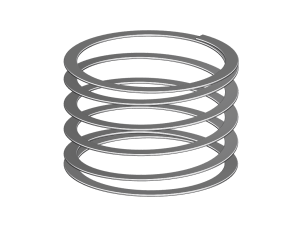
Types of Retaining Rings: Construction, Characteristics, and Applications
Multiple varieties of retaining rings exist, each designed to be installed in a specific manner, with a specific direction of load, in a specific manner and at a specific cost. Below are the major classes of producten, along with their attributes and typical uses.
-
Tapered Section (Axially Supported)
These are perhaps the most classic of the “Circlip” or “C-Clip” variety. Their cross-section is sloped—wider at the center, narrowing towards the ends/lugs, and they have lugs (holes) for installation or removal.
Key characteristics:
Installed axially into a recess that is internal to a hole (inner ring) or external to a hole (outer ring).
The taper promotes solid seating and significant resistance to pressure.
Variations include flapped, beveled, and bowed versions (to compensate for tolerance, preload, and end play, these are also available).
Use cases: Bearings, gear boxes, pulleys, and transmissions that have a significant amount of axial loading.
-
Constant Section / Snap Rings
Constant section rings have a uniform cross section (same thickness/width across the entire ring) and typically make three-point contact with the groove instead of having full peripheral contact. They may be decorated with stamps or have flat/round wire as their material.
Key characteristics:
Lower costs of material and reduced manufacturing complexity (stamped from a sheet of metal).
Ideal for locations with limited space for radial growth and a moderate requirement for the shoulder.
Contact at discrete points instead of full surface contact leads to a lower support than other ring types.
Frequent in consumer products, light-industry components with average axial pressure.
-
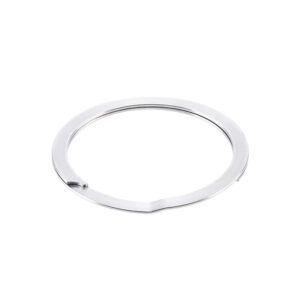
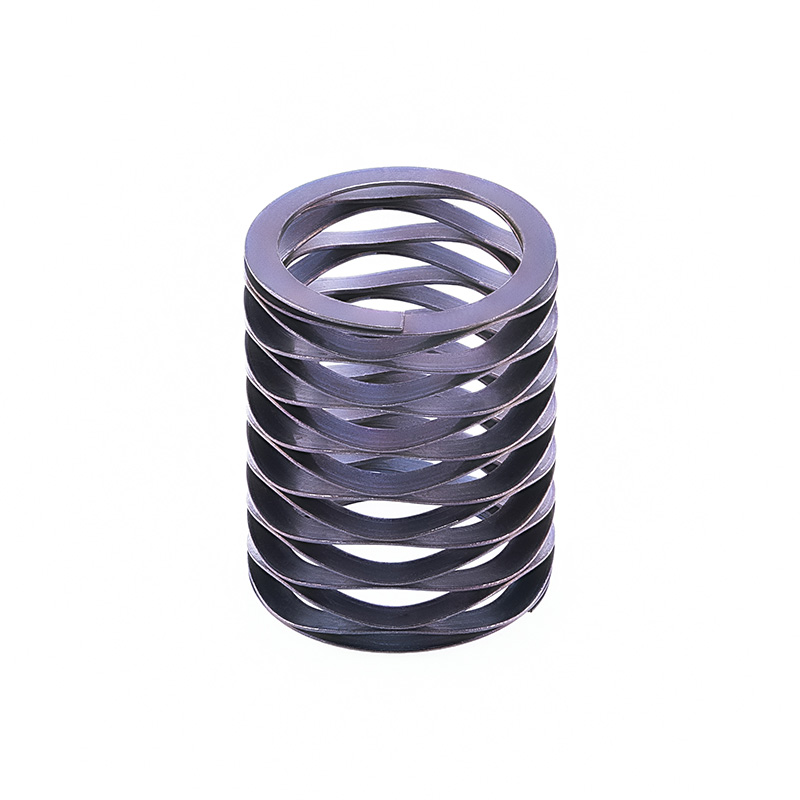
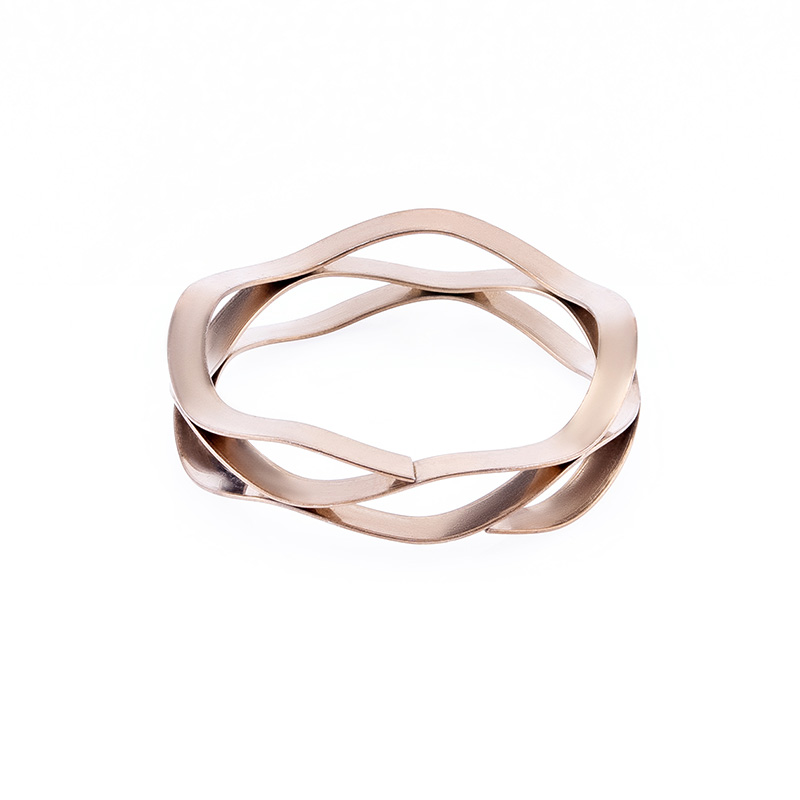
Spiral Packing Rings
Spiral rings are formed by winding a flat wire into a spiral configuration. This configuration allows for a full 360 degrees of contact with the groove (in contrast, SnapRings have a limited number of degrees).
Key attributes:
Uniform load with a radial pattern, effective contact surface, and good for high-speed, high-precision assemblies.
Easy to install: handled or utilized by a simple tool; removal is via a notch that is removed.
Ideal for applications that require the least amount of radial travel, have a low profile, or have special properties like stainless steel or foreign alloys.
Utilized in aviation, medical equipment, and high-yield manufacturing assemblies.
-
Self-closing / push-on bands
These varieties don’t require a machined opening (or limited opening) and are often intended to attach to a shaft or have a bore in which to insert (teeth, tabs).
Attributes:
More simple assembling: it eliminates the need for grooves, and faster assembling.
Usually used for smaller loads or static applications.
Less effective in high-volume, dynamic scenarios, unless specifically designed.
Small appliances, electronics for consumers, and plastic shafts/pins are all common.
-
Installed Rings and Other Specialty Styling
Radially placed rings (e.g., E-clips, C-rings) are attached to a shaft from the side instead of being installed axially. They frequently serve as part of compact assemblies that have limited access to the axial direction.
How Retaining Rings Work: Mechanics and Key Considerations
-
Groove geometry and the function of the Shoulder.
The valley has a crucial role. The ring that retains the component is inserted into the channel, and the adjacent component (e.g., bearing, spacer) is placed against the ring, which functions as the shoulder. For maximum effectiveness:
The valley must be dug to correct the diameter, width, depth, and quality.
The ring must have the necessary amount of radial pressure (spring bias) to remain seated when loaded.
The shoulder’s surface (the face that retains the part) must be flat and properly situated.
If any of these are incorrect, the ring may become deformed, it may ride out of the groove, or it may allow some movement; this will lead to failure.
-
Load Types and Retention Mechanisms
Retaining bands typically have the capacity to handle axial forces: thrust inwards or outwards along the shaft or bore axis. However, other factors are involved:
Dynamic loads: These loads have a high frequency of vibration or cyclicity, which necessitates the use of fatigue-resistant rings (spiral rings or heavy-duty Snap Rings).
Speed and load: In circular rotors, the ring must continue to contact under the influence of centrifugal, compressive forces, and the lack of clearance in the radial direction.
Preload and end play: Bowed bands or unique configurations may be intended to preload the assembly in order to reduce the likelihood of loose fit or vibrations.
-
Materials, surface treatments, and environmental variables
The selection of material is crucial: corrosion-resistant rings must have stress tolerance, temperature resistance, and wear. Common substances: carbon steel, spring steel, stainless steel (302, 316), berylliumkoper, and other exotic metals.
The surface treatments (zinc plating, black oxide, cadmium, phosphate) enhance the corrosion resistance and durability of the material. Environmental factors: rapid speed, high temperature, salt spray, and chemical exposure all affect choice.
-
Installation and removal considerations
The correct installation of the product is of paramount importance to its reliability. Many travel guides advocate for:
The proper use of retainer pliers or applicators.
Ensure the correct orientation (particularly important for external and internal circles).
Avoid injury to the grooves or bands during the installation.
Ensure the confirmation of the ring seats is accurate and doesn’t have an excessive amount of radial distortion.
Incorrect installation is frequently the cause of the ring’s failure (see the Wikipedia article on the orientation of circlips).
-
Common Failure Mechanisms
The ring will dislodge or roll out of the groove (often due to an overload, an incorrect size of the groove, or fatigue).
Ring failure due to fatigue (particularly when under cyclic/ vibration load).
Corrosion or material deterioration that causes the loss of springiness.
Groovewear or malformations that cause insufficient retention.
Visual flaws in assembly (e.g., misaligned ring that allows for axial movement).
Maintenance and inspection regimes must include audits of the ring’s seat, damage, misaligned clearance, and ring stability.
Typical Uses of Retaining Rings Across Industries
Rings that are retained appear in every mechanical department. Here is a look at the primary uses of the tool and why we chose it.
-
Automotive and Transportation
Utilized in conjunction with gear boxes, transmissions, wheel bearings, shafts, pulleys, drive systems, and steering columns. The need: high cycle consistency, compact packaging, and ease of access.
-
Ruimtevaart en defensie
High-performance spirals, custom compounds, minimal radial thickness, and high fatigue resistance are employed in the landing gear, actuators, turbines, and flight controls. Their extreme precision in holding position makes the choice of the ring important.
-
Industrial machinery and gear drives
Maintaining the rings for bearings, shafts, feed assemblies, and bearing cartridges in heavy machines, conveyors, wind turbines, and marine systems. Requirements: heavy payloads, long lifespan, corrosion resistance.
-
Mechanisms, Devices and Medical Information Systems
Small rings that are sized at around mm are used to hold components in place, for use in surgical instruments, bearings, and motor shafts. Size, diminutive, hygienic, and customizable room configurations, as well as material selections, are all important factors.
-
Consumer goods and appliances
Appliances (washers, mixers, turbines) have Snap Rings that are effective for a variety of purposes. The cost of material, the ease of assembly, and the serviceability of the product are all considered.
-
Other Alternative Uses
Hydraulic flanges employ segmented bands in high-pressure lines.
Mechanical connections in robots, wind-powered transmissions, and marine devices.
Specification and Selection Criteria for Retaining Rings
For those in charge of engineering or purchasing supplies, checking the following list is crucial:
-
Conditions of Use and Requirement of Load
The maximum amount of thrust that can be applied to the ring or shoulder (axially).
Direction of travel (shaft out of/into, housed component).
Dynamic/static environment, vibrations, speed.
Radial clearance, shaft rotation frequency, and side-load conditions.
-
Groove’s dimensions and clearance
The diameter of the groove (shaft or bore), as well as its width and depth, must correspond to the ring’s specifications.
The ring’s displacement is appropriate for the groove’s and part’s tolerance.
The clearance between the ring’s ends (space) must be considered when determining the load path.
-
Substance and Density/Environmental Resistance
Select material that is appropriate for the environment (corroding, high-temperature, or stainless steel is necessary).
The bottom of the bottle’s surface is designed to withstand wear and corrosion.
The fatigue life and dependability of cyclic loads.
-
The variety of Ring’s types (retention mode and installation)
For heavy use, compact arrangements: round or sloping section.
For more complex, less significant assemblies: consistent section or push-on.
For high-precision/low volume: custom design or micro-sized ring.
Consider the ease of installation and the required tools for removal (ease, tooling, service).
-
Serviceability & Maintenance
Rings that are subject to review: make sure the seat is intact, the ring is not damaged, and the groove is still present.
If maintenance is frequent, choose rings that can be taken apart and reattached easily without having to pay attention to critical deformation.
-
Standardization and Trackability
Use industry standards (e.g., ASME B18.27, DIN 471/472 for circlips) to assess the interchangeability of parts.
Ensure that the bands are traceable: the material, heat treatment, and final finish.
-
Price, Time, and Personalization
On-the-shelf standard bands are budget-friendly; custom bands are costly and have a lead time.
The cost of over-specification may be incurred in an unnecessary manner, and under-specification may lead to failure.
Installation, Maintenance & Best Practice Guidelines
-
Installation Directions
Clean slope and shaft/bead configuration.
Ensure the dimensions are correct and the tolerances are acceptable.
Employ proper pliers or applicators (particularly for temporary or customizable bands).
Expand or contract the ring to accommodate without causing extra stress.
Ensure the seats in the ring are fully occupied: for internal ringing, the flat side should be facing the retained part; for external ringing, the orientation of the ring should be considered. (see the orientation of circlips)
After installation, make sure the component is no longer vulnerable to rotation and ensure it is retained with a secure flange.
-
Service and Inspection
Examine for signs of fatigue or malformations (cracks, deformed shape).
Inspect the wearer’s groove for wear or distortion.
Ensure that retention is maintained when loaded and that the adjacent part has not shifted.
For assemblies with high-speed rotations, assess for balancing and run-out (the ring may affect the dynamic behavior).
-
Common Mistakes and Prevention of Failure.
A groove that is shallow or wide: causes the ring to move or slide.
Wrong orientation of the ring or the method of installation.
The overly expanding/contracting ring may lead to a loss of spring power or the development of fatigue cracks.
Incorrect composition or coating that causes corrosion or wear.
Ignoring the account for dynamic pressure, vibrations, or side effects.
-
Destruction & Replacement
Some bands (e.g., espiral) can be removed using a notch or a simple tool; other bands (e.g., push-on) are only used once.
When removing the ring, inspect the grooves and the ring before reusing it. Many manufacturers recommend that the ring should not be reused if it’s deformed.
For cleaning, make sure the correct type of ring (size, material, type) is used; other types of rings are not appropriate for cleaning.
Emerging Trends & Industry Evolution
-
Custom Ring-Solutions
Many manufacturers now provide custom ring configurations, materials (Inconel, Hastelloy, etc.), coatings, and reduced sizes.
-
Advances in material science and coatings
As machines become harsher (higher speed, higher temperature, corrosion, and lightweight compounds), the materials used to make the ring evolve as well. Highly resistant alloys that are nonmagnetic, specialized coatings (ceramic, DLC) are more frequent.
-
Automated Assembly and Installation Machines
With the increasing popularity of automated manufacturing, the use of robots and dedicated applicators to install retaining rings is increasing. The reliability of installation and the time needed to assemble are both increased. Rotor Clip mentioned that there would be dedicated tooling and engineering support for automation.
-
Predictive Maintenance and Condition Tracking
In critical assemblies (automotive engines, aerospace movers), the status of the retaining ring is increasingly assessed (via sensors that measure axial movement, vibrations, and clearance) to predict wear or failure.
-
Combination with Lightweight and Minisystemized Systems
As the number of assemblies diminishes (e.g., electric motors, drones, medical devices), the design of the retaining ring must be altered to support smaller installations (1 mm-10 mm in diameter) while still maintaining retention under dynamic conditions. Small tolerances, reduced pliers/applicators, and special alloys are part of this progression.
Summary & Key Takeaways
A retaining ring is a circular device that binds components to a shaft or bore, replacing more intricate shoulders or fasteners.
Several varieties exist: tapered sections (axial), constant sections that Snap, spiral sections, self-locking sections, and radially installed sections. Each has its benefits and typical uses.
Effective function is dependent on the correct geometry of the grooves, the material of the ring, the method of installation, and the match between the load and the condition.
Span’s use in automotive, aerospace, industrial machinery, electronics, and consumer goods.
The criteria for selection include weight, space, speed, materials, assembly/disassembly, cost, and functionality.
The implementation of installation standards and monitoring regimes is crucial to the long life and reliability of a system.
Emerging patterns: custom-made designs, enhanced materials/coatings, automated installation, diminutive size, and condition monitoring for preemptive maintenance.
Conclusie
For machine manufacturers, maintenance experts, and procurement professionals, understanding the different types of retaining rings, their purpose, and how to utilize them is beneficial: selecting the appropriate ring for the appropriate application, optimizing the cost of assembly, reducing the risk of failure, and improving the reliability of the system. Whether you’re designing a high-speed gearbox, a compact motor, or a powerful industrial drive, the correct retaining ring has a significant (but often unnoticed) role in maintaining the component’s life and performance.
 Dutch
Dutch  English
  Chinese
  French
  German
  Italian
  Japanese
  Korean
  Portuguese
  Russian
  Spanish