
External spiral retaining rings are essential components in various mechanical systems, providing axial positioning and securing parts on shafts or within housings. While these rings are designed for durability and reliability, they can encounter issues that impact their performance over time. Understanding common problems and employing proper maintenance and troubleshooting measures are crucial to ensuring optimal functionality and preventing failures in machinery and equipment.
-
Ring Deformation or Damage
One of the most prevalent issues with external spiral retaining rings is deformation or damage. This can occur due to excessive force during installation, improper handling, or exposure to harsh operating conditions. Deformation can result in the ring losing its intended shape, leading to ineffective retention or potential dislodgment from the shaft or housing groove.
Resolution: Regular inspection is key to identifying any deformation or damage. If deformation is minor, carefully reshaping the ring to its original form may suffice. However, for significant damage, replacement with a new retaining ring is recommended. Ensuring proper installation techniques and using appropriate tools can prevent deformation during assembly.
-
Corrosion and Wear
External spiral retaining rings are often exposed to varying environmental conditions, including moisture, chemicals, and temperature fluctuations. Prolonged exposure to corrosive elements can lead to rust formation or wear, compromising the integrity and functionality of the rings.
Resolution: Choosing the right material for the retaining ring based on the environmental conditions it will encounter is crucial. Stainless steel or corrosion-resistant alloys are commonly used to mitigate corrosion issues. Regular cleaning, lubrication, and protective coatings can also help prevent corrosion and reduce wear.
-
Incorrect Installation
Improper installation is a significant cause of retaining ring issues. If the ring is not seated correctly within the groove or if excessive force is applied during installation, it can lead to insufficient retention, resulting in the ring popping out or failing to secure the intended components.
Resolution: Training personnel on proper installation techniques is essential. Using specialized tools designed for retaining ring installation and ensuring the ring is seated fully within the groove without distortion or overstretching can prevent installation-related problems.
-
Overloading and Fatigue
Excessive loads or repeated stress on external spiral retaining rings can lead to fatigue failure over time. If the ring is subjected to forces beyond its specified capacity or undergoes frequent cyclic loading, it can result in cracks, fractures, or complete failure.
Resolution: Ensuring that the applied loads remain within the specified limits of the retaining ring is vital. Regular inspections to detect signs of fatigue, such as cracks or deformations, can help prevent catastrophic failures. Upgrading to a higher load capacity ring or redistributing loads if possible can mitigate fatigue-related issues.
-
Groove Irregularities
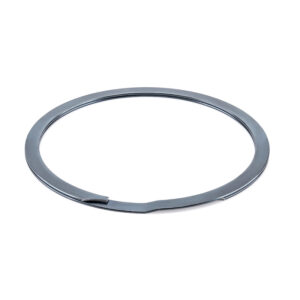
The groove in which the external spiral retaining ring sits should have precise dimensions and smooth surfaces for proper seating and retention. Irregularities in the groove, such as burrs, nicks, or inadequate depth, can hinder the ring’s effectiveness.
Resolution: Careful inspection of the groove for any irregularities before installation is essential. If irregularities are present, they should be rectified by smoothing out the surfaces and ensuring the groove dimensions meet the manufacturer’s specifications.
-
Thermal Expansion and Contraction
In applications subjected to significant temperature variations, thermal expansion and contraction can impact the external spiral retaining rings. Fluctuations in temperature cause dimensional changes in the components, potentially leading to issues with the fit and effectiveness of the retaining ring within the groove.
Resolution: When designing systems that experience temperature fluctuations, accounting for thermal expansion and contraction is crucial. Selecting materials with suitable thermal properties and ensuring adequate clearance within the groove to accommodate dimensional changes can help mitigate problems associated with thermal variations.
-
Improper Material Selection
Choosing an inappropriate material for external spiral retaining rings based on the application requirements can lead to premature failure. Different operating conditions demand specific material properties, and using a material that is not compatible can result in accelerated wear, reduced strength, or susceptibility to corrosion.
Resolution: Conducting a thorough assessment of the operating environment and conditions is essential for material selection. Consideration of factors such as temperature, moisture, chemicals, and mechanical loads is crucial in choosing the most suitable material for the retaining ring to ensure optimal performance and longevity.
-
Lack of Lubrication
Insufficient or improper lubrication can adversely affect the functionality of external spiral retaining rings. Inadequate lubrication can increase friction between the ring and the shaft, leading to premature wear, galling, or difficulty in installation and removal.
Resolution: Applying the correct type and amount of lubricant during installation and periodically during operation can significantly reduce friction and wear. Choosing lubricants compatible with the material of the retaining ring and the operating conditions is vital for optimal performance and longevity.
-
Inadequate Maintenance Schedule
Neglecting regular maintenance checks and inspections can result in undetected issues with external spiral retaining rings. Lack of scheduled assessments may allow potential problems to escalate, leading to unexpected failures and downtime.
Resolution: Implementing a comprehensive maintenance schedule that includes regular inspections, lubrication checks, and assessments for wear and deformation is crucial. Establishing a proactive maintenance routine can help identify issues early on and address them before they escalate, ensuring the reliable operation of machinery and equipment.
Conclusion
External spiral retaining rings are critical components in numerous mechanical systems, providing secure positioning and retention of parts. Recognizing and addressing common issues such as deformation, corrosion, incorrect installation, overloading, groove irregularities, thermal effects, material selection, lack of lubrication, and inadequate maintenance are paramount to ensuring the optimal functionality and longevity of these components.
By adhering to proper installation practices, selecting suitable materials, implementing regular maintenance schedules, and addressing issues promptly, engineers and maintenance personnel can mitigate potential problems associated with external spiral retaining rings. This proactive approach not only enhances the performance and reliability of machinery but also minimizes downtime, maintenance costs, and the risk of unexpected failures, thereby maximizing the overall efficiency and operational lifespan of mechanical systems.
 English
  Chinese
  Dutch
Dutch  French
  German
  Italian
  Japanese
  Korean
  Portuguese
  Russian
  Spanish