
1. Classification by Manufacturing Process
- Coiling Process: Wave springs are formed by helically coiling metal wire or strip using a dedicated coiling machine, usually followed by heat treatment for shape-setting. This method offers high 재료 utilization, burr-free surfaces, and the ability to customize complex wave profiles. It is ideal for small-batch, high-value applications such as medical devices, aerospace, and precision instruments.
- Stamping Process: Metal sheets (usually flat wire) are stamped into wave shapes using molds and then formed into rings. This method is cost-effective and suitable for high-volume production, commonly used in automotive clutches, valves, and industrial machinery.
2. Classification by Structure
1) Multi-Turn Wave Springs
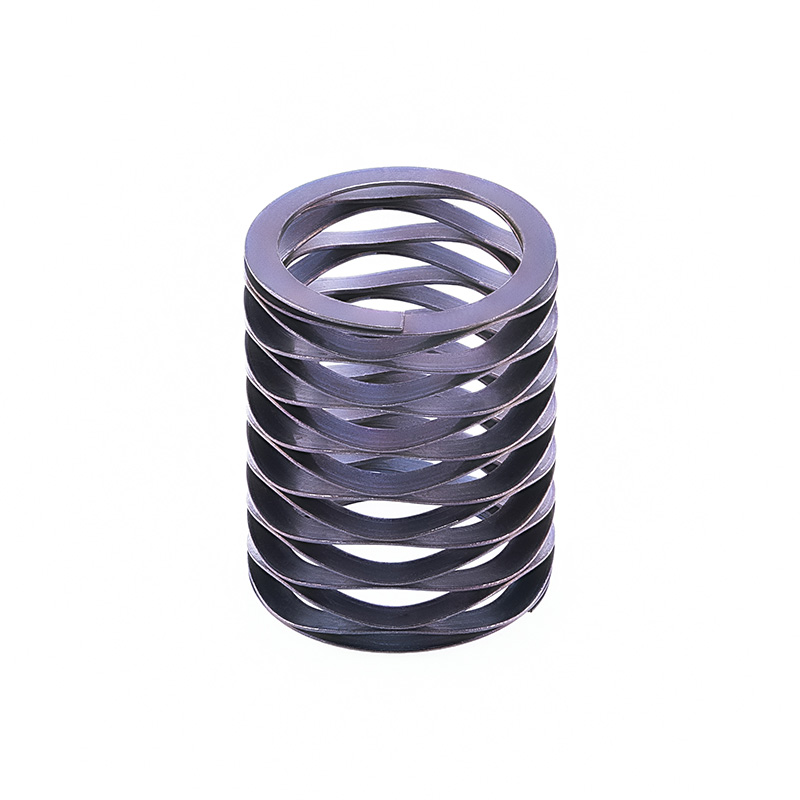
- Series-Type Wave Springs (Opposed-Wound): Also known as opposed-coil springs, these are produced by winding a single metal strip in series. They are further categorized as closed-end or flat-end, based on whether the ends can make 360° 연락하다. Structurally, they maintain consistent crest-to-trough symmetry. Flat-end opposed springs offer more uniform load distribution under compression.
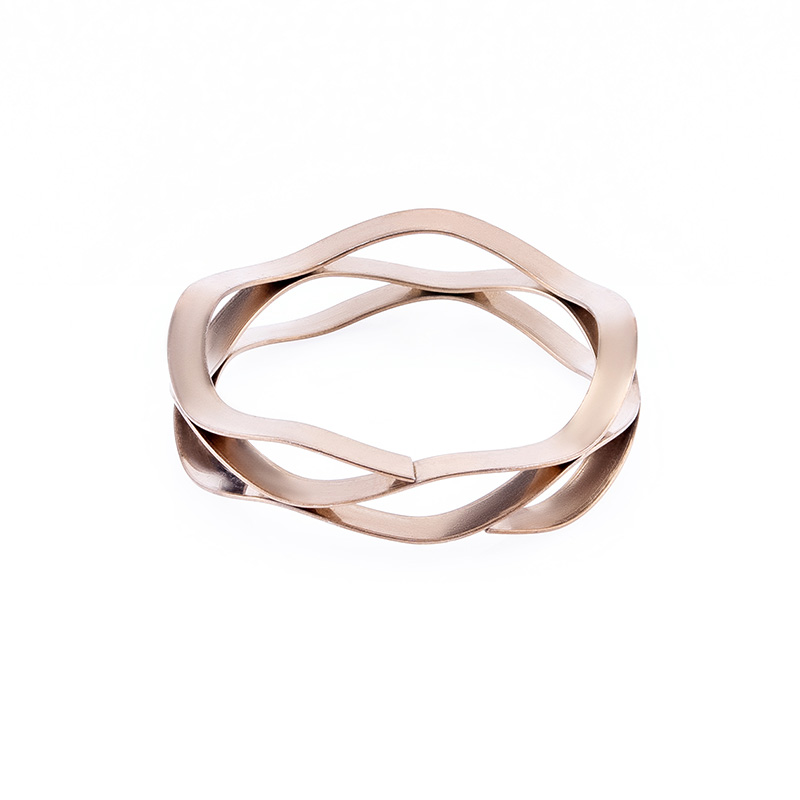
- Parallel-Type Wave Springs (Nested Type): Also known as 중첩된 웨이브 스프링, they consist of a single continuous flat wire wound in parallel layers. These springs provide a proportional increase in spring rate with the number of turns, eliminating the need to stack individual springs for higher loads.
2) Single-Turn Wave Springs
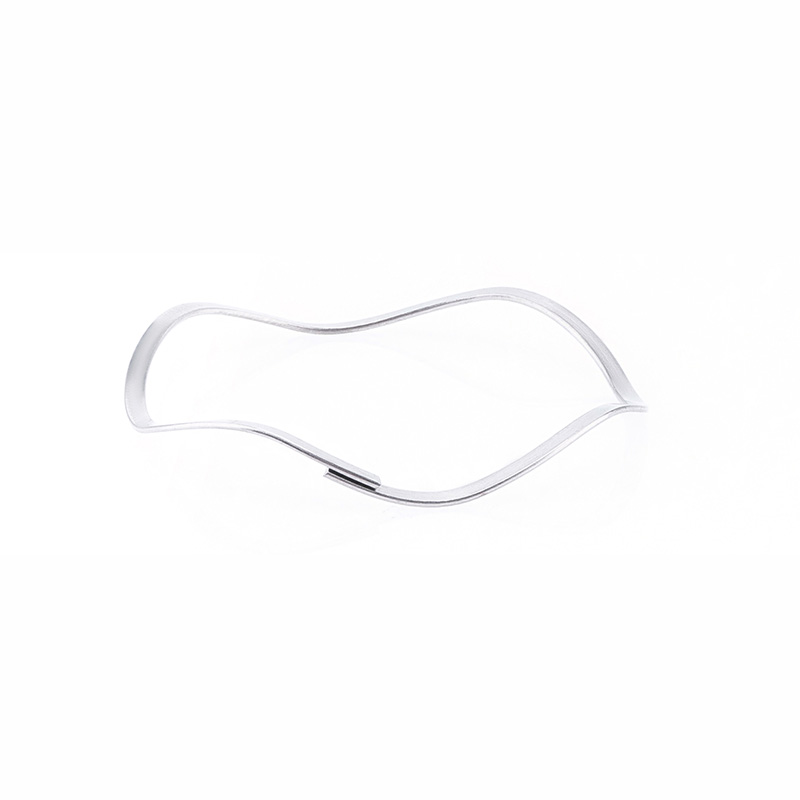
- Single-Turn Gap Type Wave Washer: Shaped like a “C”, made from round wire rolled into flat wire, coiled with a spring machine, and then stress-relieved through heat treatment. When compressed, the gap narrows automatically. These washers serve both as retaining rings and vibration absorbers, allowing circumferential movement of the ends during compression.
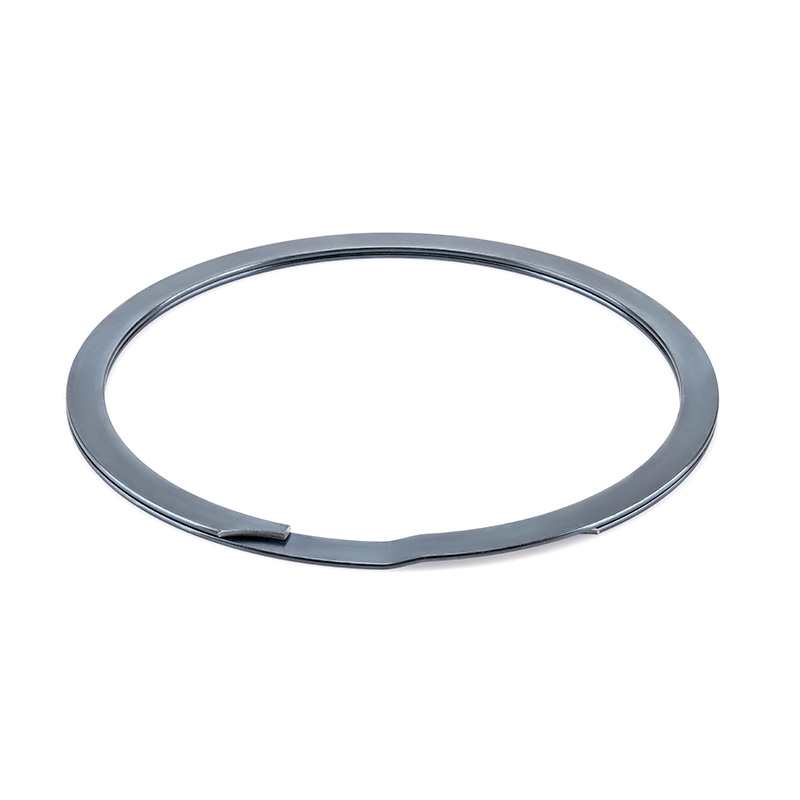
- Single-Turn Overlap Type Wave Washer: Also made from rolled round wire, coiled and heat treated. The overlapping area has double the thickness, which provides a built-in travel stop to prevent over-compression and excessive stress. These washers offer better fatigue life and durability.
- Single-Turn Closed Type Wave Washer: Shaped like an “O”, made by stamping annealed sheet metal into a flat ring and then forming the wave shape using molds. It is then quenched, tempered, and polished. These washers feature short travel and high load-bearing capabilities.
3. Classification by Application
- Wave Springs for Bearings: Used to apply preload on bearings, reducing noise, improving rotational precision and stability, and compensating for axial and radial movement during operation—ultimately extending bearing life.
- Wave Springs for Electronic Devices: Featuring excellent elasticity and conductivity, they serve as battery contacts or connectors in electronics, ensuring reliable elastic contact and electrical connection.
- Wave Springs for Mechanical Seals: Applied in sealing devices to provide sealing force and axial compensation, preventing fluid leakage and ensuring the reliability of mechanical seals in pumps, compressors, valves, and more.
- Wave Springs for Automotive Applications: Found in suspension systems, transmissions, and engines. For example, in suspension systems, they provide cushioning and vibration damping, enhancing ride comfort and stability. In transmissions, they ensure proper gear engagement and transmission efficiency.
 Korean
  English
  Chinese
  Dutch
Dutch  French
  German
  Italian
  Japanese
  Portuguese
  Russian
  Spanish