
In mechanical engineering and industrial design, small components have a significant impact on the design. A 止め輪 is also known as a circlip or holding ring; it’s part of the deceptively simple but essential components. Its presence or absence, accurate description or misuse, can influence the distinction between a dependable, long-lasting assembly and one that will fail, make noise, or wear out early on. This guide describes what a Snap Ring is, how it functions, where and why it’s used, the different types of Snap Rings available, and how to choose the appropriate one for your application.
Whether you’re designing a gearbox, maintaining bearings, creating a consumer product, or simply learning the fundamental principles of mechanical retention, this article will provide you with a solid understanding.
What Is a Snap Ring?
At its core, a snap ring is a metal ring that is designed to fit into a pre-crafted hole on a rod or houseboat (bore) and which prevents movement in the direction of travel.
Because of this function, snap rings are also commonly called retaining rings or circlips, which are often used synonymously in business.
Unlike fasteners that use a spring, nut, or helical mechanism, Snap Rings are based on the geometry of a groove and the elasticity of the 材料. This allows for a quick installation or removal and minimal additional hardware.
-
Operation’s Base
A snap ring is typically formed from spring steel or another appropriate metal with an open end that is slightly larger than the rest of the ring (a gap). This enables the ring to expand or contract during installation. Once they’ve been positioned in the gap and released, the ring will return to its original shape, which will exert pressure on the adjacent components, causing them to lock in place.
This causes the method of Snap Ring to be low-cost, efficient, and effective at providing both axial position and retention, a necessity in numerous rotating, sliding, or bearing combinations.
Why Snap Rings Are Essential — Their Role in Retention and Stability
Despite their small size and simple design, Snap Rings have a significant role in mechanical systems. Their benefits are significant:
Axial Inertia: By preventing the movement of the axles, SnapRings prevent the mispositioning of bearings, gears, or other components under stress and during operation.
スペース効率: Snap-rings take up little space compared to large mechanical mechanisms that are designed to be inserted into the flange (e.g., flange, lock nuts, multiple bolts).
Simplicity and Cost-Effectiveness: Their design features simple fasteners, threaded ends, or extra hardware that typically reduces the cost of manufacturing and installation.
Ease of Assembly and Maintenance: Snap rings can be installed or removed easily using a proper ring plier or tool, which facilitates the maintenance, inspection, or disassembly of the ring.
Reliable retention under stress: When properly specified and positioned, SnapRings will maintain the component’s alignment in the presence of vibrations, load changes, or axial force.
Because of these attributes, Snap Rings are commonly employed in bearings, shafts, gearboxes, transmissions, motors, and pumps. They are also utilized anywhere that rotational or axial movement is necessary.
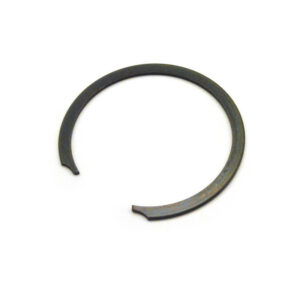
Snap Ring Types — Internal, External, and More
Snap rings are available in multiple varieties and configurations, each designed to fit into different assembly scenarios and with different loads. Having this 知識 helps you in recognizing the appropriate ring for your application.
Here are the most important categories:
-
内部スナップリング
Definition: intended to be inserted into a hole or housing. The ring is compacted during installation, it snaps into a groove located inside the bore, and it binds components to the housing in a radial direction.
Use Cases: Having a bear with a retention inside of a housing that is secure, or having external space for a shaft that is limited.
-
外部スナップリング
Definition: Comes in a wide variety of shapes and sizes, designed to fit around the outside of a shaft or pin. The ring is enlarged in order to be installed, then snaps into the groove to provide a shoulder that prevents the movement of mounted components in an axial direction.
Use Cases: securing the bearings, collars, gears, or other components to the shafts; axles, transmissions, drive train assemblies, where the retention of axial forces is necessary on the shaft.
-
Constant-Section Snap Rings
Also called constant thickness sections, these have a uniform thickness around their circumference. When positioned, they deform in an elliptical manner and contact the groove at multiple points (not a complete 360 degree).
Advantages: Constant stress distribution, long retention, appropriate for moderate to high pressure loads.
Common Suppliers: Carbon steel, stainless steel, and sometimes other materials that are resistant to corrosion or have a different composition.
-
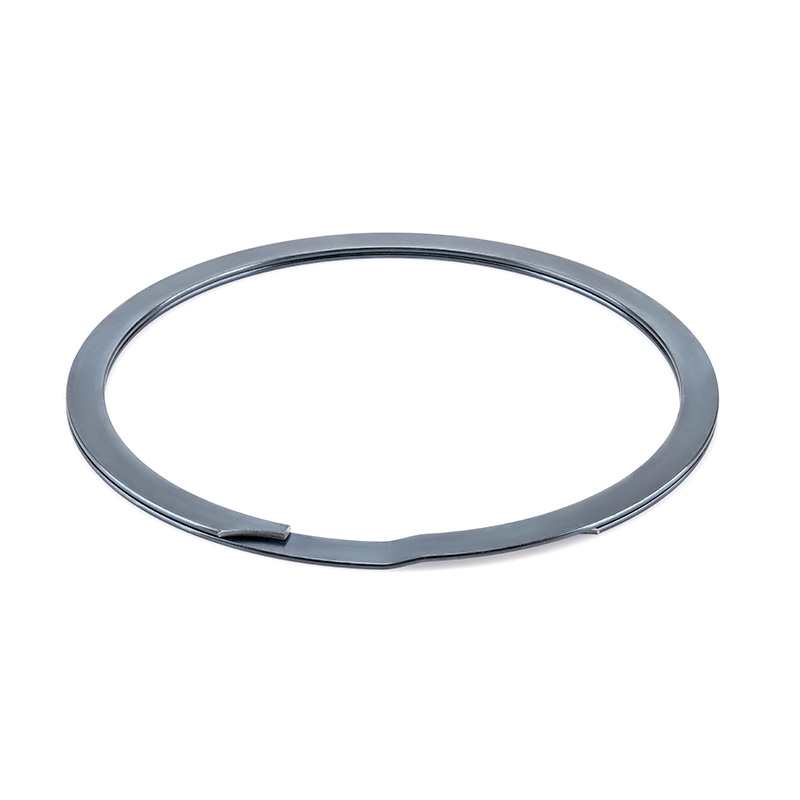
Spiral Rings that are holding steady
These are different from constant-section bands in that they are formed from coiled wire that is flat; this provides a 360-degree continuous contact with the groove, instead of a discrete number of points.
Benefits: Even distribution of the load around the circumference, no lugs or protruding ears (useful for tight radial clearance), installation and removal easier (hand or simple tools can be used).
Use Cases: High-precision assemblies, which have a smooth 360-degree contact that decreases the stress concentration; rotating machines; compact housing; heavy-duty applications that require a strong hold with little interference.
-
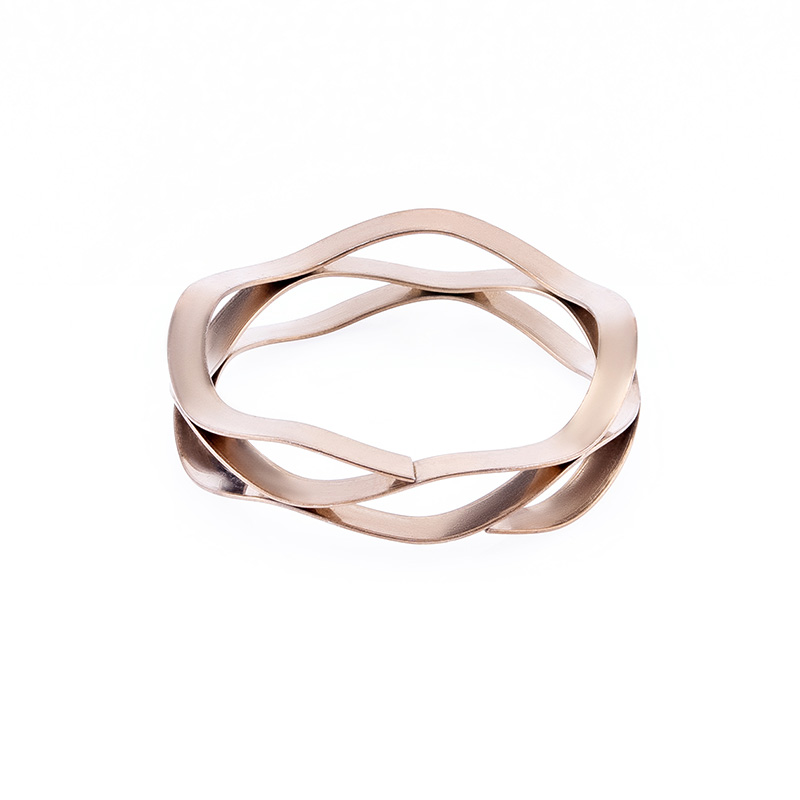
Other types of ring retention (E-Rings, Push-On Rings, Self-Locking Rings, etc.)
Other specialized types: self-latching, push-ons, E-rings (E-clips), etc., are also present. These are employed in scenarios that are lighter in weight or have a specialized purpose, e.g., the ease of assembly or removal, the lack of machined space, or the cost of the product is of concern.
These alternative ring types may sacrifice load capacity or long-term retention in favor of convenience and simplicity. These applications are ideal for low-thrust, low-burn applications or frequent assembly changes.
Where Snap Rings Are Used — Industries & Applications
Snap-ringed containers have a broad range of applications in many different industries because of their simple design, reliability, and compactness. Here are some of the most common and essential scenarios.
-
Bearings and Assemblies of Shafts
Probably the most common purpose of snap-ringed containers is to hold items that are retained by them. In assemblies that have bearings, SnapRings facilitate the retention of inner or outer races, keep spacers or thrust washers in place, and prevent displacement of the axis under pressure or during rotation.
Without a snap ring (or other retention mechanism), bearings may shift axially or become loose, which will lead to misalignment, increased wear, noise, and eventual failure. Snap-ringed containers effectively address these issues while taking little space.
-
Gears, transmissions, and reciprocating motion
In gearboxes, transmissions, or any shaft-based rotational equipment, snap rings are used to secure gears, collars, synchronizer rings, and other components on shafts — preventing axial movement while allowing rotation.
For instance, in automotive or heavy-duty machinery, Snap Rings serve as a simple, dependable way to maintain parts in place under heavy stress, vibrations, and frequent operation cycles.
-
Motors, Pumps, and Other Mechanical Devices
Motors, generators, compressors, and other mechanical devices that rotate frequently have shafts, bearings, and housings associated with them – all of these are ideal for the use of Snap Rings. From securing impellers to placing bearings or seals, SnapRings offer a dependable, compact retention that does not require complex assembly.
-
Automotive, Aerospace, and Heavy Engineering
In automotive transmissions, wheel hubs, engine components, drive trains, and other important assemblies, Snap Rings are commonly employed because of their dependability and capacity to withstand load and vibrations.
Aerospace and high-end equipment may also utilize specialized Snap Rings (including materials that are resistant to corrosion or have a high strength) to achieve demanding weight, space, and dependability.
-
Lighting devices, appliances, and consumer products
Not all instances of Snap-Ring are designed to be heavy-duty. Many smaller devices that use electricity, such as small motors, appliances for the household, power tools, bikes, hobby machines, and simple mechanical assemblies, all have a tendency to rely on Snap Rings or related devices because of their inexpensive nature, compact size, and ease of installation.
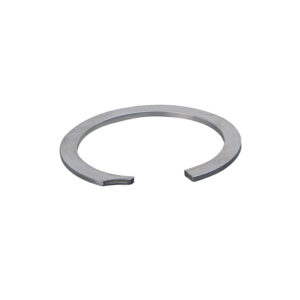
How to Choose the Right Snap Ring — Selection Criteria
Selecting the appropriate Snap ring for your purposes is not simple. The incorrect type, size, or material can cause early failure, noise, misalignment, or problems with maintenance. Below are the factors that should be considered when choosing a Snapchat ring.
-
Figure out the Method of Execution: Internal or External?
First, determine if you need internal or external storage (housing or shaft). This determines whether you should choose an internal or external Snap ring.
Internal Snap Rings: They’re most effective when you want to preserve bearings or other components inside a housing, or when the shaft can to be cleared.
External buckles: beneficial for holding components to a shaft, collar, gear, or other.
-
Think about the Load and Thrust Necessities
Depending on the axial or side load the assembly will experience, choose a snap ring type and cross-sectional profile accordingly:
Constant-section Snap Rings are commonly utilized for moderate to high pressure or force; their cross-section is typically rectangular, and their stress is uniformly distributed.
For applications that have a higher load, have a higher frequency of vibrations, or are dynamic in nature, Spiral Rings may have a superior performance because of the constant 360-degree contact and a more even distribution of load.
For light-duty or low-thrust applications, E-rings, push-on rings, or self-closing rings might be appropriate – but always consider the load, vibrations, and サービス requirements before purchase.
-
Geography of Groove and the haft
Snap-rings require a properly sized, deep, or wide groove for effective retention. When choosing a particular style, make sure the tolerances for the groove and the surface are within the manufacturer’s guidelines. Incorrectly designed grooves can cause a secure fit or early failure.
Also, consider the need for external and internal clearances: external rings need a sufficient amount of radial space around the shaft, internal rings need a sufficient amount of bore space, especially important in compact or stringent designs.
-
The selection of material and environmental conditions
The choice of material affects the corrosion resistance, fatigue life, temperature tolerance, and durability. Common options include carbon steel, stainless steel, and various types of alloy steel.
For adverse environments (moisture, chemicals, salt, high temperature), stainless steel or special alloy rings are typically employed. In instances with high cycling or vibrations, attention to fatigue properties becomes pertinent.
-
Installation and Maintenance Additions
Use the appropriate type of pliers (internal or external) to avoid distorting or destroying the ring during installation or removal.
Ensure that the grooves are clean and free of debris or burrs; any imperfections will compromise the seating and retention.
During regular maintenance, inspect the Snap Rings for malformations, corrosion, wear, or damage, especially in critical assemblies; replace as necessary.
Snap Rings vs Other Retention / Fastening Methods
Why select a Snap ring as opposed to a nut, a spear-like fastener, a bolt, or another form of retention? The answer is found in the trade-offs between space, cost, ease, and performance. Here is a contrast:
Snap Ring and Nuts/bolts: Nuts/bolts can provide a high grasping force and variable tension, but they typically need more space, threading, and additional hardware (washers, lock washers, etc.). Snap-ringed bites offer a permanent hold without requiring additional hardware.
Snap Ring and Flanges: Flanged shafts or housings have a higher complexity and cost; they may also increase the weight. Snap-ringed bocci require only a shallow depression – simple and cost-effective.
Snap Ring versus Adhesives or Welding: Adhesives or welds are long-lasting and difficult to service; they also have a complicated disassembly. Snap-ringed containers are simple to maintain, replace, and reuse.
Snap Ring’s performance in comparison to Press Fits / Tolerances: Press fittings or tight tolerances can help to retain things, but they may also make it difficult to assemble or disassemble, and the tolerances may change over time (wear, thermal expansion). Snap-ringed containers are guaranteed to have a consistent, reproducible hold while also allowing for dissociation.
For many scenarios, the compactness, reliability, serviceability, and cost-efficiency of Snap Rings are paramount.
Common Mistakes & Pitfalls When Using Snap Rings
Despite their apparent ease, the misuse or misdescription of SnapRings can lead to significant issues. Here are the most common errors and how to avoid them:
-
Incorrect dimensions or quality of groove
If the shaft’s grooves are not sized to the correct diameter, width, or depth — or if they have flaps, rough surfaces, or variations — the ring may not be properly seated. This can lead to slippage, misaligned movement, unpredictable behavior, or early failure. Selalu follow the manufacturer’s specifications regarding grooves.
-
Using the Incorrect Type (Indirected or Directed)
Internal and external SnapRings are both types of errors that are common. Installing an external ring inside a hole, or conversely, will lack the ability to retain it. Always double-check that the ring is intended for internal or external use.
-
Over-extending or Over-circulating During installation
Using excessive pressure when installing or removing SnapRings (e.g., with pliers) can lead to permanent deformation of the ring or the development of micro-cracks, which diminishes the fatigue life of the ring. Use the proper type of pliers for snapping and avoid overstretching the ring past its elastic limit.
-
Poor selection of the material for the environment
The use of carbon steel Snap Rings in environments that have a high concentration of corrosion or humidity may lead to rust, a loss of strength, and failure. For these habitats, it’s beneficial to utilize stainless steel or an appropriate alloy.
-
Ignoring the Dynamic Loads, Vibration, and thermal cycling
Snap bands must be included in the anticipated load, vibrations, and temperatures. Underestimating these can cause wear, fatigue, or looseness.
Best Practices for Specifying and Installing Snap Rings
Based on industry standards and engineering knowledge, following these practices will help to ensure long-term performance:
always begin with comprehending the assembly’s composition — its axial load, its radial load, its shaft/housing design, its clearance, and the operating environment.
Select the ring type with care — internal or external, constant section or spiral, or other varieties — based on the load, space, maintenance, and environmental concerns.
Ensure that the grooves are cut to the proper size and have a high-quality surface. Deburr, scrub, and inspect before putting in.
Use the correct type of installation tools (pliers that snap) and avoid over-deformation. Use eyewear during installation or removal of the SnapRings because the ring can violently pop out during these processes.
Watch out for signs of wear, corrosion, or malformations during regular maintenance; replace before it fails.
Select the appropriate material/ coating for the operating environment: stainless steel, plated coatings, special alloys if necessary.
Summary: When Snap Rings Make the Most Sense
Snap rings are effectively simple, but powerful, as a solution to retention. They provide significant benefits when:
Space is limited (axially or radially), and a low-profile method of retention is necessary.
Axial or thrust forces require a reliable means of retention that does not require bulky hardware.
The design is facilitated by the ease of assembly and disassembly for cleaning or maintenance.
The expense of manufacturing is simple to calculate (no threading, complex machining, or extra components).
The process involves bearing components, shafts, rotating parts, and gears, especially in the automotive, industrial, machinery, or appliance industries.
Many mechanical systems that are simple, dependable, and cost-effective are represented by snap rings.
結論
Small components are often involved in the heavy lifting in the background. A snap ring is small, affordable, and simple to overlook; however, it can have a significant impact on the dependability, longevity, and safety of mechanical assemblies. By providing axial support, bearing supports, and shafts, this enables compact design and facilitates maintenance. Snap Ring remains important in the automotive, industrial, aerospace, consumer, and other fields.
Selecting the appropriate type ( internal or external, constant section or spiral, or other varieties), ensuring the proper geometry of the groove, selecting the appropriate material, and installing it correctly are all important aspects of taking advantage of it. Conversely, poor design or careless installation may lead to early failure, misalignment, noise, or hazardous conditions.
If you’re designing a new machine, restoring an existing design, or collecting components for manufacturing, a chosen Snap Ring may be one of the most practical, space-saving, and dependable means of retention.
Use this book as a starting point. As you encounter specific issues – such as size limitations, high stress, vibrations, and environmental concerns – consider the appropriate type of Snap Ring in detail and follow the best practices in design and installation.
By following this method, you take advantage of the entire potential of this simple component, but crucially, you make sure that your mechanical system is as dependable and efficient as intended.
 Japanese
  English
  Chinese
  Dutch
Dutch  French
  German
  Italian
  Korean
  Portuguese
  Russian
  Spanish