
Introduction
Why are more engineers choosing single turn gap wave washers over traditional spring washers? In modern mechanical assemblies, where compact design, precise preload, and long-term stability are critical, selecting the wrong washer can lead to vibration issues, load inconsistency, and premature component wear. Compared with conventional alternatives, single turn gap wave washers provide an efficient space-saving solution with reliable load performance. This article explores the key differences, helping engineers and buyers identify the right choice for demanding applications.
Understanding the Single Turn Gap Wave Washer
Before comparing performance, it is important to understand what this component is and why its design matters.
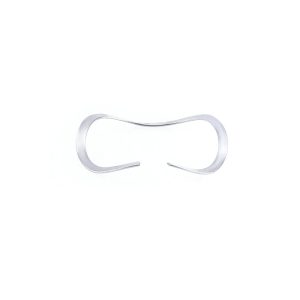
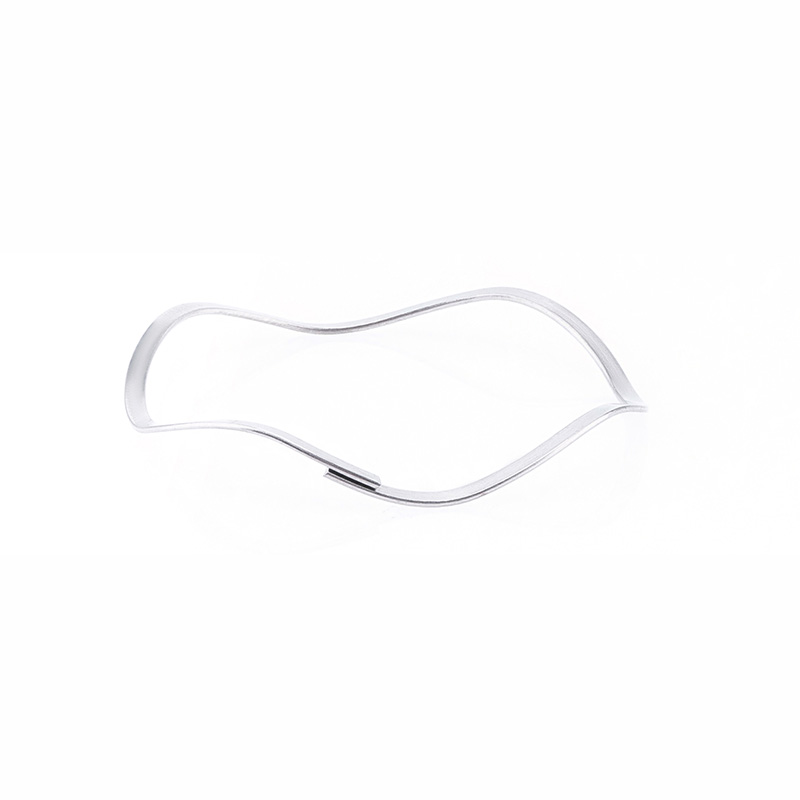
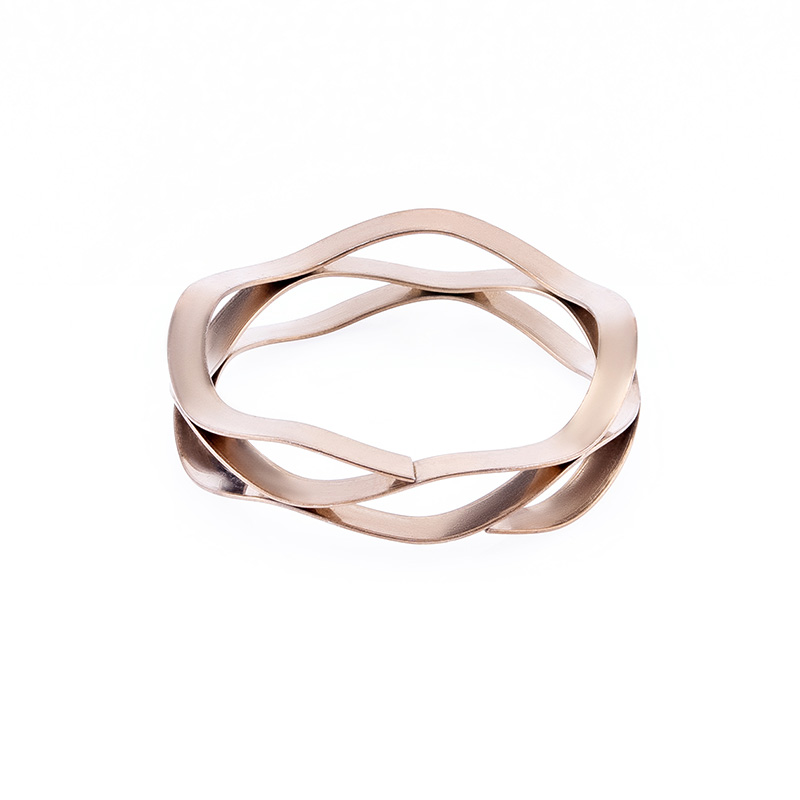
UN rondelle ondulée à un tour is a precision elastic element made from flat wire that is edge-coiled into a single circular ring. Unlike traditional coil springs with round wire, its rectangular cross-section provides more controlled load distribution and improved axial efficiency. Around the ring, a sinusoidal wave pattern is formed—typically with three, four, or five complete waves depending on load requirements. A small intentional gap is left between the two free ends.
This gap is not a defect—it is the defining feature of the design.
When a conventional stamped wave washer is compressed, its outside diameter expands. Inside a bore or housing, this can create friction, binding, and inconsistent force output. The rondelle ondulée à un tour solves this by allowing the open gap to close slightly during compression, accommodating radial expansion without interference. This enables smooth circumferential movement and more predictable load performance.
The result is improved fatigue resistance, longer service life, and more stable performance compared with stamped alternatives. For manufacturers, this means lower maintenance costs and greater long-term reliability.
Gap vs. Overlap Configurations
Within the single-turn wave spring family, two primary end configurations are commonly used: gap and overlap.
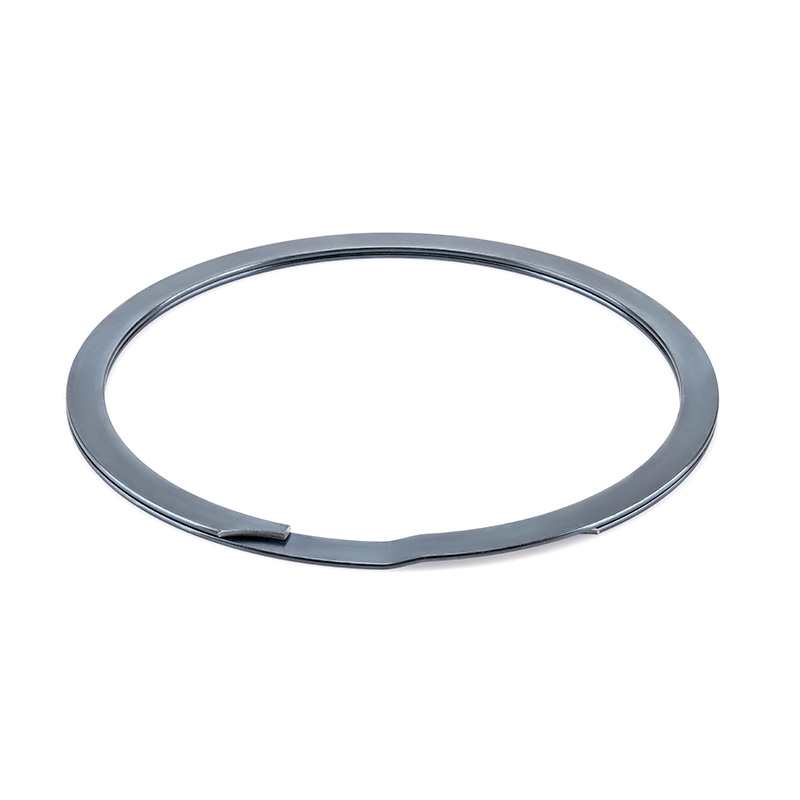
A standard rondelle ondulée à un tour has a small open space between the ends, while an overlap design allows the ends to slide past one another during compression.
The gap configuration offers excellent flexibility for preload control, vibration damping, and shock absorption. Its open-ended structure absorbs radial expansion naturally, preventing the binding issues common with stamped wave washers. For most bearing preload, axial compensation, and vibration-control applications, the gap design remains the preferred choice.
Space Savings—Where the Single Turn Gap Wave Washer Wins First
The most immediate advantage of a rondelle ondulée à un tour over a traditional coil spring is its ability to dramatically reduce axial space requirements.
Why does this matter? Because in modern mechanical design, every millimeter counts.
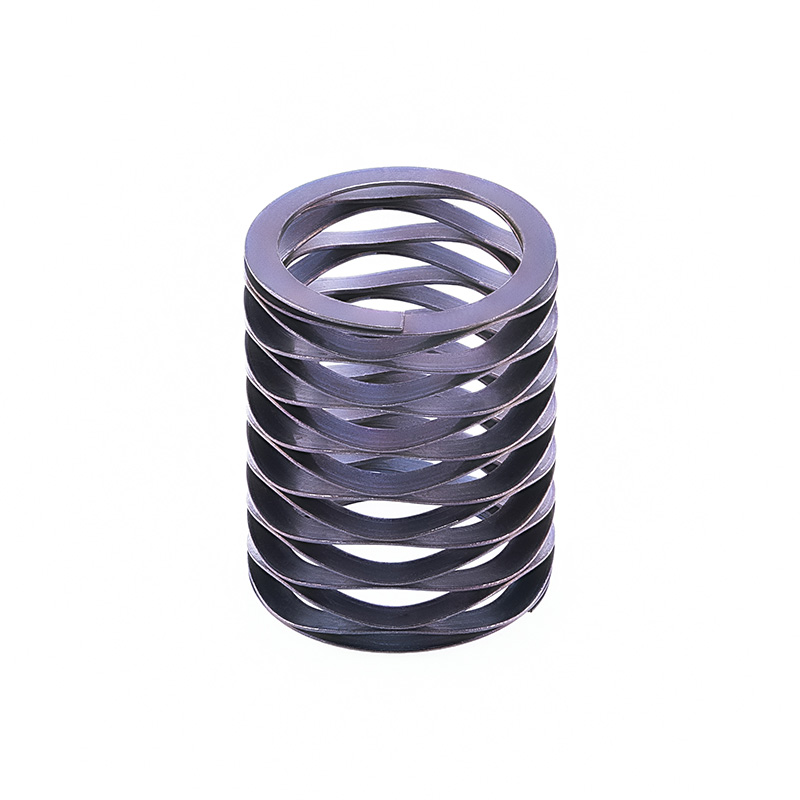
A traditional coil spring stores energy through torsion. Its round wire is wound into a helix, and under compression, each coil twists relative to the next. To achieve meaningful deflection, multiple active coils are required—directly increasing spring height. In many assemblies, a standard coil spring may stand 15–20 mm tall in its free state.
UN rondelle ondulée à un tour, by contrast, stores energy through bending rather than torsion. Its flat wire is formed into waves that flatten during axial compression, functioning more like a curved beam.
This creates several immediate benefits:
- Lower free height
- Reduced axial footprint
- Equivalent force in less space
- More compact assembly design
In many cases, a wave spring can deliver the same force and deflection as a coil spring while occupying up to 50% less axial height.
This translates directly into engineering advantages.
For example:
- Brushless DC motors: More available space for copper windings, improving torque density
- Medical handheld devices: Smaller, lighter tools with improved ergonomics
- Compact bearing assemblies: Shorter overall package length
Consider a bearing preload application. A conventional coil spring may require a 12 mm counterbore, while a comparable rondelle ondulée à un tour may need only 4–6 mm, freeing valuable design space for other components.
Load Consistency and Preload Stability
Space savings are valuable—but only if performance remains reliable.
Traditional stamped wave washers often struggle with load consistency. Variations introduced during stamping can affect:
- Matériel thickness
- Wave geometry
- Residual stress distribution
- Spring response under load
These inconsistencies can result in unpredictable force-deflection behavior.
UN rondelle ondulée à un tour, manufactured through precision edge-coiling of flat wire, minimizes these variables.
Key manufacturing advantages include:
✔ Uniform wave geometry
✔ Consistent material properties
✔ Better dimensional accuracy
✔ More repeatable spring performance
The result is a linear and highly repeatable load-deflection curve.
For engineers, this means predictable axial force for a given deflection—critical in applications requiring tight preload tolerances, such as:
- Bearing preload systems
- Precision motor assemblies
- Aerospace mechanical interfaces
- Temperature-sensitive housings
Unlike Belleville washers, which may exhibit nonlinear behavior and friction hysteresis, the rondelle ondulée à un tour delivers smoother and more stable spring performance.
That predictability simplifies system modeling and improves long-term operational reliability.
Radial Expansion and Binding Prevention
This is one of the most overlooked—but technically significant—advantages of the design.
All compression springs experience radial expansion when compressed.
In many conventional coil spring applications, this is manageable because sufficient clearance exists between the spring and the surrounding bore.
However, single turn wave spring applications often operate inside close-tolerance housings, where radial clearance may be measured in fractions of a millimeter.
This is where stamped wave washers often fail.
Because a stamped washer has a closed circumference, radial expansion has nowhere to go. The result can include:
- Friction against the housing wall
- Binding during compression
- Inconsistent force transmission
- Surface wear
- Premature fatigue failure
Le rondelle ondulée à un tour eliminates this issue through its intentional open-gap design.
As compression increases:
- The outside diameter expands
- The end gap closes slightly
- Radial growth is absorbed naturally
- Circumferential movement remains unrestricted
This prevents mechanical interference and ensures:
- Smoother compression behavior
- More stable force output
- Reduced wear
- Longer service life
In housing-based applications, this gap feature is not simply beneficial—it is essential.
Vibration Damping and Noise Reduction
Precision assemblies do not tolerate vibration well.
Excess vibration can cause:
- Component rattling
- Noise generation
- Bearing wear
- Reduced system accuracy
- Shortened service life
Traditional coil springs provide force, but they offer limited damping capability.
UN rondelle ondulée à un tour performs two functions simultaneously:
1. Provides axial spring force
2. Absorbs and dampens vibration
Its wave geometry allows the spring to absorb minor shocks and dissipate vibrational energy more effectively.
This makes it particularly valuable in:
- Electric motors
- Pumps
- Compresseurs
- Automotive assemblies
- Precision rotating systems
In bearing preload applications, the benefits are especially clear:
- Eliminates axial play
- Reduces operational noise
- Improves rotational smoothness
- Prevents excessive bearing loading
Testing has shown that optimized wave spring designs maintain damping performance even after extended exposure to dynamic loading.
Le rondelle ondulée à un tour, with its flexible gap configuration, enhances this damping effect while maintaining consistent load capacity—delivering both quiet operation and long-term mechanical stability.
Data-Driven Comparison—Single Turn Gap Wave Washer vs. Traditional Spring Options
Let‘s put numbers side by side. The table below compares a rondelle ondulée à un tour against three common alternatives: traditional coil springs, stamped wave washers, and split lock washers.
| Fonctionnalité | Single Turn Gap Wave Washer | Traditional Coil Spring | Stamped Wave Washer | Rondelle frein fendue |
|---|---|---|---|---|
| Typical free height | Very low (single turn) | High (multiple coils) | Low (similar to a wave) | Very low |
| Axial space reduction vs. coil | Up to 50% | Baseline | N/A | N/A |
| Energy storage mechanism | Bending of waves | Torsion of round wire | Bending | Friction bite |
| Radial expansion handling | Gap absorbs expansion | Minimal expansion; generally unconstrained | Binding occurs in the bore | Not applicable |
| Load-deflection linearity | Linear, predictable | Linear, predictable | Non-linear, variable | Low linearity |
| Fatigue life | Excellent (coiled flat wire) | Good (round wire) | Poor (stamping stress) | Poor (high stress risers) |
| Radial clearance required | Minimal (gap takes up expansion) | Minimal | Significant (to avoid binding) | Modéré |
| Noise/vibration damping | Bien | Poor to moderate | Modéré | Poor |
| Primary applications | Bearing preload, precision assemblies | General compression | Low-cost preload | Bolted joint locking |
Beyond the feature comparison, consider the cost-performance trade-off. While a wave spring may have a higher unit price than a low-grade stamped washer, it often leads to significant overall cost reductions in the broader system—smaller, lighter assemblies with reduced spring cavities save material and manufacturing costs. A single-turn wave spring can replace a traditional stamped wave washer and, depending on the size, offer actual cost savings while providing superior performance.
Real-World Comparison: Bearing Preload Application
Consider an electric motor bearing preload scenario. The required preload force is 150 N at a working height of 2.5 mm, operating in a 30 mm housing bore.
| Approach | Component | Hauteur libre | Required Bore Clearance | Installation Issues | Preload Consistency | Estimated Cost |
|---|---|---|---|---|---|---|
| Traditional | Coil spring | 8–10 mm | Minimal | Requires a deep counterbore | Bien | Medium to high |
| Low-cost alternative | Stamped wave washer | 2.0 mm | 0.5 mm+ to avoid binding | Binding risk; unpredictable preload | Poor | Faible |
| Recommended solution | Rondelle ondulée à un tour | 2.0–2.5 mm | 0.1 mm (gap handles expansion) | None; smooth compression | Excellent | Moyen |
Le rondelle ondulée à un tour wins on every dimension except pure unit cost compared to the cheapest stamped option—and even that gap is small enough that most engineers happily pay it for the reliability gains.
Key Applications Where a Single Turn Gap Wave Washer Outperforms Traditional Springs
Where should you use a rondelle ondulée à un tour instead of a traditional coil spring? The application range is extensive and still expanding across multiple industries.
Bearing Preload Systems
This is the largest and most established application area. Wave springs are widely used for bearing preload in electric motors, pumps, gearboxes, and other precision rotating machinery. A rondelle ondulée à un tour delivers stable axial preload, helping compensate for thermal expansion, assembly tolerances, and minor wear while effectively eliminating axial play.
In electric drive systems in particular, wave springs are commonly applied in:
- Motor bearing preload systems
- Gearbox vibration reduction assemblies
- Sensor and actuator mounting structures
Its compact axial height is especially critical in new energy vehicle drive motors, where packaging space is extremely limited and every millimeter matters.
Dispositifs médicaux
Compact handheld medical instruments such as dental tools, insulin pens, and surgical drivers require both miniaturization and reliability. A wave spring provides the required force in a significantly reduced axial height compared to coil springs, enabling smaller and more ergonomic device designs.
In addition, the rondelle ondulée à un tour offers highly repeatable load behavior over millions of cycles, which is essential for long-term medical device stability, safety, and precision performance.
Aerospace Components
Aerospace systems demand lightweight structures, high reliability, and strict space optimization. Wave springs and related retaining solutions are widely used in mechanical seals, electrical connectors, motor preload systems, pumps, valves, and compressors.
Le rondelle ondulée à un tour provides predictable load output, excellent fatigue resistance, and strong performance under extreme vibration and temperature conditions, making it suitable for applications that must meet rigorous aerospace qualification requirements.
Automotive Transmissions and Clutches
Modern automotive transmissions and clutch systems operate under high vibration loads, wide temperature fluctuations, and severe space constraints. In these environments, a rondelle ondulée à un tour is commonly used to provide consistent preload and damping.
Compared with traditional coil springs, it fits more efficiently into tight axial spaces while maintaining stable force output in drivetrain assemblies, improving both durability and system smoothness.
Electronic Devices and Connectors
Consumer electronics increasingly demand ultra-thin structures and highly reliable electrical contact performance. Wave springs are widely used in battery contact systems and precision connectors, where stable elastic force and conductivity are required in a very limited space.
Le rondelle ondulée à un tour is also applied in electronic sealing and connector systems, ensuring consistent contact pressure and long-term electrical reliability across the device lifecycle.
Fatigue Life and Durability—Why Wave Springs Last Longer
A common engineering concern when replacing traditional springs is fatigue performance. Can a flat-wire wave spring match the cycle life of a round-wire coil spring?
In most properly designed cases, the answer is yes—and often better.
Le rondelle ondulée à un tour operates under a different stress mechanism compared with coil springs. Coil springs primarily experience torsional shear stress due to wire twisting, while wave springs are dominated by bending stress as the wave profile flexes under load.
When properly designed and manufactured, bending stress can deliver excellent fatigue resistance and more stable long-term behavior.
Technical specifications of a rondelle ondulée à un tour show that the gap structure significantly improves fatigue life compared with traditional stamped wave washers. Modern edge-coiling processes reduce stress concentration points and eliminate micro-cracks often introduced during stamping.
A NASA-referenced study (2007) reported fatigue failures in wave washers caused primarily by manufacturing defects, particularly sharp transitions at wave crests rather than smooth geometries. This highlights an important conclusion: wave spring design is not the issue—manufacturing quality is.
A properly engineered rondelle ondulée à un tour, with controlled forming and smooth wave geometry, can achieve millions of cycles in high-duty applications such as continuously operating electric motors. Final performance depends heavily on material selection, especially options like 17-7PH stainless steel for high fatigue resistance or carbon steel for general industrial use.
Material Choices and Customization Options
UN rondelle ondulée à un tour is not a universal component. Its performance is directly influenced by material selection, which affects strength, corrosion resistance, temperature capability, and cost efficiency.
Stainless Steel Options
17-7PH stainless steel is a precipitation-hardening alloy that provides high strength, excellent fatigue performance, and strong corrosion resistance. It can be formed in a relatively soft state and then heat-treated to achieve the final spring hardness.
This makes it ideal for aerospace, medical, and marine applications where both durability and corrosion resistance are critical.
SUS301 stainless steel offers a balanced combination of elasticity and corrosion resistance at a more economical cost, making it suitable for automotive systems and general industrial applications.
Carbon Steel Options
For environments where corrosion resistance is not a major concern, carbon steel grades such as 60Si2MnA or 50CrVA provide excellent elasticity and load performance at lower cost.
These materials are typically used in indoor equipment or protected assemblies where exposure to moisture and chemicals is limited.
High-Temperature Alloys
In extreme operating conditions, superalloys such as Inconel can be used. These materials maintain stable spring properties under high temperatures, where conventional stainless steels may lose strength or oxidize.
Personnalisation
A professional rondelle ondulée à un tour manufacturer can engineer customized solutions based on specific load, deflection, and dimensional requirements.
Custom options may include:
- Wave count optimization
- Thickness adjustment
- Diameter customization
- Load–deflection curve tuning
This flexibility allows engineers to precisely match spring behavior to application requirements, improving both performance and system efficiency.
FAQ
Q1: Can I replace a coil spring directly with a single turn gap wave washer?
Not as a simple drop-in substitution. The wave spring requires a shorter axial envelope. You must redesign the housing height, but the performance and space savings make the redesign worthwhile.
Q2: How does a single turn gap wave washer compare to a Belleville washer?
A single turn gap wave washer provides a linear load curve and handles radial expansion without binding. Belleville washers offer higher load capacity per unit height but exhibit non-linear behavior and hysteresis.
Q3: What is the typical fatigue life of a single turn gap wave washer?
With proper design and quality manufacturing from a reputable supplier, a single turn gap wave washer can achieve millions of cycles in high-cycle applications like electric motors.
Q4: Can a single turn gap wave washer be used in a rotating assembly?
Yes. In bearing preload applications, the washer is typically static relative to the housing or shaft and does not rotate with the bearing. Verify with your application engineer for specific designs.
Q5: What tolerances can I expect from a single turn gap wave washer?
Reputable manufacturers produce wave springs to tight tolerances that ensure consistent load-deflection behavior across production batches. Contact your supplier for specific tolerance data based on your design requirements.
Conclusion
UN rondelle ondulée à un tour outperforms traditional springs by delivering predictable, linear load in up to 50% smaller axial space, reducing binding through its gap-end design, and offering excellent fatigue life when properly manufactured.
For engineers in electric motors, bearing preload systems, medical devices, automotive transmissions, or aerospace applications, the key question is no longer whether it is better—but whether continuing to use conventional springs wastes space, risks binding, and compromises load consistency.
Flat-wire wave spring technology is now mature, widely adopted, and supported by experienced manufacturers capable of delivering custom designs. The combination of space savings, load reliability, and vibration damping often justifies the switch.
To optimize your assembly, contact Lispring with your bore diameter, working height, preload requirements, and operating environment. Their engineering team can recommend the right rondelle ondulée à un tour and provide samples for testing.
 French
  English
  Chinese
  Dutch
Dutch  German
  Italian
  Japanese
  Korean
  Portuguese
  Russian
  Spanish