
Retaining rings are essential fasteners in mechanical structures. They have a broad market and a wide range of applications, and their use continues to grow in many fields. If you are interested in Lisheng-Quelle retaining rings, this article will provide a detailed introduction to their meaning, uses, installation and removal methods, and usage.
What is a retaining ring?
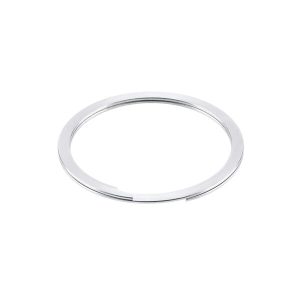
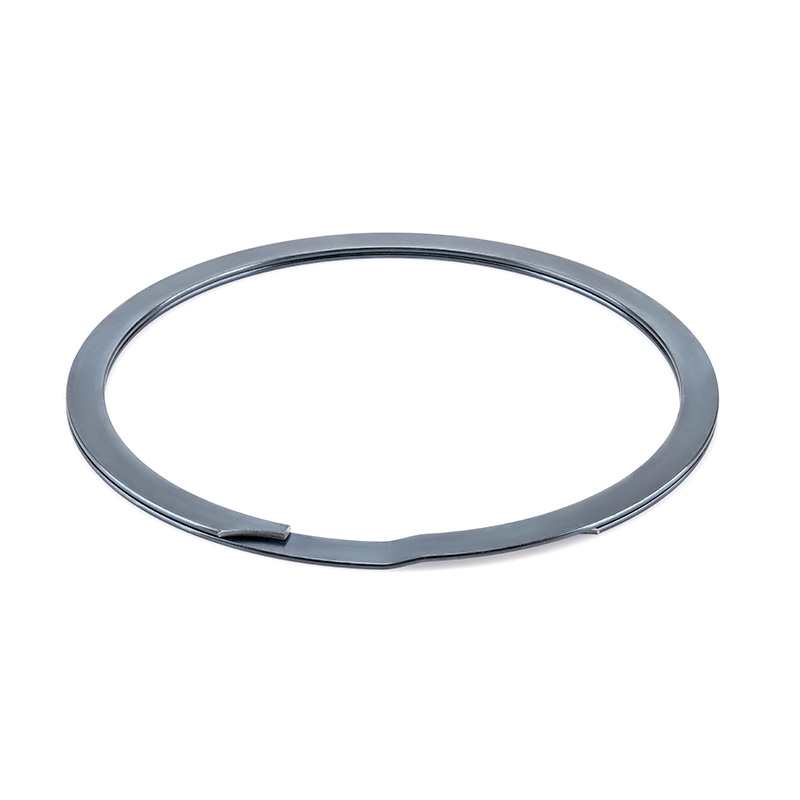
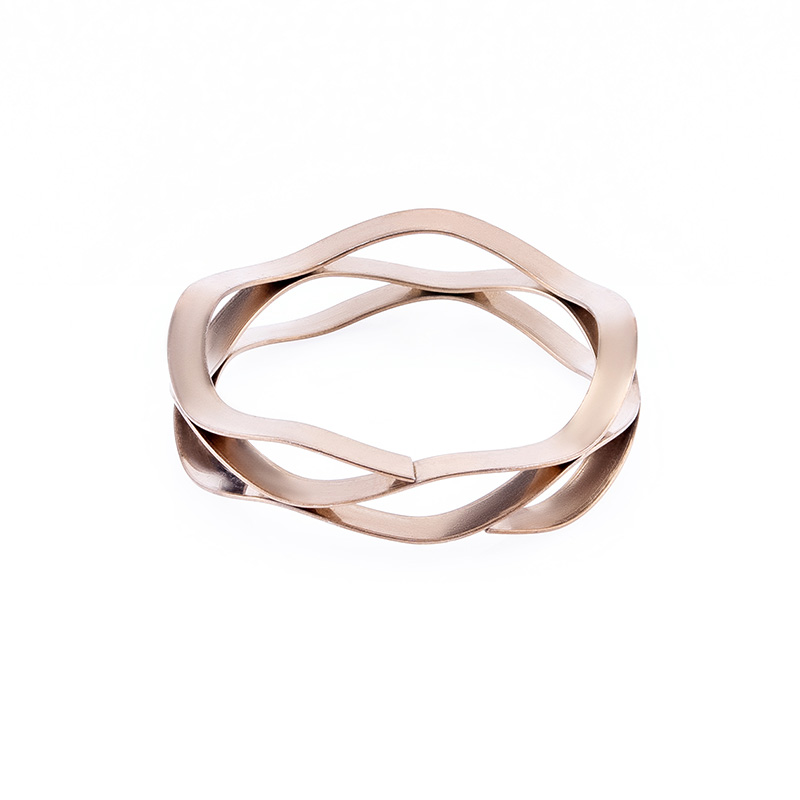
A retaining ring, also known as a circlip or snap ring, is a standard fastener installed in a shaft or hole groove. Its primary function is to prevent axial movement of bearings, gears, pulleys, or other components, ensuring their positioning and securement during operation.
Retaining rings are typically made of spring steel, carbon steel, stainless steel, copper alloys, and other materials. They achieve positioning through the interaction of their elasticity with the groove. Compared to fastening methods such as screws and pins, retaining rings are lightweight, easy to install, and low-cost, making them widely used in machinery, automobiles, home appliances, and electronics.
Uses of Retaining Rings
The main uses of retaining rings include:
Axial positioning: Prevents components from sliding along the shaft or hole.
Load bearing: They can withstand certain impact forces and workloads, providing support.
Reducing the number of parts: Retaining rings replace complex fastening structures, reducing manufacturing and assembly costs.
Easy assembly and disassembly: Some types of retaining rings can be reinstalled and removed repeatedly, facilitating maintenance.
Ensuring operational safety: Preventing equipment failures or accidents caused by loose parts.
Main Types of Retaining Rings
There are many types of retaining rings, and common classification methods include:
By Installation Position:
Externer Sicherungsring: Installed in a circumferential groove on the outside of the shaft.
Interner Sicherungsring: Installed in a groove within a hole to provide a retaining function.
By Structural Shape:
Split Retaining Rings (Type E, Type C): Commonly used for positioning bearings and sleeves.
Spiralsicherungsring: Rolled and formed, suitable for space-constrained conditions.
Snap Rings/Retaining Rings: Commonly found in automotive engines and mechanical parts.
By Material:
Carbon Steel Retaining Rings: High strength, most widely used.
Stainless Steel Retaining Rings: Corrosion-resistant, suitable for the chemical and food industries.
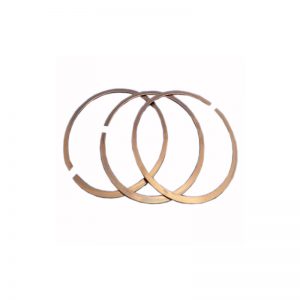
Copper Alloy Retaining Rings: Excellent conductivity, commonly used in electrical equipment.
How to Select a Retaining Ring?
When selecting a retaining ring, consider the following:
Shaft or hole diameter: The retaining ring must precisely match the shaft or hole.
Load capacity: Select a material with appropriate strength based on the impact and load to which the part will be subjected.
Environmental conditions: Stainless steel or plated retaining rings should be selected for environments with high humidity or strong corrosion.
Installation method: Consider whether specialized installation tools are required and whether removal is easy.
Cost factors: Carbon steel retaining rings are often used in large-scale production to reduce costs.
Differences between different types of retaining rings
| Typ | Installation Position | Merkmale | Typische Anwendungen |
| Externer Sicherungsring | Shaft groove | Easy to install, widely used | Bearings, gears |
| Interner Sicherungsring | Bore groove | Provides axial positioning inside bore | Cylindrical housings |
| Spiralsicherungsring | Shaft or bore | Even stress distribution, compact | Aerospace, electronics |
| Carbon Steel Ring | Both | High strength, low cost | General machinery |
| Stainless Steel Ring | Both | Corrosion-resistant | Food, medical equipment |
| Copper Alloy Ring | Both | Good conductivity | Electrical devices |
Retaining Ring Applications
Retaining rings are used in nearly every mechanical system, with typical applications including:
Automobilindustrie: Engines, drive shafts, and transmissions.
Mechanical manufacturing: Positioning bearings, gears, and couplings.
Electronic and electrical equipment: Motors and rotating components in household appliances.
Luft- und Raumfahrt: Lightweight structural components.
Medizinische Ausrüstung: Small precision rotating mechanisms.
Retaining Ring Failure Causes and Prevention
Common Failure Causes:
Material fatigue: Long-term stress leading to fracture.
Improper installation: Deformation caused by incorrect tool use.
Abrasion corrosion: Long-term friction or environmental corrosion.
Overload: Exceeding the load capacity.
Preventative Measures:
Select appropriate material and strength.
Use specialized mounting pliers.
Lubricate and inspect regularly.
Strictly control loads to avoid overloading.
Retaining Ring Market Size Analysis
With the continued development of automobiles, household appliances, and industrial machinery, the retaining ring market has maintained steady growth.
Demand has increased significantly in new energy vehicles, smart manufacturing, and aerospace, in particular.
According to industry data, the global retaining ring market is expected to maintain a compound annual growth rate (CAGR) of 3%–5% over the next five years.
The Asia-Pacific region, due to its concentrated manufacturing industry, will account for the largest share.
Retaining Ring Market Share Analysis

The above chart shows the global retaining ring market share growth trend from 2018 to 2025. Market demand is increasing annually, and the market share is expected to reach approximately 24% by 2025, maintaining steady growth.
Retaining Ring Usage and Maintenance Guide
Before installation: Inspect the retaining ring for cracks or deformation, and confirm that the groove dimensions are compatible.
During installation: Use specialized circlip pliers to avoid deformation caused by rigid prying.
During use: Regularly inspect for wear and lubricate as necessary.
Maintenance Cycle: Critical equipment is recommended to be inspected every six months; general machinery can be inspected annually.
Replacement Guidelines: If cracks, fatigue, or looseness are present, the retaining ring should be replaced immediately.
Abschluss
Retaining Rings, as compact yet critical fasteners, are widely used in machinery, automotive, electronics, and other fields.
Their main advantages lie in their simple structure, easy installation, and low cost.
Failures are often caused by fatigue, wear, and improper installation. Proper selection and maintenance can effectively extend their lifespan.
From a market perspective, the retaining ring industry is expected to maintain steady growth in the future, particularly driven by new energy vehicles and intelligent equipment.
Overall, retaining rings, while small, play an indispensable role in the mechanical world.
 German
  English
  Chinese
  Dutch
Dutch  French
  Italian
  Japanese
  Korean
  Portuguese
  Russian
  Spanish