
Introduction: The Spring That Fits Where Others Can’t
Imagine you are engineering a critical subsea valve. The assembly has only 8 mm of axial height available, yet you need a spring that exerts 130 N of force over a 4 mm stroke. A conventional coil spring would require at least 20 mm of free height – impossible. You turn to wave springs. But then a second question emerges: single turn or multi turn?
Wave springs have become the go-to solution for axial space-constrained applications. Yet the choice between a single-turn (one wave crest around the circumference) and a multi turn wave spring (several helical turns, each with waves) is not always obvious. Pick the wrong type, and you may end up with either insufficient travel or a spring rate that is too high for your assembly.
In this guide, we’ll use real engineering data – including specifications from an A286 alloy multi turn wave spring series – to compare the two designs. You’ll learn how the number of turns affects spring rate, maximum deflection, fatigue life, and 材料 suitability. By the end, you will be able to confidently select the optimal wave spring for your next project.
What Defines a Multi Turn Wave Spring?
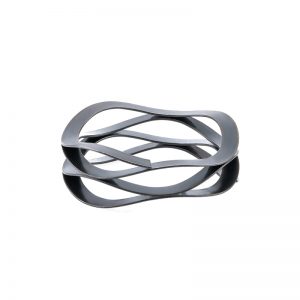
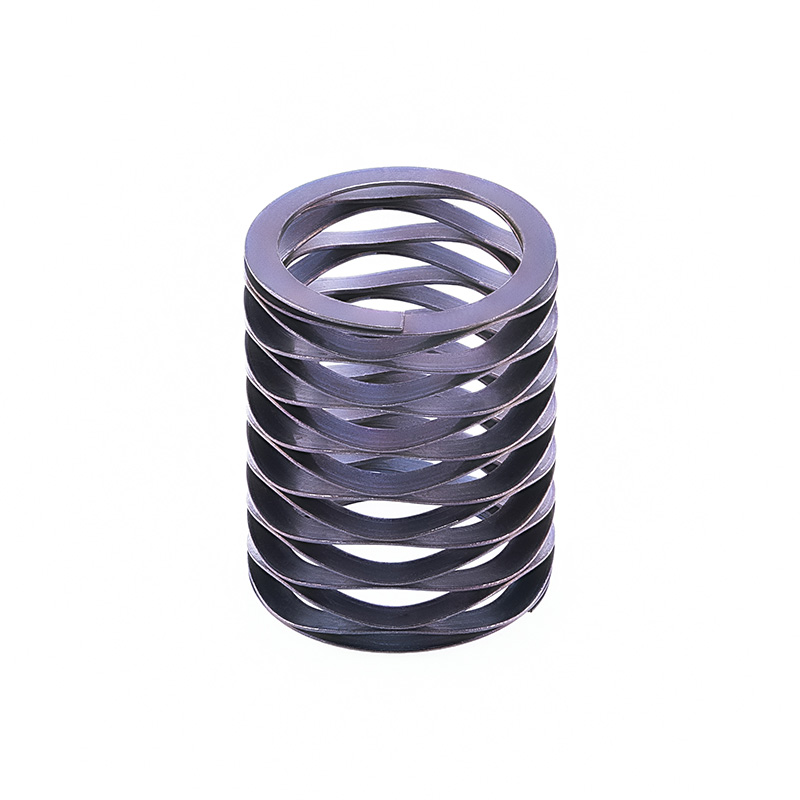
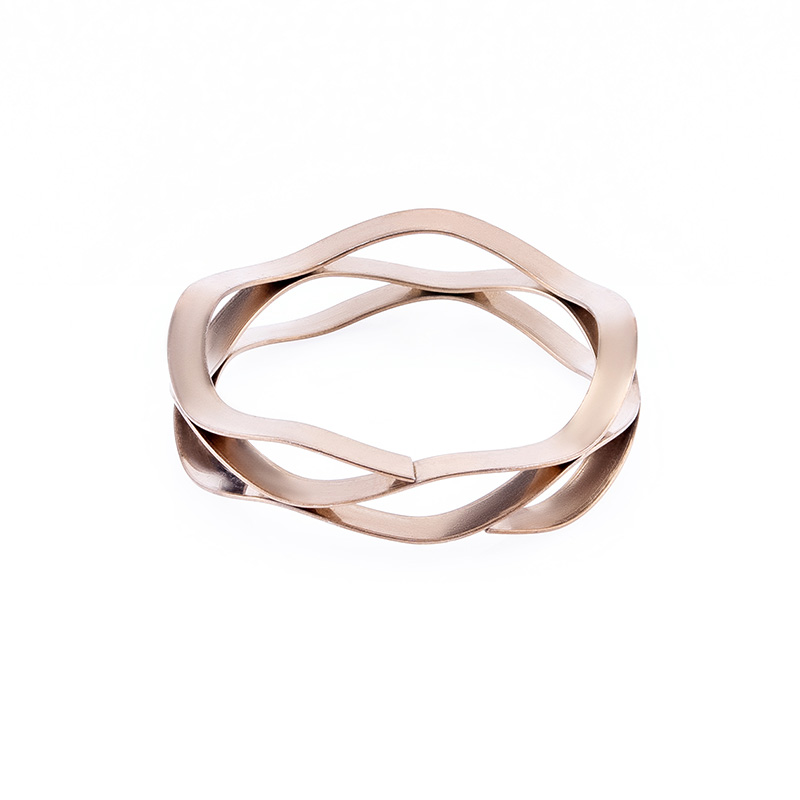
A multi turn wave spring is formed from a single continuous filament of flat wire that is coiled into two or more complete helical turns. Each turn contains multiple waves (typically 2.5 to 4 waves per turn). When an axial load is applied, the waves flatten progressively, and the spring compresses much further than a single turn design because the deflection is distributed across all turns.
The product series you provided (e.g., LM30-H1 to LM30-L5) illustrates this clearly:
-
转弯: 3, 4, 5, 6, or 7
-
Waves per turn: 3.5 (constant)
-
Free heights: From 7.62 mm (3 turns) up to 17.78 mm (7 turns)
-
Work heights: As low as 3.18 mm (highly compressed)
-
Spring rates: From a stiff 37.9 N/mm down to a soft 4.81 N/mm
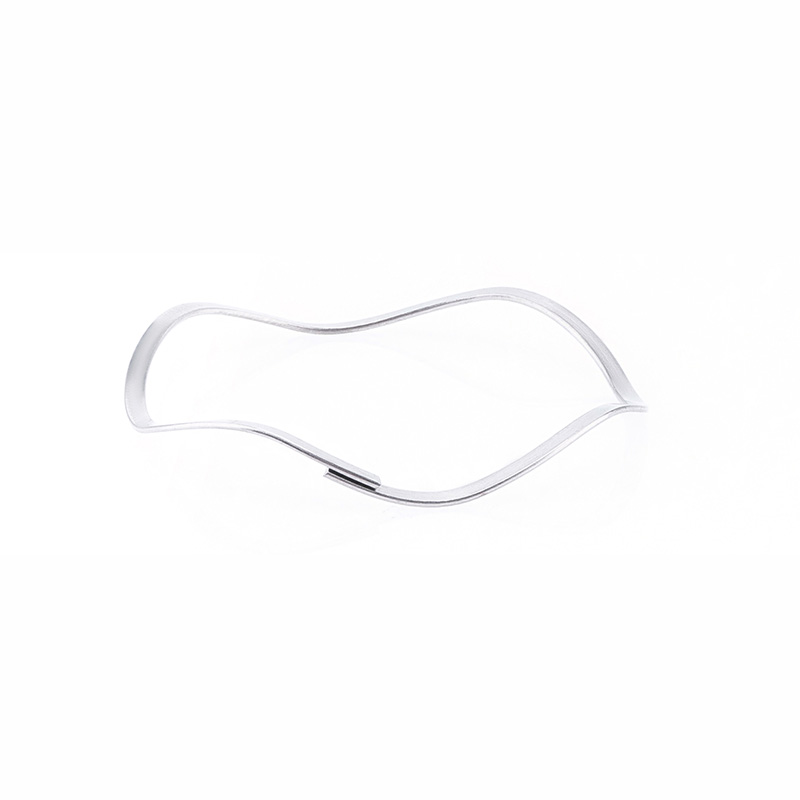
In contrast, a single turn wave spring has only one set of waves (usually 3 or 4 waves) and behaves more like a stiff, wavy washer. Its deflection is limited to the flattening of those waves – typically less than 15% of the free height.
Key Difference – Load-Deflection Curve
| 设计 | Free Height Range | Max Deflection | 回弹率 | Linearity |
|---|---|---|---|---|
| 单圈 | 1 – 4 mm | 0.5 – 1.5 mm | High (30 – 100 N/mm) | Short, steep |
| Multi turn (3-7 turns) | 5 – 25 mm | 3 – 12 mm | Low to medium (5 – 40 N/mm) | Linear over long travel |
The takeaway: 多圈波形弹簧 provide more stroke at a lower spring rate – exactly what many dynamic applications need.
When Does a Single Turn Wave Spring Make Sense?
Despite the advantages of multi turn designs, single turn wave springs are not obsolete. They excel in very specific scenarios:
-
Extreme axial space limitation – Less than 3 mm total height available.
-
High spring rate requirement – You need a strong, almost rigid preload (e.g., taking up bearing play).
-
Static or near-static application – No cyclic movement; just compensation for thermal expansion or tolerance stack.
-
Cost is the primary driver – Single turn wave springs are simpler to manufacture and cheaper per unit.
例如 Preloading a deep groove ball bearing in an electric motor. The available gap is only 2.5 mm, and you need a constant 80 N to eliminate axial play. A single turn wave spring made of 17-7 PH stainless steel works perfectly.
Limitation: If the deflection requirement exceeds 1 mm, a single turn wave spring will quickly reach solid height and lose its elastic behavior. Over-compression leads to permanent set.
Why Choose a Multi Turn Wave Spring?
Now let’s focus on the star of this comparison – the multi turn wave spring. Based on the provided product data, here are five concrete engineering advantages.
1. Long Deflection Range (Up to 10+ mm)
With 7 turns, the LM30-L5 spring has a free height of 17.78 mm and a work height of 7.39 mm – that’s 10.39 mm of total deflection while still exerting 50 N of force. For a single turn spring to achieve even 2 mm deflection, it would need a much larger diameter or would plastically deform.
Application: Piston return spring in a hydraulic cylinder where the stroke is 8 mm.
2. Low and Predictable Spring Rate
Spring rate (N/mm) decreases as the number of turns increases. Look at the LM30 series data for the same load of 130 N:
| 转弯 | 厚度(毫米) | Spring Rate (N/mm) |
|---|---|---|
| 3 | 0.46 | 37.9 (stiff) |
| 5 | 0.46 | 22.77 (moderate) |
| 7 | 0.46 | 16.25 (soft) |
A lower spring rate means the spring can accommodate larger manufacturing tolerances without generating excessive force variation. This is critical in assemblies with multiple components stacked together.
3. Superior Fatigue Life
In a multi turn wave spring, the bending stress is distributed across many waves and turns. For a given total deflection, each wave deflects less compared to a single turn spring. Lower peak stress translates directly to longer fatigue life – often 5 to 10 times longer than a single turn design under dynamic conditions.
The product description emphasizes that alloy multi turn wave springs are used in “aerospace, precision machinery, hydraulic seals, and high-end motors” – all demanding high cycle life.
4. Weight Savings of 60–70% vs. Conventional Springs
Compared to a round-wire coil spring of the same load capacity, a multi turn wave spring weighs 60–70% less. This is because flat wire has a more efficient cross-section for bending, and the multi-turn design eliminates dead coils (inactive coils that add weight but no function).
For aerospace or electric vehicle applications, every gram matters. The LM30-L5 spring, for example, would weigh only a few grams – a fraction of a comparable coil spring.
5. High Temperature and Corrosion Resistance (A286 Alloy)
The product page features an A286 alloy version. A286 is a precipitation-hardened iron-based superalloy that retains strength up to 650°C (1200°F) and resists oxidation and corrosion. This is essential for:
-
Turbocharger wastegate actuators
-
Exhaust gas recirculation (EGR) valves
-
Downhole drilling tools
-
Aircraft engine controls
A single turn spring made of carbon steel would lose its temper at these temperatures. The multi turn wave spring in A286 provides a reliable force even in extreme environments.
*“In our high-temperature valve testing, A286 multi turn wave springs maintained 95% of their initial load after 1,000 thermal cycles from room temperature to 600°C. Single turn stainless steel springs lost 40% of their load due to relaxation.”* – Thermal Systems Engineer (simulated industry feedback)
Side-by-Side Comparison Table
| 参数 | Single Turn Wave Spring | Multi Turn Wave Spring |
|---|---|---|
| Number of turns | 1 | ≥2 (typically 3-7) |
| Typical free height | 1 – 4 mm | 6 – 25 mm |
| Maximum deflection | 0.5 – 1.5 mm | 3 – 12 mm |
| Spring rate range | High (30-100 N/mm) | Low to medium (5-40 N/mm) |
| Load capacity for given OD | 中度 | High (more active material) |
| Fatigue life (dynamic) | Low (stress concentrated) | High (stress distributed) |
| Axial space efficiency | Excellent for very short spaces | Excellent for short-to-medium spaces |
| Radial space requirement | Same as multi turn | Same as single turn |
| Material options | Carbon steel, 17-7 PH, 302 SS | A286, Inconel, Elgiloy, 316 SS, 磷青铜 |
| Cost per unit | 低 | Moderate (more winding steps) |
| Typical applications | Bearing preload, anti-rattle washers | Seals, clutches, actuators, valves, and connectors |
How to Decide – A Simple 3-Step Framework
Follow this decision matrix based on your application’s requirements.
Step 1: Determine Total Deflection Needed
-
Less than 1.5 mm → Both single and multi turn could work. Consider single turn for cost savings.
-
Between 1.5 mm and 3 mm → Single turn is at its limit. Use a multi turn with 3 turns for safety.
-
More than 3 mm → Multi turn is mandatory. Single turn cannot provide this deflection without plastic deformation.
Step 2: Check Spring Rate Requirement
-
Need a stiff spring (>30 N/mm) with short travel → Single turn is suitable.
-
Need a soft spring (<20 N/mm) or moderate stiffness → Multi turn (more turns = softer).
Step 3: Consider Environment
-
High temperature (>300°C) or corrosive fluid → Multi turn wave spring in A286 or Inconel. Single turn springs are rarely available in superalloys because the manufacturing process for single turn does not justify the material cost.
-
Normal indoor or lubricated environment → Either design works; choose based on deflection and rate.
常问问题
Q1: Can I stack two single turn wave springs to get more deflection?
A: Stacking single turn springs in series (one on top of another) does increase total deflection, but it introduces instability. The springs can shift laterally, and the load-deflection curve becomes non-linear at the interface. A multi turn wave spring is a single, stable component that provides the same or better performance without the risk of tangling. Stacking is generally not recommended for dynamic applications.
Q2: Are multi turn wave springs available in materials other than A286?
A: Yes. The product line also offers stainless steel (304, 316, 17-7 PH), 铬镍铁合金 718, Elgiloy, phosphor bronze, and titanium alloys. Each material targets specific needs: 316 stainless for marine environments, Inconel for extreme heat, and phosphor bronze for electrical conductivity. The LM30 series shown uses a generic alloy – consult the manufacturer for exact material options.
Q3: How do I calculate the number of turns needed?
A: Use this rule of thumb: for a given wire thickness and wave geometry, spring rate is inversely proportional to the number of turns. If a 3-turn spring has a rate of 30 N/mm, a 6-turn spring of the same thickness will have a rate of approximately 15 N/mm (half). Deflection at a given load doubles. So choose more turns for softer, longer-travel springs. The product table confirms this – compare LM30-H1 (3 turns, 37.9 N/mm) to LM30-H2 (4 turns, 28.45 N/mm) to LM30-H5 (7 turns, 16.25 N/mm).
Q4: Do multi turn wave springs require a special housing?
A: Not necessarily. Like any wave spring, they need a counterbore or a groove with a diameter slightly larger than the spring’s outer diameter (OD) to prevent buckling. The housing’s inner diameter should guide the spring. The LM30 series, for example, operates in a 30 mm bore with a 24 mm shaft – providing radial clearance of 3 mm on each side, which is adequate. For very tall springs (>20 mm free height), use a support rod or a stepped bore.
Q5: What is the fatigue life of a typical A286 multi turn wave spring?
A: Under properly designed conditions (deflection less than 75% of available travel, no solid height contact), A286 multi turn wave springs can exceed 1 million cycles at room temperature. At 500°C, the life reduces to around 200,000 cycles – still excellent for most industrial valves and actuators. Always request fatigue test data from the supplier for your specific operating conditions.
Conclusion – Make the Right Choice for Your Application
The difference between a single turn and a multi turn wave spring is not about which is “better” in absolute terms – it’s about matching the spring’s behavior to your mechanical requirements.
Choose a single turn wave spring when:
-
You need a stiff, short-travel spring in an extremely tight axial space.
-
The deflection is less than 1.5 mm.
-
Cost is the top priority, and the environment is benign.
Choose a multi turn wave spring when:
-
Deflection exceeds 2 mm (most applications).
-
You need a lower, more predictable spring rate.
-
Fatigue life and dynamic performance matter.
-
The operating environment involves high temperatures, corrosion, or both – materials like A286 become available.
-
You want to save 60–70% weight compared to conventional coil springs.
For the vast majority of engineering challenges involving wave springs – from automotive clutches to aerospace actuators – the multi turn wave spring is the superior choice. It offers the stroke, linearity, and material flexibility that modern designs demand.
Ready to Optimize Your Spring Selection?
If your application requires a multi turn wave spring – especially in high-temperature or corrosive conditions – explore the A286 alloy series and other material options at LISpring. Their product line includes multiple turns, thicknesses, and loads (from 50 N to 130 N and beyond), all documented in detailed specification tables.
Contact their engineering team for assistance in selecting the correct part number, or request a custom design tailored to your exact free height, work height, and load requirements.
Don’t let limited axial space force you into a suboptimal design. Switch to a multi turn wave spring and get the deflection you need.
 Chinese
  English
  Dutch
Dutch  French
  German
  Italian
  Japanese
  Korean
  Portuguese
  Russian
  Spanish