
序章
If a mechanical assembly requires a secure, low-profile solution to hold bearings, gears, or sleeves on a shaft or within a housing, スパイラル止め輪 provide one of the most reliable methods for axial fixation. Unlike conventional stamped snap rings with protruding ears that may interfere with rotating components, spiral retaining rings for reliable axial fixation feature a smooth, continuous 360° retaining structure with no gaps or protrusions.
This continuous design helps distribute axial loads evenly around the shaft, reduces the risk of imbalance during high-speed operation, and enables easier installation without the need for specialized pliers. As a result, spiral retaining rings for shaft axial fixation applications are widely used in precision engineering environments where stability and reliability are critical.
Whether applied in mechanical assembly systems, used for secure shaft and bore retention, or integrated into high-performance equipment requiring precise alignment, the spiral-wound structure delivers consistent load-bearing performance across demanding industries, including automotive transmissions, aerospace actuators, medical devices, and wind energy systems.
In this guide, we will further explore the engineering principles, material selection, installation techniques, and real-world applications of spiral retaining rings, helping you understand why they are widely regarded as a premium solution for precise component positioning in mechanical assemblies.
What Are Spiral Retaining Rings? A Precision-Engineered Fastener
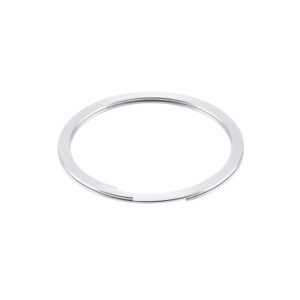
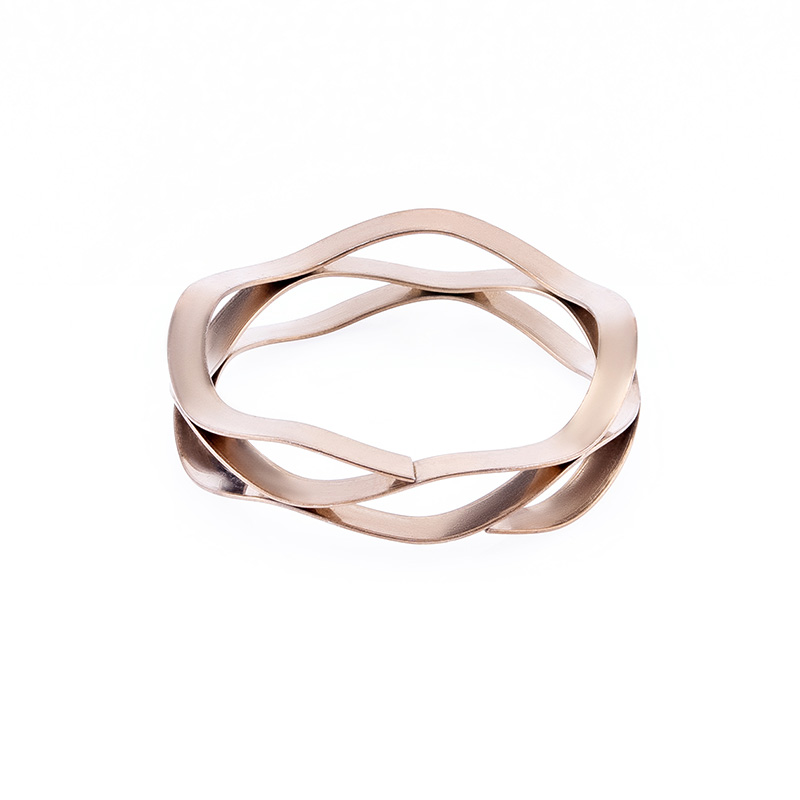
スパイラル止め輪 (also known as spiral snap rings or spiral-wound retaining rings) are mechanical fasteners formed by edgewinding a flat wire into a continuous spiral shape. The wire is coiled on its edge, producing a ring with one or more turns (typically two or three turns). This manufacturing process preserves the natural grain structure of the metal, resulting in superior strength and fatigue resistance compared to stamped alternatives.
The key physical distinction of a スパイラル止め輪 is its smooth, uniform cross-section without any ears, tabs, or overlapping ends. The ring seats into a machined groove on a shaft (external retaining ring) or inside a bore (internal retaining ring). Unlike traditional snap rings that require dedicated pliers to compress or expand through holes in their lugs, spiral retaining rings are installed using simple manual tools: external rings are gently opened and slipped over the shaft end; internal rings are compressed and inserted into the bore. This design simplicity reduces assembly time and eliminates the risk of tool slippage damaging nearby components.
A Brief Comparison: Spiral vs. Stamped Retaining Rings
The table below highlights the critical differences between spiral retaining rings and conventional stamped snap rings.
| 特徴 | スパイラル止め輪 | Stamped Snap Rings (e.g., Truarc) |
|---|---|---|
| Manufacturing method | Edgewinding (coiling flat wire) | Punching from sheet metal |
| Grain structure | Follows ring contour – no discontinuity | Interrupted by punching – stress raisers |
| 360° retaining surface | Yes, no gap in multi-turn designs | No – has lug gaps and open ends |
| Protruding ears/lugs | None – No Ears to Interfere® | Yes – requires radial clearance |
| Installation tools | Manual or simple expanding/compressing tools – no pliers | Special snap ring pliers needed |
| Suitability for high RPM | Excellent – balanced, no eccentric mass | Poor lugs cause imbalance and vibration |
| Material utilization | Nearly 100% (no scrap) | Low – large scrap from punched holes |
| Cost for large diameters | Very cost-effective | Prohibitively expensive tooling |
Engineering Advantages of Spiral Retaining Rings for Axial Fixation
1. No Ears to Interfere – Maximizing Design Space
The absence of installation lugs is arguably the most valuable feature of spiral retaining rings for shaft axial fixation applications. In compact assemblies (e.g., electric motors, gearboxes, or surgical tools), every millimeter of radial clearance matters. Protruding ears on stamped rings can collide with adjacent components, seals, or housings, forcing engineers to increase envelope size or compromise on retention. Spiral rings eliminate this problem, allowing designers to place retaining grooves very close to shoulders, bearings, or housing walls.
Furthermore, because spiral rings have no gaps in multi-turn designs (two or more turns), they provide a full 360° shoulder surface. This uniform contact prevents uneven loading of the retained component, reducing wear on bearing faces and ensuring consistent axial positioning. For spiral retaining rings for precise component positioning, this feature is indispensable in applications such as encoder mounting or optical sensor alignment.
2. Superior Dynamic Balance for High-Speed Rotating Assemblies
When スパイラル止め輪 are used on a rotating shaft, their symmetrical construction ensures near-perfect dynamic balance. Stamped rings, with their open ends and off-center lugs, introduce a small but measurable imbalance. At high rotational speeds (over 10,000 RPM), this unbalance generates vibration, noise, and premature bearing failure. Spiral rings have no such mass eccentricities. In one comparative test by a major wave spring manufacturer, a 2-turn external spiral retaining ring operating at 15,000 RPM exhibited less than 10% of the vibration amplitude measured from a comparable stamped snap ring under identical conditions.
3. Gap-Free Retention Eliminates “Rattle.”
Multi-turn spiral retaining rings do not rely on an overlapping end or a locking mechanism. Instead, the natural spring force of the coil holds the ring tightly in its groove. Because there is no open gap between ends (except in single-turn designs, which are rarely used for heavy axial loads), the ring cannot expand or contract under vibration. This prevents the “rattle” or axial play that sometimes develops with stamped rings when their lug clearance allows slight movement. Industries such as aerospace and defense mandate gap-free retention for critical flight control actuators, making spiral retaining rings used in mechanical assembly systems a preferred choice.
4. No Special Pliers Required – Faster Assembly
Installation of スパイラル止め輪 requires only simple hand tools. For external rings, an assembler opens the ring slightly using a pair of manual expanders or even two small screwdrivers, slides it over the shaft end, and releases it into the groove. For internal rings, the ring is compressed with a simple hand tool and inserted into the bore. This process can be completed in seconds, with no risk of over-stressing the ring (as can happen when over-expanding a snap ring with pliers). For high-volume production lines, manufacturers report a 30-50% reduction in assembly time when switching from stamped snap rings to spiral retaining rings.
5. Exceptional Fatigue Life and Load Distribution
The edgewinding process does not cut across the metal’s grain structure, meaning スパイラル止め輪 retain the full fatigue strength of the raw wire material. Stamped rings, by contrast, punch the profile from sheet metal, creating microscopic cracks and stress risers at the punched edges. Under cyclic axial loads (e.g., gear thrust loads in a transmission), these stress risers can propagate and lead to ring fracture. Spiral rings have no such weak points, offering a fatigue life often 2-3 times longer than comparable stamped rings, as demonstrated in accelerated life testing per SAE J1325 standards.
Additionally, the multi-turn design allows the spiral retaining ring to act as a series of stacked spring coils, distributing axial force across a wider shoulder width. This reduces localized stress on the groove and prevents groove deformation in soft materials (e.g., aluminum housings).
Material Options and Surface Treatments
スパイラル止め輪 are available in a wide range of materials to match specific environmental and mechanical requirements. The table below summarizes common choices.
| 材料 | Key Properties | 代表的なアプリケーション |
|---|---|---|
| Carbon spring steel (e.g., 65Mn, 1075) | High tensile strength (1500–1800 MPa), good fatigue life, low cost | General industrial machinery, automotive transmissions, agricultural equipment |
| ステンレス 302 / 304 | Excellent corrosion resistance, non-magnetic (304), good strength | Medical devices, food processing equipment, and marine environments |
| ステンレス 316 | Superior corrosion and pitting resistance, withstands chlorides | Offshore oil & gas, chemical plants, pharmaceutical manufacturing |
| Alloy steel (e.g., 17-7 PH) | High strength-to-weight ratio, heat treatable to high hardness | Aerospace actuators, racing transmissions, defense systems |
| Inconel / Monel (special order) | Extreme temperature resistance (up to 800°C), oxidation resistance | Gas turbine engines, exhaust systems, and high-heat industrial furnaces |
Surface Finishes for Enhanced Performance
-
Phosphate coating – Provides corrosion protection and serves as a lubricant during installation, reducing friction on the groove.
-
Zinc plating (clear or yellow) – Cost-effective corrosion resistance for carbon steel rings; up to 96 hours of salt spray protection.
-
Passivation (for stainless steel) – Removes free iron particles, maximizing natural corrosion resistance.
-
Black oxide – Offers mild corrosion inhibition and a non-reflective appearance for optical instruments.
Many manufacturers, including Lisheng Spring, offer custom material selection and heat treatment to meet specific customer specifications for spiral retaining rings for secure shaft and bore retention.
How to Select the Right Spiral Retaining Ring for Your Application
External vs. Internal Rings
-
外部スパイラル保持リング seat into a groove machined on the outside diameter of a shaft. They retain components such as gears, bearings, pulleys, or fan blades that must be held against the shaft shoulder.
-
内部スパイラル止め輪 seat into a groove machined inside a cylindrical bore or housing. They retain components like bushings, bearings, or pistons that must be prevented from moving outward.
Number of Turns: 1, 2, or 3?
Most standard スパイラル止め輪 are manufactured with two turns. A two-turn ring provides a full 360° shoulder with no gap, excellent load distribution, and moderate axial strength. Single-turn rings are rarely used because they lack a continuous shoulder and have lower load capacity. Three-turn rings offer the highest axial load capability and the widest contact surface, but they require a slightly deeper groove (greater axial height). For most applications, two-turn rings represent the optimal balance of strength, compactness, and cost.
Required Axial Load Capacity
The maximum axial load that a スパイラル止め輪 can withstand depends on the material shear strength, ring cross-section (wire thickness and width), and the groove geometry. A reliable rule of thumb for carbon steel rings is:
Load capacity (N) ≈ 0.6 × (shear strength of material) × (area of ring cross-section in shear).
For example, a carbon steel 65Mn external spiral retaining ring with a wire thickness of 1.5 mm and a radial wall of 2.5 mm (cross-section area approx. 3.75 mm²) has a shear area of two turns = 7.5 mm². With a shear strength of ~450 MPa, the theoretical load limit is about 3375 N (approx. 340 kg). Actual safe working load should be derated by a factor of 1.5-2.0, depending on dynamic conditions.
For critical applications, Lisheng Spring provides engineering calculation support to determine the optimal ring size and turn count for spiral retaining rings for precise component positioning.
Installation Groove Design Standards
To achieve reliable axial fixation, the groove geometry is as important as the ring itself. The following parameters must be specified:
-
Groove diameter – For external rings: groove OD = shaft diameter – (0.2–0.3 mm clearance). For internal rings: groove ID = bore diameter + (0.2–0.3 mm clearance).
-
Groove width (axial height) – Must match the ring’s axial thickness plus a small running clearance (typically 0.05–0.1 mm).
-
Groove bottom radius – Sharp corners are stress risers; a small radius (0.1–0.2 mm) is recommended.
-
Corner chamfer at shaft end/bore opening – A 15°–30° chamfer of 0.5–1.0 mm helps guide the ring into position without damage.
Industry standards such as NAS 669 (National Aerospace Standard) and ISO 10766 provide detailed groove dimensions for spiral retaining rings. Most manufacturers provide groove design tables specific to each ring size.
Real-World Applications of Spiral Retaining Rings
Automotive Transmissions and Electric Vehicle Drive Units
In modern automatic transmissions and e-axle units, compactness and high-speed capability are critical. Spiral retaining rings for shaft axial fixation applications secure planetary gear sets, needle bearings, and clutch packs without adding radial bulk. A leading transmission manufacturer reduced assembly time by 35% after switching from stamped snap rings to two-turn external spiral rings on all gear shafts. The smooth 360° surface also eliminated bearing damage caused by lug contact, improving warranty returns by 18%.
Aerospace Flight Control Actuators
Aerospace hydraulic actuators require absolute reliability under vibration, extreme temperatures (-55°C to 150°C), and high-cycle fatigue. スパイラル止め輪 made from 17-7 PH stainless steel are used to retain piston rods and bearing assemblies inside flight control actuators. Their gap-free design prevents any axial backlash that could affect control surface response. The FAA and EASA have approved spiral retaining rings for use in primary flight controls, citing their superior fatigue life compared to stamped rings.
Medical Surgical Drills and Robotics
High-speed surgical drills (up to 80,000 RPM) demand perfectly balanced components. Using spiral retaining rings used in mechanical assembly systems, manufacturers secure the tool couplings and bearings inside the handpiece. Because the rings have no protruding ears, they generate no imbalance or heat spots, allowing surgeons to operate with precision. Additionally, the 316 stainless steel construction resists autoclave sterilization (up to 135°C, high-pressure steam).
Industrial Robotics and Collaborative Robots (Cobots)
Robotic arm joints incorporate harmonic drives or strain wave gearing, which require precise axial preload and retention. Spiral retaining rings for secure shaft and bore retention hold the wave generator bearing onto the input shaft. The ring’s uniform cross-section allows robotic engineers to achieve consistent axial positioning within ±0.02 mm, critical for repeatable positioning accuracy. Moreover, the rings can be easily removed for servicing, as they don’t need special pliers.
Wind Turbine Pitch and Yaw Systems
In wind turbine nacelles, pitch control mechanisms adjust blade angles to optimize energy capture and prevent overloads. These systems often operate in remote, hard-to-access locations, so reliability and long service life are paramount. スパイラル止め輪 made from corrosion-resistant 316 stainless steel secure the pitch bearing within the hub. Their long fatigue life (estimated 20+ years) matches the turbine’s design life, eliminating the need for mid-life ring replacement.
Comparison Table: Spiral Retaining Rings vs. Constant Section Retaining Rings
Constant-section retaining rings (also called “hoop rings”) are another alternative. They are formed from a flat sheet with a constant rectangular cross-section and a single gap. Here‘s how spiral rings compare.
| Parameter | Spiral Retaining Ring (2-turn) | 定数部止め輪 |
|---|---|---|
| 360° contact | Yes (no gap) | No – has an open gap at one point |
| Protective lug | None | May have small ears for pliers (not always) |
| Ability to handle high RPM | Excellent (balanced) | Fair – gap causes a slight imbalance |
| Installation ease | Simple hand tools | Requires pliers or heavy compression |
| Axial load capacity | High (distributed over two turns) | Moderate (single cross-section) |
| Cost for large diameters (>150 mm) | Very low (edgewinding uses no expensive tooling) | Moderate to high (custom die required) |
| Material availability in exotic alloys | Wide (any wire alloy can be edgewound) | Limited (sheet availability restricts alloys) |
よくある質問
Q1: Can spiral retaining rings be reused after removal?
Yes, if the ring is not permanently deformed. Multi-turn spiral rings retain their elasticity. Inspect for damage before reusing. Do not reuse if the ring shows cracks or takes a permanent set.
Q2: What is the maximum temperature for a stainless steel spiral retaining ring?
304 stainless retains useful strength up to 550°C (1022°F). For higher temperatures (up to 800°C), use Inconel or Nimonic alloys available by special order.
Q3: How do I choose between an external and internal spiral retaining ring?
Use external for shafts: the ring seats in a groove on the shaft’s outside diameter to retain components like gears. Use internal for bores: the ring seats inside a housing to retain bearings or bushings.
Q4: Are spiral retaining rings available in custom sizes?
Yes. Leading manufacturers like Lisheng Spring offer custom diameters, cross-section dimensions, and turn counts. Minimum order quantities can be as low as 50 pieces for some sizes.
Q5: Do spiral retaining rings require a groove with a specific surface finish?
A surface finish of 3.2 µm Ra or better is recommended. Smooth groove walls reduce wear on the ring and prevent stress concentration. Avoid sharp edges.
Q6: Can spiral retaining rings withstand axial shock loads?
Yes, provided the ring is properly sized. Multi-turn construction distributes shock loads across two or three coils, reducing peak stress. For high shock applications, use a three-turn design.
結論
From compact electric motors to heavy-duty wind turbines, スパイラル止め輪 provide the most reliable, balanced, and easy-to-install solution for axial fixation. Their gap-free 360° retaining surface, absence of interfering ears, superior fatigue life, and compatibility with high-speed rotation make them the first choice for engineers who demand precision and durability. Whether you require spiral retaining rings for precise component positioning in a medical robot or spiral retaining rings for secure shaft and bore retention in an industrial gearbox, the right spiral ring can dramatically improve assembly efficiency and product longevity.
At 礼勝泉, we specialize in manufacturing high-performance spiral retaining rings with exacting tolerances, advanced materials, and custom engineering support. Our product range includes 2-turn external and internal rings, heavy-duty designs, corrosion-resistant stainless steel options, and even custom sizes tailored to your unique application.
Please feel free to お問い合わせ anytime with any questions or needs.
 Japanese
  English
  Chinese
  Dutch
Dutch  French
  German
  Italian
  Korean
  Portuguese
  Russian
  Spanish