
Humanoid robots are rapidly evolving toward greater dexterity, stability, and human-like motion. At the core of these capabilities lie the joints, and the “soul” of each joint is the precision reducer. As the critical component that determines motion accuracy, payload capability, torque density, and servizio life, the reducer is often regarded as the heart of humanoid robot joints.
Today’s humanoid robot reducers mainly include harmonic drive reducers, RV reducers, planetary reducers, e cycloidal reducers, each chosen based on load, stiffness, backlash requirements, and structural constraints:
-
Harmonic reducers: small size, lightweight, high reduction ratio, and compact structure—currently the mainstream solution in humanoid robots.
-
RV reducers: high rigidity, heavy-load capability, strong shock resistance, and high precision, suitable for shoulder and upper-arm joints.
-
Planetary reducers: high rigidity, strong wear resistance, low cost, easier manufacturing; however precision is lower—used in hands, servo actuators, and integrated driver modules.
-
Cycloidal reducers: high accuracy, high load capacity, low noise, and compact design—ideal for waist, hip, and leg joints.
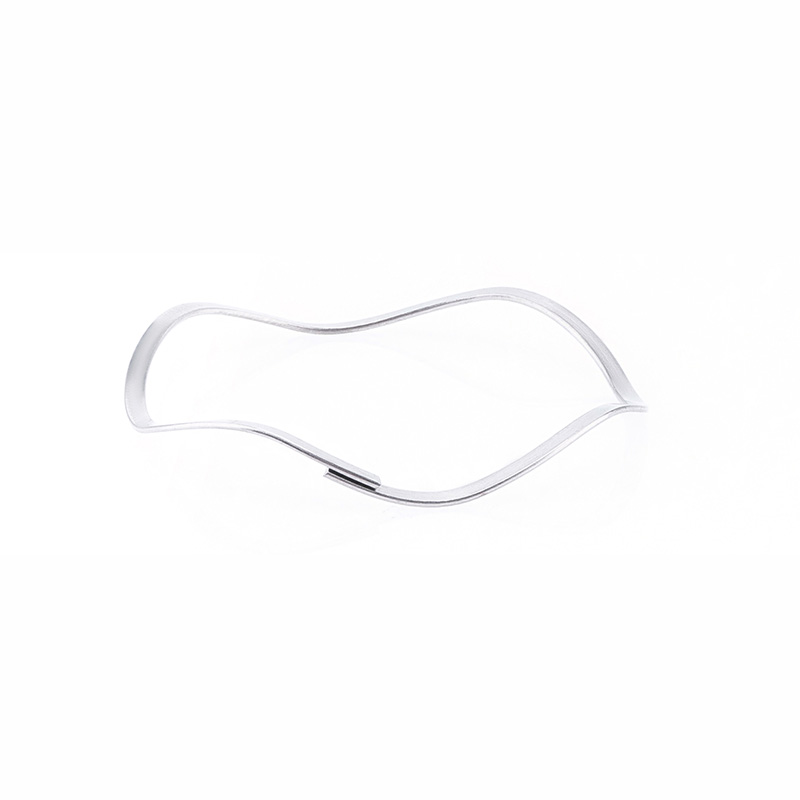
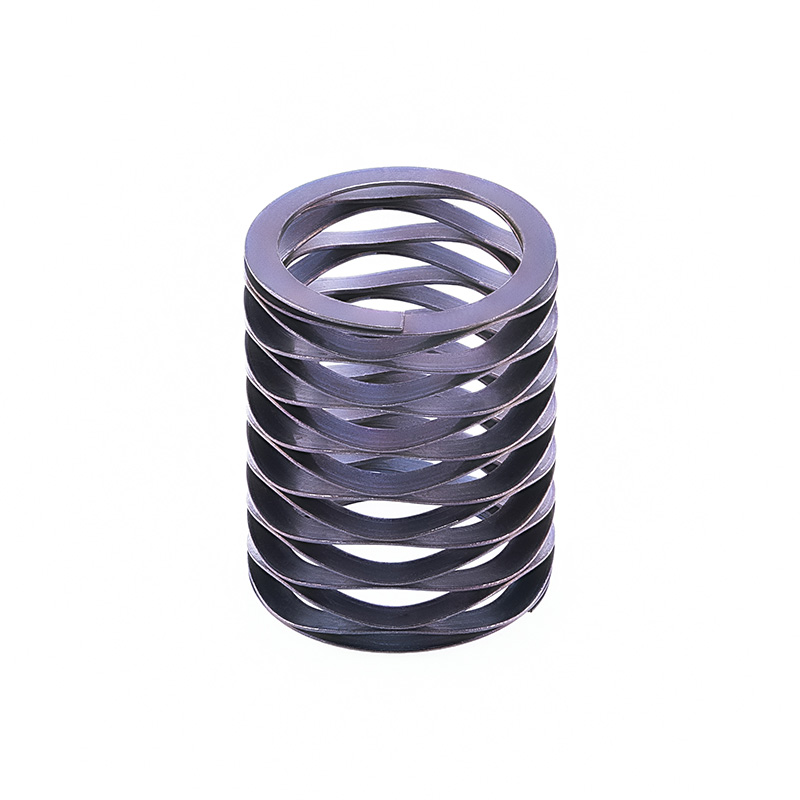
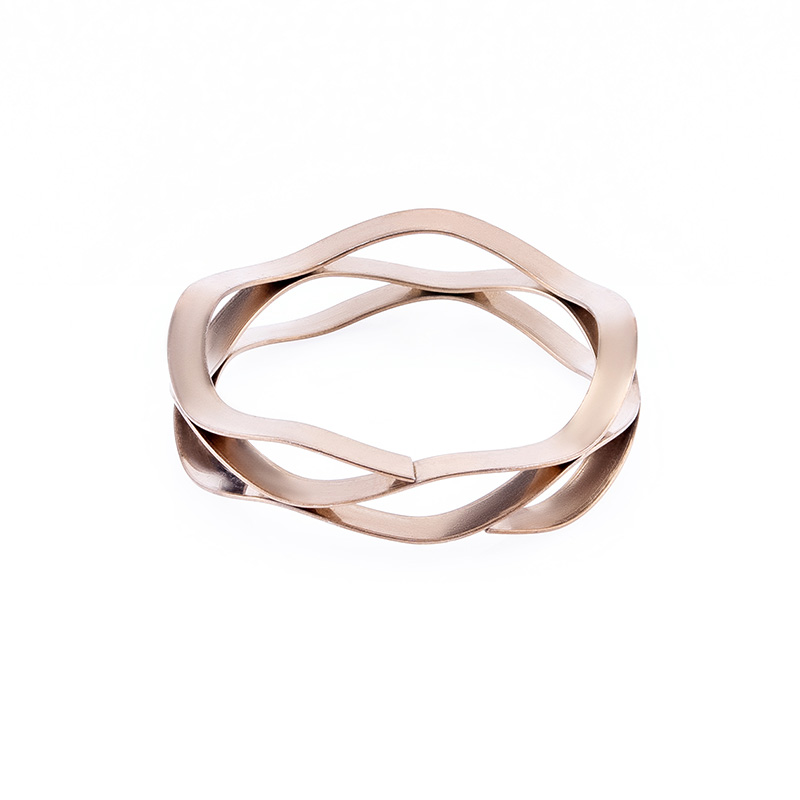
Across all these reducer types, wave springs play an increasingly critical role in optimizing joint performance, improving assembly reliability, and enabling further miniaturization of humanoid robots.
1. Why Sorgenti d'onda Are Essential in Robot Joint Reducers
Lispring’s flat-wire multi-turn wave springs provide multiple advantages specifically suited to the demanding environments of humanoid robot joints:
(1) Compact Axial Size for Lightweight Joints
Wave springs can reduce axial height by up to 50% compared with traditional round-wire compression springs. This allows reducer and joint assemblies to be thinner and lighter—essential for improving robot agility and battery life.
(2) Stable Preload for High-Precision Motion
Precision harmonic and cycloidal reducers require controlled axial preload for:
-
Eliminating backlash
-
Maintaining gear mesh precision
-
Reducing vibration and torque ripple
-
Achieving repeatable motion accuracy
Lispring preload wave spring provide consistent and linear load–deflection curves, maintaining optimal preload even under long-term cyclic operation.
(3) Compensation for Thermal Expansion and Wear
Humanoid robot joints frequently experience:
-
Temperature rise from motors and drives
-
Long-term materiale wear
-
Micro-movements during high-frequency joint motion
Custom wave springs compensate for these deviations by providing constant-force compliance, preventing accuracy loss over time.
(4) High Fatigue Life for Dynamic Robot Movements
Robot joints operate at high speed with continuous oscillation. Lispring uses flat wire with optimized stress distribution and surface finishing, delivering:
-
>1 million cycle fatigue life
-
Low stress concentration
-
Improved reliability in dynamic robotics environments
2. Wave Springs in Different Reducer Types
(1) Harmonic Reducers
Wave springs are used for:
-
Preloading flexible bearings
-
Maintaining axial stiffness
-
Stabilizing elliptical cam movement
-
Reducing noise and lost motion
Their compact size fits perfectly into harmonic drive’s tight axial constraints.
(2) RV Reducers
Wave springs are applied in:
-
Roller bearing preload
-
Eccentric cam assemblies
-
Compensating backlash changes during load shocks
Their durability supports RV reducers’ high rigidity and heavy-load characteristics.
(3) Planetary Gear Reducers
Molle a onda provide:
-
Preload for input/output bearings
-
Structural compensation for manufacturing tolerances
-
Cost-effective stiffness control in small joint actuators
Ideal for robot fingers, wrists, and small modular actuators.
(4) Cycloidal Reducers
Typical functions include:
-
Preloading needle bearings
-
Ensuring precise cycloidal disc engagement
-
Maintaining low noise and high efficiency
Lispring stainless steel wave springs help enhance the smoothness and precision of leg and hip joints.
3. Why Choose Lispring Wave Springs for Humanoid Robots
-
Specialized in flat-wire wave springs for 16+ years
-
Custom design for harmonic/RV/cycloidal actuator structures
-
Tight tolerance manufacturing for robotic-grade precision
-
High-temperature materials: SUS304, SUS316, Inconel X-750/718
-
Automated forming + inline inspection for consistency
-
Proven reliability in robotic actuators, servo systems, and medical devices
4. Conclusion
As humanoid robots pursue higher intelligence and motion capability, every joint must deliver precise, smooth, and stable movement. Precision reducers define the mechanical “heart” of these joints—while wave springs serve as the key elastic elements ensuring preload stability, compactness, and long-term durability.
Lispring continues to support leading robotics manufacturers with high-performance wave springs tailored for harmonic drives, RV reducers, planetary actuators, and cycloidal gear systems, helping advance the next generation of humanoid robotics.
 Italian
  English
  Chinese
  Dutch
Dutch  French
  German
  Japanese
  Korean
  Portuguese
  Russian
  Spanish