
In modern mechanical manufacturing and precision assembly, axial fixation and positioning of parts are crucial for ensuring stable operation. Traditional open retaining rings, over time, have gradually exposed issues such as easy breakage of the lugs, uneven force distribution, and complex assembly and disassembly. A new type of retaining ring without lugs—the spiral retaining ring—is gradually replacing these traditional solutions and becoming the preferred retaining device in industries such as high-end equipment manufacturing, automotive parts, aerospace, and hydraulics and pneumatics.
Definition and Structural Features of Spiral Retaining Rings
Definizione
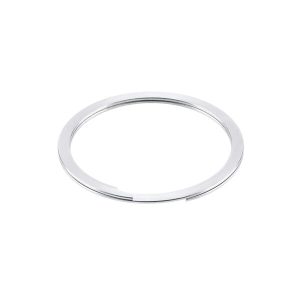
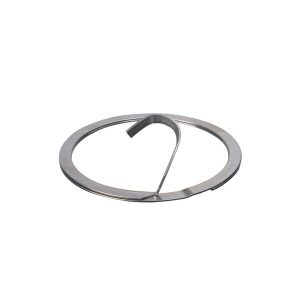
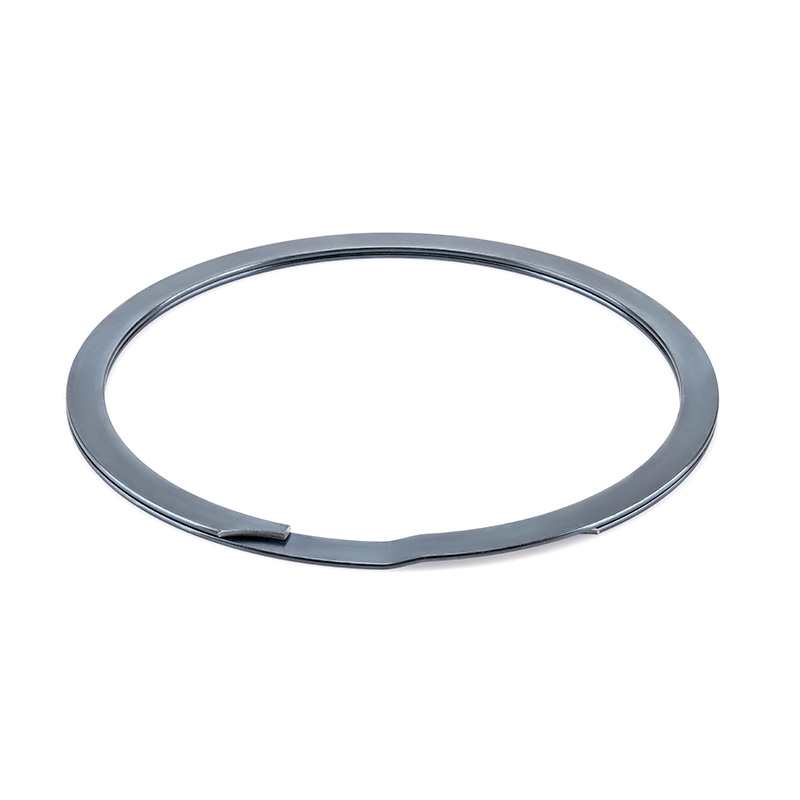
UN anello di tenuta a spirale is an annular metal fastener formed by continuous spiral winding to form a closed structure. It fits into a shaft groove or hole to provide axial positional retention and fixation of parts. Compared to traditional retaining rings, it lacks openings or lugs, ensuring uniform force distribution along its entire circumference and providing higher fatigue resistance.
Structural Principle
Spiral retaining rings typically have a rectangular cross-section or a custom shape. They are processed into the desired cross-section through cold rolling or precision turning, and then coiled into shape along a spiral trajectory using specialized coiling equipment. During installation, the retaining ring is pushed into the groove along the spiral direction, securing the ring using the metal’s elasticity and friction.
Basic Specifications and Types
Common types of spiral retaining rings include:
- Single-Turn Retaining Rings: Suitable for light-load, space-saving applications.
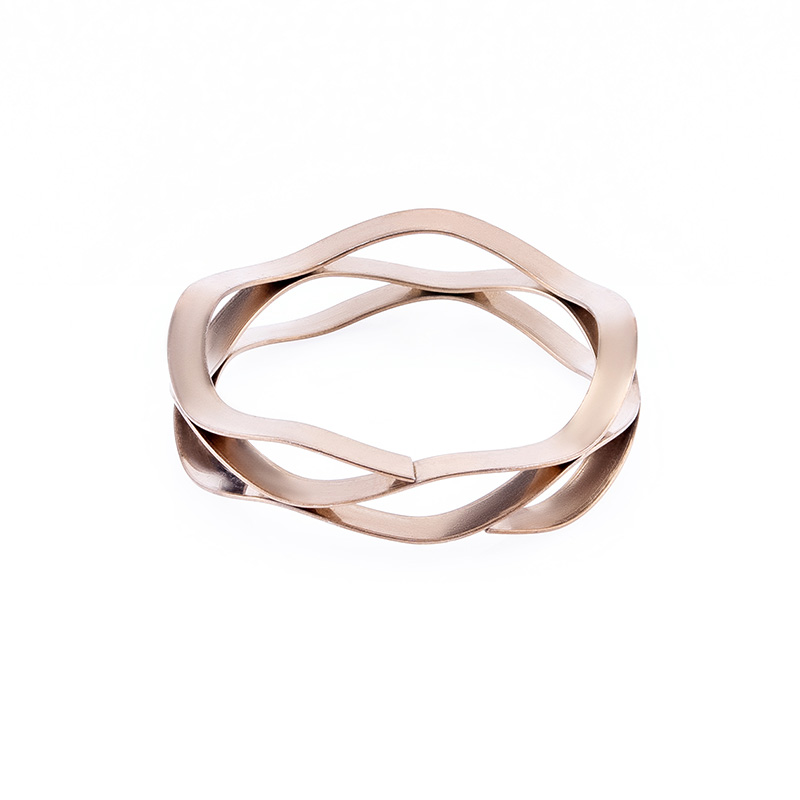
- Multi-Turn Retaining Rings: Composed of two or three turns, they offer high load-bearing capacity and are suitable for high-load applications.
- Internal Retaining Rings: Installed in a hole to retain external components.
- External Retaining Rings: Installed outside the shaft to retain internal components.
Spiral Retaining Ring Installation Methods
Pre-Installation Preparation
- Dimension Matching: Confirm that the inner/outer diameter of the retaining ring meets the progetto standards for the groove diameter, groove width, and groove depth.
- Cleaning and Inspection: Ensure the groove is free of burrs and oil to avoid damaging the retaining ring or affecting the fit during installation.
- Tool Selection: Small retaining rings can be installed by hand, while large retaining rings or high-hardness retaining rings require installation tools (such as a dedicated pusher).
Installation Steps
- Starting Point: Align one end of the retaining ring with the notch.
- Screw-In: Push the retaining ring into the groove, one turn at a time, following the spiral direction.
- Checking Seat: Ensure the retaining ring is fully seated in the groove, with no warping or protrusions.
Installation Precautions
- Avoid forcible pressure-insertion to prevent permanent deformation of the retaining ring.
- When installing in a low-temperature environment, heat the retaining ring slightly to improve its elasticity.
Removal Methods of Spiral Retaining Rings
Removal Tools
- Needle-nose pliers, tweezers
- Specialized removal push rod
- Small flat-blade screwdriver (use with caution to avoid scratching the notch)
Removal Steps
- Find the end of the retaining ring and grip or hook it with a tool.
- Push the retaining ring out one turn at a time in the spiral direction.
- Wrap it with your hands or a cloth when storing to prevent it from popping out and injuring anyone.
Removal Techniques
- For stuck or rusted retaining rings, spray them with lubricant and let them sit for a few minutes before removing them.
- Large retaining rings can be removed while rotating to reduce friction.
Main applications of Spiral Retaining Rings
Spiral retaining rings, due to their high strength, easy assembly and disassembly, and adaptability, are widely used in:
- Mechanical Manufacturing
- Axial positioning of gears, pulleys, and couplings
- Positioning components in precision transmission systems
- Automotive
- Securing engine crankshafts and piston pins
- Positioning and preventing internal transmission components from falling out
- Aerospaziale
- Securing aircraft landing gear and engine turbine components. Preventing high-speed rotating parts from loosening.
- Electronics and home appliances
- Limiting rotating parts such as motor rotors and fans.
- Hydraulic and pneumatic equipment
- Locking moving parts such as valve cores and piston rods.
Functions and Values of Spiral Retaining Rings
- Preventing axial displacement: Prevents parts from sliding or falling off axially.
- Bearing shock and vibration: Alleviates instantaneous impact forces, extending component life.
- Optimized structure: Reduces component design space compared to traditional retaining rings.
Core Features of Spiral Retaining Rings
- Installation and removal are relatively simple, eliminating the need for complex procedures.
- Stable performance allows for use in heavy-duty equipment and high-speed applications.
- Excellent shock and vibration resistance.
- Compact yet powerful, they facilitate a wide range of applications.
- Custom sizes are available to meet diverse requirements.
Comparison of Spiral Retaining Rings and Traditional Retaining Rings
| Comparison Item | Anello di ritenzione a spirale | Traditional Snap Ring |
| Shape Structure | Continuous spiral, no lugs | Open ring with lugs |
| Installation Method | Spiral feed or pull-out | Requires snap ring pliers |
| Force Distribution | 360° uniform | Localized force, prone to stress |
| Strength & Life | High, suitable for heavy loads | Lower, lugs prone to fatigue |
| Space Occupation | Smaller | Larger |
| Costo | Slightly higher | Lower |
| Application Flex. | Fits both standard and non-standard | Mainly for standard grooves |
Spiral Retaining Ring Usage Guide
- Selection: Consider factors such as diameter, groove width, groove depth, load, rotational speed, and environmental corrosiveness.
- Installation Environment: Keep the groove smooth and burr-free.
- Lubrication and Protection: Lubricant or rust inhibitor can be used in high-speed or corrosive environments.
- Regular Inspection: Regularly inspect the retaining ring’s condition under high-vibration and high-impact conditions.
Future Technology Trends
- Materiale Upgrades: Use high-strength alloy steels and titanium alloys to improve fatigue life.
- Surface Treatment Innovations: PVD and DLC coatings enhance wear resistance and corrosion resistance.
- Intelligent Monitoring: Integrate sensors to monitor retaining ring looseness or fatigue.
- Integrated Structure: Integrate with the component body to reduce assembly steps.
Conclusione
As a high-performance fastener, spiral retaining rings are gradually replacing traditional retaining rings in various industries due to their advantages such as uniform force distribution, secure structure, easy installation and removal, and strong adaptability. With the future trend of high-end equipment manufacturing and intelligent assembly, their application scope will further expand. Reasonable selection, correct installation and regular maintenance will enable the spiral retaining ring to maximize its efficiency in the mechanical system and significantly improve the reliability and servizio life of the equipment.
If you have a need for spiral retaining rings, we recommend contacting Lipris for consultation!
 Italian
  English
  Chinese
  Dutch
Dutch  French
  German
  Japanese
  Korean
  Portuguese
  Russian
  Spanish