
Introduction
Engineering design confronts a recurring paradox: the most critical mechanical functions—maintaining bearing preload, compensating for thermal expansion, and eliminating axial play—almost invariably occur where space is scarcest. When the available axial envelope shrinks to less than a millimeter, conventional coil springs become unwieldy architectural liabilities, and stamped Belleville washers introduce friction and hysteresis that undermine precision.
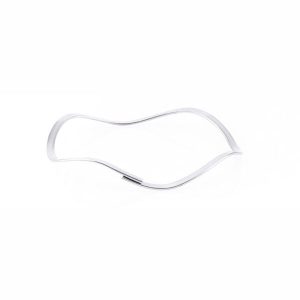
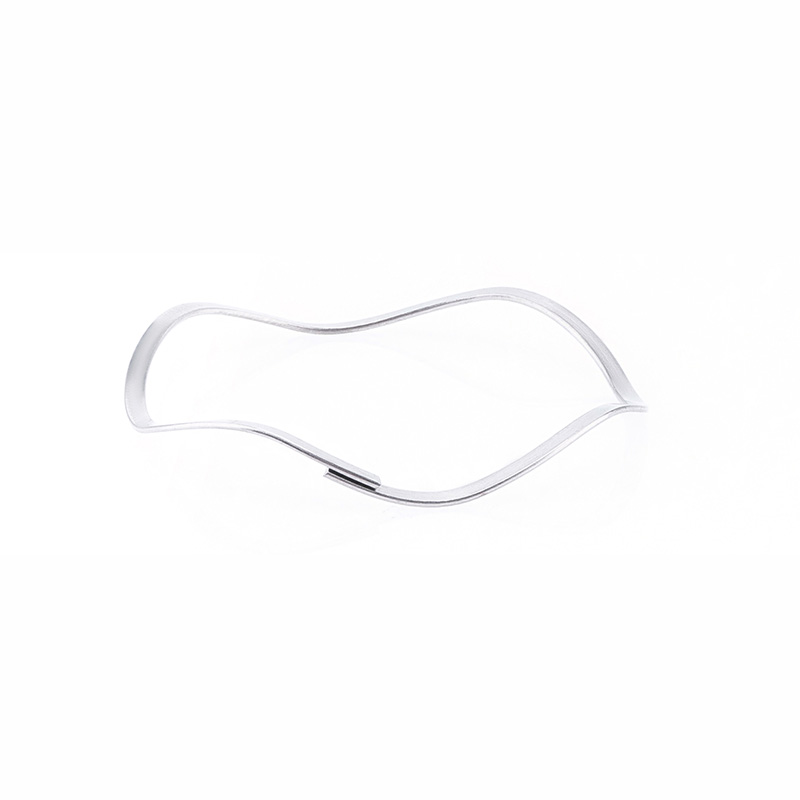
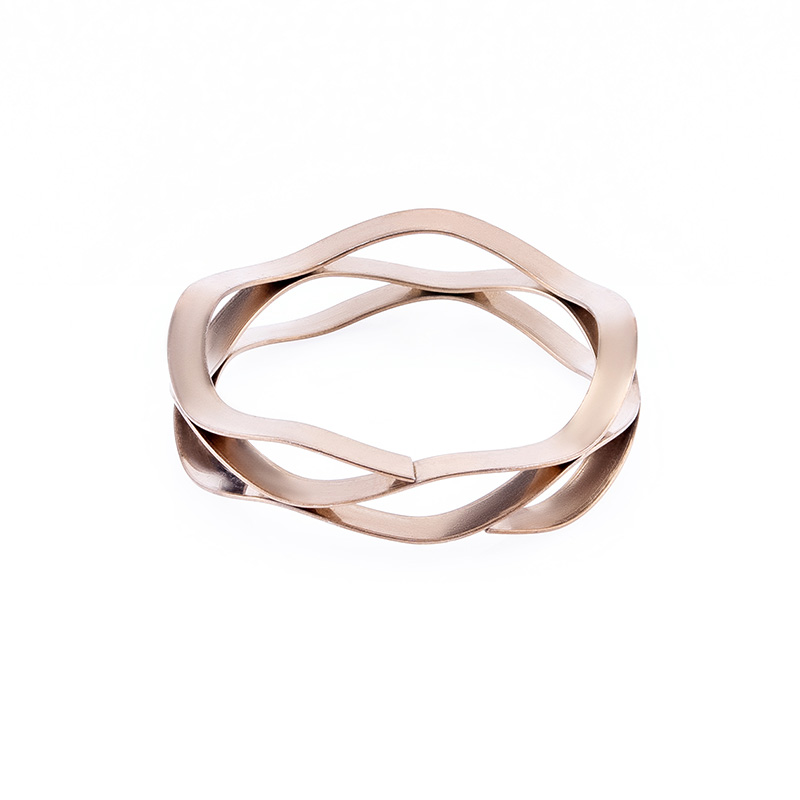
In such constrained environments, the wave spring washer—specifically the single-turn overlap configuration—emerges as the definitive solution. Unlike gap-style wave washers prone to binding during radial expansion, the overlap design allows free circumferential movement, eliminating hang-up and ensuring smooth, predictable performance. Fabricated from flat wire and formed into precise sinusoidal waves with overlapping ends, this component delivers a linear load curve while occupying a fraction of the vertical space required by traditional alternatives.
This guide draws on real-world manufacturing data and material science to demonstrate why the single-turn overlap wave spring washer—particularly when engineered from high-performance alloys like 17-7PH—is an essential asset for precision mechanical devices operating under tight spatial constraints.
Defining the Single-Turn Overlap Wave Spring Washer
Anatomy of the Overlap Design
A wave spring washer is a precision elastic element composed of multiple peaks and troughs, typically wound from flat wire rather than round stock. However, within the category of single-turn wave washers, there is a critical distinction between Gap and Overlap types.
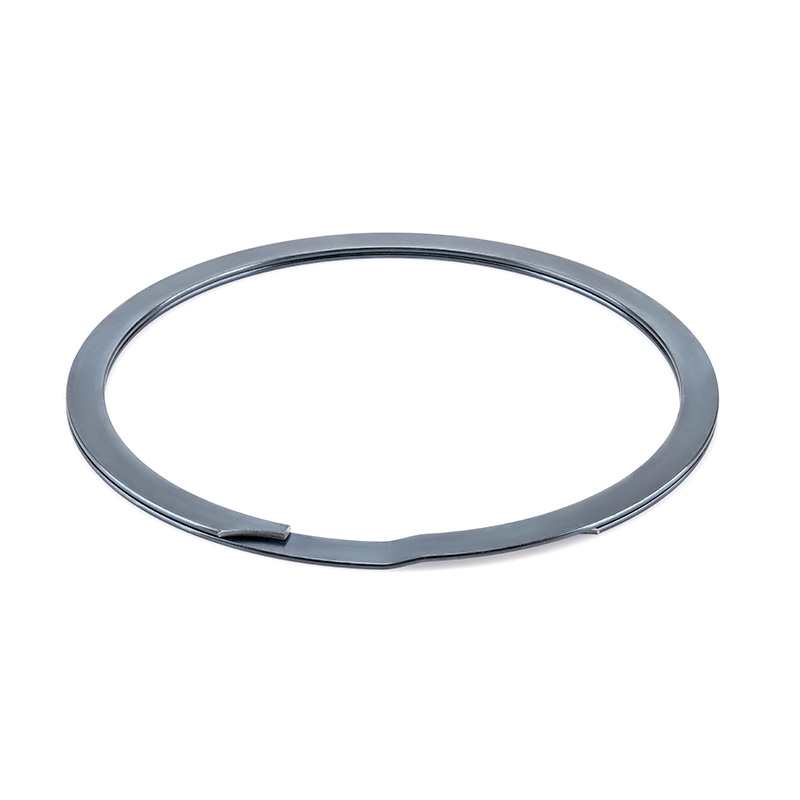
In a standard gap wave spring, the ends of the ring are separated by a small space. While functional in static bores, this design poses a risk in dynamic applications: as the spring compresses and its outer diameter expands radially, the gap can close, leading to the ends butting against each other. This causes binding, unpredictable force spikes, and potential scoring of the bore wall.
The single-turn overlap wave spring washer solves this elegantly. As described in precision manufacturing guidelines, the ends of the spring are designed to overlap one another. During compression, the spring is free to expand circumferentially within the cavity. The overlapping ends simply slide past each other, ensuring the outer diameter growth is unimpeded, and the spring remains free to move around the circumference. This eliminates the hang-up typical of stamped wave washers, providing a dependable and accurate fit.
Material Matters: The Role of 17-7PH and Stainless Steels
The performance of a wave spring washer is inextricably linked to its metallurgy. While carbon steel (like 60Si2MnA or 50CrVA) offers good elasticity, applications requiring corrosion resistance and high fatigue life demand stainless steel.
A premier material specified by leading wave spring washer suppliers is 17-7PH stainless steel (also known as SUS631). This is a precipitation-hardening alloy that offers a unique combination of attributes:
-
High Strength: Comparable to many alloy steels.
-
Excellent Fatigue Life: Essential for the millions of cycles experienced in high-cycle wave spring applications.
-
Corrosion Resistance: Superior to 17-4PH in many chemical and marine environments.
-
Formability: Can be formed into complex wave shapes in a relatively soft condition before being hardened via heat treatment to achieve final spring properties.
Other common materials include SUS301 for general-purpose corrosion resistance and Inconel variants for extreme temperature environments. The selection of flat wire material directly impacts the spring rate (N/mm) and the maximum allowable working stress.
Quantifying the Advantage: Space, Weight, and Precision
The 50% Solution: Reducing Envelope Size
The most compelling argument for a wave spring washer is its volumetric efficiency. Based on industry data from precision manufacturers, replacing a conventional round wire coil spring with a single-turn overlap wave spring can reduce the axial space and component weight by 40% to 50%.
Consider this comparison for a given load requirement:
| Design Parameter | Round Wire Coil Spring | Single-Turn Overlap Wave Spring Washer | Engineering Impact |
|---|---|---|---|
| Solid Height | High (Dia. x N Coils) | Extremely Low (Typically 1.5x to 2x Material Thickness) | Enables thinner device profiles (e.g., connectors, pumps). |
| Radial Expansion | Diameter increases (barrel effect). | Controlled Expansion (Overlap ends prevent binding). | Allows tighter bore tolerances without friction. |
| End Configuration | Requires grinding flat for stable seating. | Naturally Flat Seating (Milled flat wire). | Eliminates secondary machining cost and ensures perpendicular load application. |
| Weight | High material usage. | Reduced Material Usage (Up to 50% lighter). | Critical for aerospace and portable medical devices. |
Decoding the Load/Deflection Curve
Engineers rely on wave spring washer technology not just for space but for predictability. The single-turn overlap design typically features 3 or 4 waves per turn.
Looking at a standard specification table (e.g., Part No. LB-0039 operating in a 10mm bore), we observe a Spring Rate of approximately 48 N/mm. This rate is relatively linear through the working deflection range (typically 30% to 70% of total available deflection).
This linearity is crucial for bearing preload applications. As bearings wear slightly or the housing expands thermally, the wave spring washer maintains a consistent axial force. Unlike a Belleville washer, which can have a highly digressive curve (force drops off sharply after a point), the wave spring provides a softer, more forgiving clamp that protects delicate ceramic or miniature bearings.
Critical Applications and Engineering Scenarios
The single-turn overlap wave spring washer excels in environments characterized by:
-
Short Deflection Requirements: Where the axial movement is minimal (e.g., take-up of tolerance slack).
-
Low to Medium Force Ranges: Typically from 20N to 150N, depending on diameter and thickness.
-
Dynamic Radial Growth: Specifically, where the bore diameter is tight,t and any binding would cause catastrophic failure.
Example Scenarios:
-
Sealed Electrical Connectors: Maintaining contact pressure between mated halves while allowing for expansion due to thermal cycling. The low profile of the wave spring washer keeps the connector shell compact.
-
Miniature Ball Bearing Preload: In dental handpieces or spindle motors, a single turn wave spring washer for bearing preload eliminates axial play, reducing noise and vibration without adding excessive drag torque.
-
Hydraulic and Pneumatic Valves: Providing a soft return force for spools or poppets where a full coil spring would block flow paths.
Manufacturing Process and Quality Assurance
The performance of a wave spring washer is only as good as the precision of its manufacture. Advanced suppliers utilize computer-aided design (CAD) systems to determine exact geometric dimensions because there is no unified international standard for every custom profile.
The Process Flow:
-
Material Preparation: Flat wire (e.g., 17-7PH Condition A) is precision-slit to exact width and thickness tolerances.
-
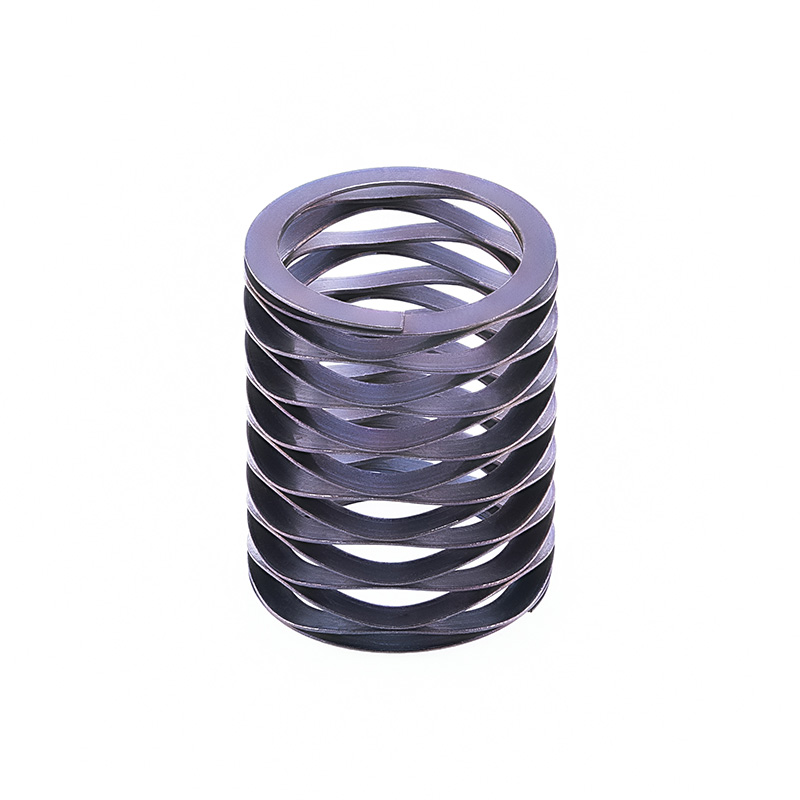
CNC Forming: Unlike traditional coiling, wave spring washers are formed on automated punching machines or edge-winding CNC equipment. This ensures that the peaks and valleys are perfectly concentric and the overlap is consistent.
-
Heat Treatment: The springs undergo specific heat treatments (austenite conditioning and precipitation hardening for 17-7PH) to achieve the specified hardness and spring temper.
-
Surface Finishing: Options include bluing (oxide finish for carbon steel), phosphating, electroplating, and electrophoresis for corrosion protection or color coding.
-
100% Inspection: High-quality suppliers employ online spring testing equipment, CNC spring testers, and optical comparators to ensure every single piece meets the load at working height specification.
Comparison Analysis: Overlap vs. Gap vs. Multi-Turn
To ensure the correct wave spring washer is specified, it is helpful to contrast the overlap variant with its close relatives.
| Feature | Single-Turn Overlap Wave Washer | Single-Turn Gap Wave Washer | Multi-Turn Wave Spring |
|---|---|---|---|
| Radial Expansion | Free to expand. Ends slide. | Constrained. Gap closes, risk of binding. | Expands freely (ends are nested). |
| Solid Height | Slightly higher than Gap due to overlap thickness. | Lowest possible solid height. | Higher (multiple layers of wire). |
| Load Capacity | Low to Medium. | Low to Medium. | Medium to High. |
| Deflection Range | Short. | Short. | Long (proportional to the number of turns). |
| Best Use Case | Dynamic bores, tight tolerances. | Static bores or very large clearance. | Replacing long coil springs. |
Maintenance and Longevity Best Practices
The wave spring washer is a low-maintenance component, but its longevity is tied to installation quality. According to engineering guidelines, maintenance consists primarily of visual inspection for:
-
Signs of wear or fretting at the wave crests.
-
Misalignment in the groove or bore.
-
Damage to the overlap section.
Critical Installation Note: Ensure the wave spring washer is installed according to manufacturer guidelines and is not subjected to loads exceeding its rated capacity. Over-compressing a wave washer past its “Work Height” will induce plastic deformation (yielding), resulting in a permanent loss of spring force. Keeping the spring free of debris ensures the waves can flatten smoothly without friction-induced hysteresis.
FAQ
1. Why choose an overlap wave spring washer over a standard gap wave washer?
The overlap design allows the spring’s outer diameter to expand freely during compression without the ends binding. In tight bores, a gap washer can lock up, causing erratic performance and potential damage to the housing. The overlap type provides smoother, more reliable operation in dynamic applications.
2. What is the advantage of 17-7PH stainless steel for wave spring washers?
17-7PH offers an exceptional combination of high tensile strength (comparable to alloy steel) and excellent corrosion resistance. It is ideal for high-cycle wave spring washer applications in aerospace, medical, and marine environments where both fatigue life and environmental resistance are non-negotiable.
3. Can a single-turn wave spring washer replace a coil spring?
Yes, often with significant space savings. If your application requires a short deflection and low to medium force, a wave spring washer can reduce the axial space required by up to 50% compared to a round wire coil spring of equivalent load capacity.
4. How do I determine the correct load for my wave spring washer?
You should specify the Work Height (the height at which you need the force applied) and the Bore Diameter. Reputable wave spring washer suppliers provide load/deflection tables (like the LB series) that list the force (in Newtons) at specific working heights. Always select a spring where your operating point is between 30% and 70% of the spring’s total travel.
5. Are custom sizes of single-turn overlap wave spring washers available?
Absolutely. While standard series like the LB-0035 through LB-0100 cover many common metric bores (9mm to 26mm), manufacturers with in-house CNC design systems can produce custom wave disc springs tailored to unique non-standard diameters, thicknesses, and wave counts.
Conclusion: The Compact Powerhouse
The single-turn overlap wave spring washer is more than just a stamped piece of metal; it is a precision-engineered solution for the modern engineer’s most persistent challenge: doing more with less space. Whether you are designing a next-generation medical implant, a high-density electrical interconnect, or a high-speed spindle, the combination of 17-7PH spring integrity and the binding-free overlap geometry offers unparalleled reliability.
By reducing axial length by nearly half and ensuring consistent, linear force without hysteresis, this component allows you to push the boundaries of miniaturization without compromising mechanical stability.
Ready to optimize your next design?
If you require specific load ratings, custom materials like 17-7PH, or need to review a full wave spring washer dimension chart, connect with a precision spring manufacturer today. Leverage decades of engineering expertise to select or design the exact wave spring washer that fits your tight space and exacting performance requirements. Contact an engineer to request a sample or discuss your custom part specifications.
 English
  Chinese
  Dutch
Dutch  French
  German
  Italian
  Japanese
  Korean
  Portuguese
  Russian
  Spanish