
Snap rings are a powerful standard component with a wide range of applications. They are commonly used in machinery, automotive, and equipment manufacturing, primarily for securing, positioning, and preventing axial movement of parts. Common materials include carbon steel, alloy steel, stainless steel, and copper alloys. Through stamping, heat treatment, and surface treatment, they are finally formed into standard workpieces. Retaining rings are a high-demand standard component with high market demand. If you have a need for retaining rings, please contact us for more information!
What is a Snap ring?
A Snap ring is a standard fastener widely used in mechanical parts. It is typically installed in a shaft groove or hole groove to secure the part in place and prevent axial movement. Despite its small size, retaining rings play a critical role in mechanical transmission, bearing fixation, automotive components, and electronic equipment. Simply put, a snap ring is a safety feature that prevents parts from slipping.
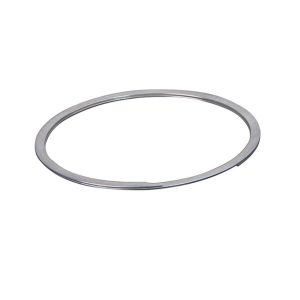
What is a retaining ring?
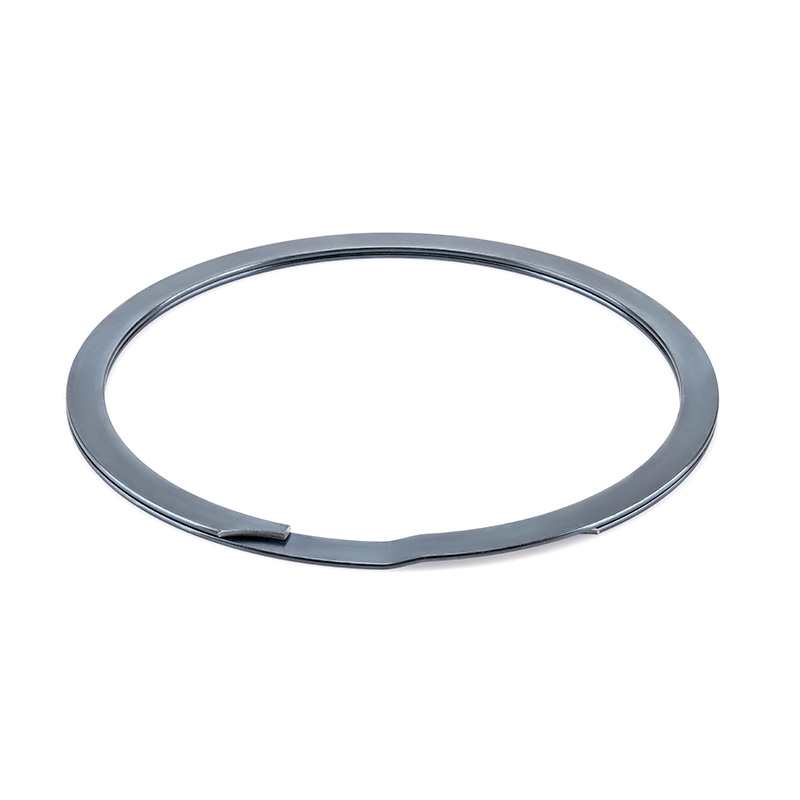
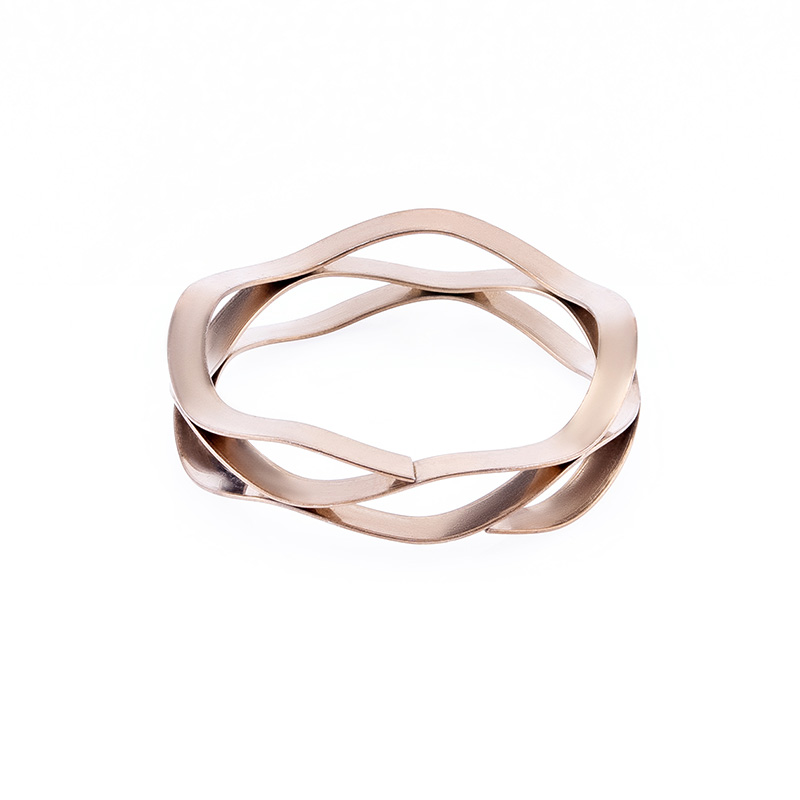
A retaining ring is a type of retaining ring, also known as a split retaining ring or circlip. It uses the inherent elastic tension of the metal to clamp into a shaft groove or hole groove through an open structure, thereby achieving a fixed position.
Common retaining rings include:
- Shaft retaining rings: These retaining rings clamp onto the shaft groove to secure external parts.
- Hole retaining rings: These retaining rings clamp into the hole groove to secure internal parts.
Compared to ordinary retaining rings, retaining rings offer greater flexibility during installation and removal and are therefore more widely used.
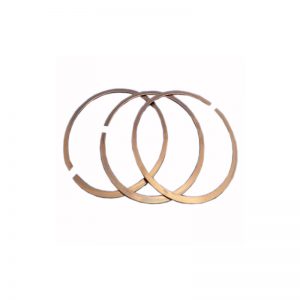
What materials are snap rings made of?
The performance and lifespan of retaining rings are closely related to the material. Common materials include:
- Carbon steel: Low cost, moderate strength, commonly used in general machinery. Spring steel: Offers excellent elasticity and fatigue resistance, suitable for high-load applications.
- Stainless steel: Corrosion-resistant and rust-resistant, suitable for humid and chemical environments.
- Copper and aluminum alloys: Used for lightweighting or conductive environments.
- Alloy steel: Wear-resistant and stronger, commonly used in heavy-duty equipment.
What are the production processes for snap rings?
The manufacturing process for retaining rings directly determines their precision and reliability. The main processes include:
- Stamping: Forming metal sheets by stamping, suitable for mass production.
- Turning: Machining to achieve precise dimensions, suitable for high-precision requirements.
- Heat treatment: Improves the hardness and wear resistance of retaining rings.
- Surface treatment: Includes blackening, zinc plating, phosphating, and nickel plating to enhance rust resistance.
- Laser cutting and grinding: Used for retaining rings of special specifications or high precision.
What are the main uses of snap rings?
The core function of retaining rings is to prevent axial slippage of parts, specifically:
- Fix bearings and prevent them from shifting on shafts.
- Limiting gears, pulleys, and other transmission components. Used to control gaps between connected parts.
- Used as fasteners for tiny parts in electronic components and household appliances.
Main Applications of Snap Rings
Snap rings are found in nearly every mechanical system, with typical applications including:
- Automotive: Engines, transmissions, wheel bearings.
- Industrial Machinery: Machine tools, agricultural machinery, conveying equipment.
- Household Appliances: Motors, fans, washing machines.
- Aerospace: Fastening applications requiring extremely high precision.
- Electronic Equipment: Small motors and micro transmission systems.
Functions of Snap rings and Retaining Rings
Snap Rings:
- Limiting and Positioning: Prevents axial movement and ensures stable component positioning.
- Bearing Fixing: Commonly used to position bearings, gears, and other components.
- Increasing Structural Strength: Provides a complete overall structure, suitable for withstanding large shocks and loads.
Retaining Rings:
- Quick Assembly: No complex machining required, simply snap into place.
- Removable and Maintainable: Easy to install and disassemble using circlip pliers, suitable for areas requiring frequent maintenance.
- Space Saving: Requires minimal installation space, suitable for lightweight designs.
Advantages and Disadvantages of Snap ring and Retaining Rings
Advantages of Snap rings
- High overall strength and reliability.
- Suitable for high-load, long-term use.
- High positioning accuracy, not prone to loosening.
Disadvantages of Snap rings
- Complicated installation and disassembly.
- High machining precision requirements, relatively high manufacturing costs.
- Lack of flexibility, not suitable for frequent assembly.
Advantages of Retaining Rings
- Quick assembly and disassembly, easy maintenance.
- Elastic structure allows for adaptability to certain assembly tolerances.
- Low cost, suitable for mass production. Small footprint and compact design.
Disadvantages of elastic retaining rings
- Limited load capacity and lower strength than solid retaining rings.
- Long-term use may cause loss of elasticity due to fatigue, leading to loosening.
- Insufficient stability in high-vibration or high-impact environments.
How to choose the right Snap ring?
When choosing a Snap ring, consider the following factors:
- Dimensional compatibility: Select the appropriate specification based on the shaft or hole diameter.
- Load-bearing requirements: Select the material based on the load capacity.
- Usage environment: Stainless steel or surface-treated parts are preferred for humid and corrosive environments.
- Ease of installation: Choose between circlips and retaining rings based on whether frequent assembly and disassembly is required.
- Degree of standardization: Choose products that comply with international standards (DIN, GB, ANSI) to ensure universal compatibility.
What is the difference between a Snap ring and retaining ring?
| Comparison Dimension | Snap ring(ordinary snap ring) | Elastic retaining ring
(circlip/open retaining ring) |
| Definition | A limiting element installed on a shaft or hole to prevent the part from moving axially | A retaining ring with an opening or cutout that fits into a shaft groove or hole groove by elasticity |
| Installation | Usually requires machining or installation with fixings | Install directly with circlip pliers and secure with elastic clamping |
| Structural characteristics | Closed ring structure, strong integrity | Open design, elastic, can shrink or expand |
| Difficulty of disassembly | Generally, it is necessary to disassemble related parts, and the operation is relatively cumbersome. | Quick disassembly and assembly using special tools |
| Application range | Mostly used in situations with heavy loads and high requirements | Commonly used in light or medium loads and where high assembly efficiency is required |
| Cost | The processing precision requirements are high and the cost is high | Mature technology, mass production and low cost |
Is the retaining ring easy to install and remove? What tools are required?
Installation: Circlips can be quickly installed using specialized circlip pliers; ordinary retaining rings require a screwdriver or installation tool. Disassembly: Retaining rings are easy to disassemble, but care must be taken to avoid deformation.
Generally speaking, retaining rings offer the advantage of ease of installation.
Do retaining rings tend to loosen easily?
If the correct specifications are used, the notches are properly machined, and the installation is performed properly, retaining rings generally will not loosen. However, if the mounting groove is worn, the retaining ring material is soft, or it is subjected to long-term impact loads, there is a risk of loosening. Therefore, reinforced or heavy-duty retaining rings can be used in high-load applications.
Do retaining rings rust?
- Carbon steel and ordinary steel retaining rings: Without surface protection, they are prone to rust.
- Stainless steel retaining rings: They have excellent corrosion resistance and are not prone to rust.
- Surface-treated retaining rings: Galvanizing and phosphating can improve rust resistance.
Are standard parts universally compatible?
Most retaining rings are standard parts that adhere to international standards (such as DIN 471, DIN 472, GB/T 893, and ANSI), making them highly compatible. When purchasing, users only need to refer to the standard model and size chart.
Retaining Ring Usage Guide
- Inspect the notch before installation to ensure proper dimensions and burr-free.
- Use specialized tools to avoid excessive force that may cause deformation.
- Avoid overloading,Exceeding the designed load capacity can cause breakage.
- Inspect regularly, especially in high-vibration equipment, to prevent loosening.
- Properly protect against rust,Store in a dry place and apply anti-rust oil if necessary.
Conclusion
Although small in size, retaining rings are essential components in mechanical equipment. Whether standard or elastic retaining rings, they play a key role in bearing fixation, component positioning, and safety protection. Proper selection of materials, specifications, and craftsmanship can significantly enhance the reliability and lifespan of mechanical systems. With increasing standardization, the use of retaining rings will become more widespread, and high-performance materials and precision craftsmanship will further enhance their value in future industries.
 English
  Chinese
  Dutch
Dutch  French
  German
  Italian
  Japanese
  Korean
  Portuguese
  Russian
  Spanish